
Mining rights questioned: 13 appear before court for public violence
A total of 13 people were arrested last Thursday for public violence during a protest by residents of several villages in the Mogalakwena area, raising their concerns against Ivanplats, Platreef Mine.
MOKOPANE – A total of 13 people were arrested last Thursday for public violence during a protest by residents of several villages in the Mogalakwena area, raising their concerns against Ivanplats, Platreef Mine.
This protest occurred exactly a year later after a group of protesters gathered outside the Platreef Mine’s entrance on 26 November 2014 to voice their disappointment with the mining rights awarded to the mine on 4 November 2014 by the Department of Mineral Resources (DMR).
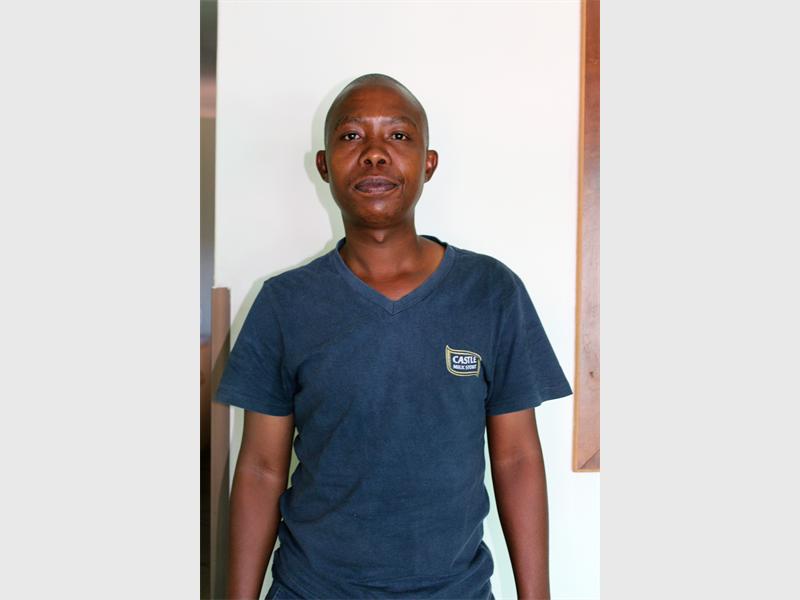
Shimane Kekana, community leader, and Aubrey Langa, community adviser, told Bosveld on Thursday: “The community has taken it upon themselves to enforce the law, as the government and the authorities are failing to do so. We do not consider our actions illegal.”
Mahwelereng police spokesperson, Const Sello Leso, said: “The 13 suspects appeared before the Mokerong Magistrate’s Court and the case was postponed to 18 December. The suspects were released on warning.”
Langa and Kekana said the reasons the protesters are angry are: “After a year Ivanplats, Platreef Mine has not complied with the legal requirements. We are not disputing the fact that they have a mining right, but we are challenging the granting of the right having launched an internal appeal.
“The DMR ordered Ivanplats to fence off the burial grounds and by June 2015 Ivanplats failed to comply with this specific order. A PGR survey was conducted within the box-cut and two graves were discovered. This discovery means that all operations should be suspended with immediate effect. Unfortunately the findings were kept secret and operations went on despite the order stating that no mining activity may take place within a 100 m buffer zone from the graves.”
Kekana and Langa further said the community wants prove that they are allowed to mine in this area. “As the South African Heritage Resources Agency (SAHRA) ordered Ivanplats in 2013 to motivate a valid reason why they want to mine in this specific area seeing that there are more than 50 graves in this specific area. Ivanplats failed to do so and as a result it was not approved by SAHRA. The DMR cannot issue a mining licence without the approval of SAHRA. The terms and conditions clearly states that the mine is not allowed to operate within the burial grounds.This is a criminal offence and we have opened two cases as the Mahwelereng police station in December 2014 and again in June 2015.” Kekana said the community wants Ivanplats to comply with the law and to stop their unethical behaviour.
“All of the above grieves have been reported to the government and to the authorities but up to know nothing has been done.”
Bosveld spoke to Jeremy Michaels, spokesperson for Ivanplats, and he gave the following statement regarding the graves:
“Ivanplats has gone to great lengths to ensure that the sensitive issue of graves is handled with the necessary care, in full compliance with the law. Our company and its employees have the utmost respect for graves and it therefore follows that we have done everything in our power to ensure that graves or potential burial sites are dealt with according to the law and the wishes of the next-of-kin.
“Regarding the various complaints by some community members, Ivanplats states categorically that no graves have been found in the ‘box-cut area’ where construction is taking place. In those cases where graves have been identified outside of the construction area, the company is working with heritage specialists, the relevant authorities and the next-of-kin to preserve the remains. There is no substance to the allegations of wrong-doing and no state agency has issued instructions to the company to stop construction.”
He further said that Ivanplats is building a significant underground platinum mine which will create thousands of jobs during the construction and production phases, stimulating the local economy and attracting substantial foreign investment in the process.
“We will not be deterred by fictitious claims and unreasonable demands, nor will we be intimidated, but will continue to ensure that we comply with the law and treat our host communities with respect and dignity.”