
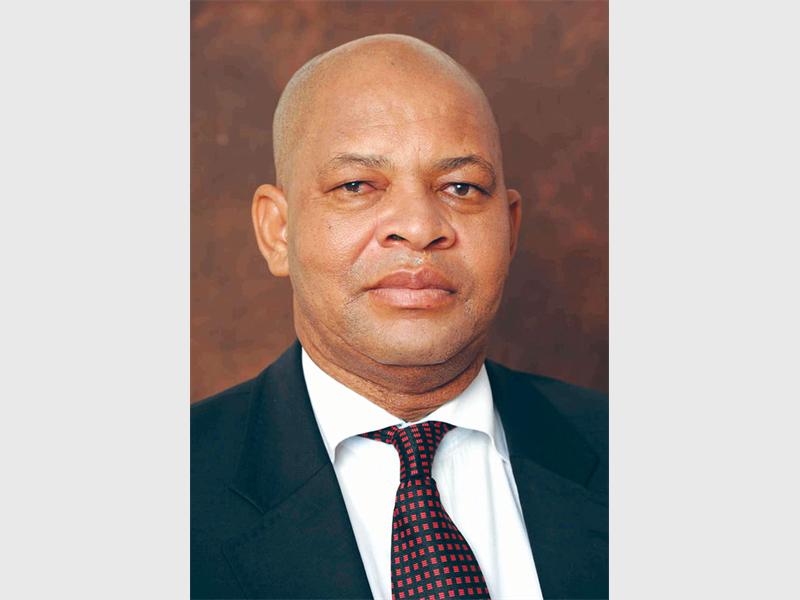
POLOKWANE – “We have to do what the MEC of Provincial Treasury instructed us to do and that is to cut wastage and to direct resources where they are mostly needed. We must ensure proper financial management and we must live within our means,” Mathabatha said.
Mathatbatha said his major concern is the tendency of misplacing public servants in terms of their skills, qualifications and experience.
“Since I first stressed my concerns on this matter in 2013 I have requested the Public Service Commission to undertake a thorough competency assessment of all senior management service employees in the provincial administration. A preliminary report has been finalised and we should be able to report in due course on these findings and appropriate course of action. Based on the outcome of the competency assessment we will be embarking on an intensive training programme for all public servants,” Mathabatha said.
He added that the idea is to improve skills level and thereby enhance the ability of government employees to be able to serve the people better.
Administration as a programme in the Office of the Premier is entrusted with the responsibility of providing administrative support to the premier, Executive Council and the director-general in fulfilling their legislative function and promotion of good corporate governance.
In this regard, the Office of the Premier will utilise its allocated budget to strengthen financial management systems, empower the office of the director-general, Executive Council and the Premier Support Unit, to be able to fulfil the mandate the Premier has referred to.
As part of the province’s continued drive towards a clean and responsive administration, the Office of the Premier commissioned a number of external service providers to conduct a forensic audit on a number of key issues.
“Investigations are at an advance stage and upon completion decisions will be made and these will be implemented without any fear, favour or prejudice. Our determination is to bring about a clean administration, nothing more and nothing less,” Mathabatha said.
According to the premier, Institutional Development ensures that policies, processes and systems enable the provincial administration to deliver services.
“Part of this is to ensure that we fill all the vacant positions of the Head of Departments (HOD)s, including the finalisation of the all pending disciplinary cases against some (HODs). In doing this priority will be given to critical scarce and priority funded vacant posts,” Mathabatha said.
Through policy and governance the Office of the Premier is able to implement the mandate of planning, coordinating, monitoring and evaluation.
Through this programme area the Office of the Premier will be monitoring the implementation of the Limpopo Development Plan, in particular the progress relating to the attainment of 10 high level development targets.
“We will remain focused and committed to our anti-poverty programmes with special bias to rural areas. To date we conducted and concluded consultative sessions in all our districts and we are in the final stages of developing the Provincial Anti-Poverty Programme. The final draft document reaffirms the Executive Council’s decision to prioritise the provincial growth points such as Polokwane, Musina-Makhado, Corridor, Greater Tubatse, Mogalakwena and Lephalale as key strategic priorities for economic agglomeration and industrialisation,” Mathabatha said.
He added that the Executive Council has also noted that the province still has significant infrastructure backlogs despite progress made with regard to provision of water, electricity, roads and other social services.
“We are putting more measures in place to improve on infrastructure planning and project implementation. We have assigned the planning branch in the Office of the Premier to coordinate the development of the Limpopo Integrated Infrastructure Master Plan. This will provide a framework for infrastructure delivery and funding requirements over the next 10 years,” Mathabatha said.
In attempt to root out corruption the province has branded government vehicles with an anti-corruption message and this message calls on the public to report any incidents of corruption, which include the abuse of state vehicles.
All government departments have anti-corruption hotlines, while branded vehicles also carry the numbers on which residents can report incidents.
The department hotlines work closely with the premier’s anti-corruption and fraud hotline, which has a 99% success rate.