Jubilation after Koma
An estimated 80 girls and women attending an initiation school in Dikgale-Mantheding Village some 40 km from Polokwane counted among the more than 4 300 females who underwent the customary process across Limpopo this past koma season. Prior to covering the festivities in Dikgale-Mantheding Village, Polokwane Observer witnessed the return of 750 boys from the …
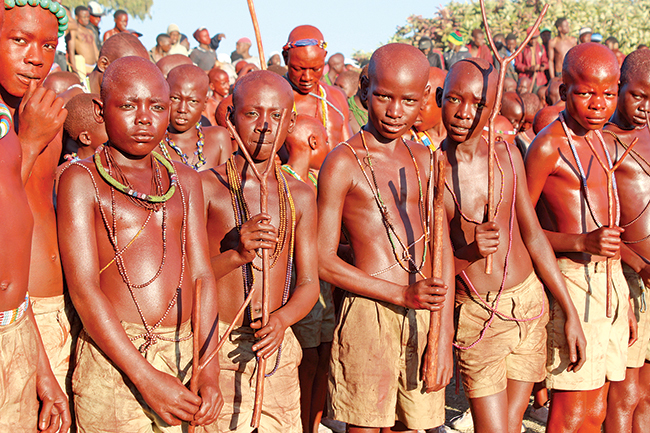
An estimated 80 girls and women attending an initiation school in Dikgale-Mantheding Village some 40 km from Polokwane counted among the more than 4 300 females who underwent the customary process across Limpopo this past koma season.
Prior to covering the festivities in Dikgale-Mantheding Village, Polokwane Observer witnessed the return of 750 boys from the mountains, a trek that always makes a lasting impression, in adjacent Madiga Village early Saturday. As the sun protruded over the horizon, the distant sound of whistles and excited voices of boys and men descended on the sleepy village of Madiga. In keeping to customary prescript, male initiates (bodikana) were accompanied by baditi (caregivers) throughout the month-long process starting in the last week of June. For them the shared secrets of the koma and the process of being exposed to the rites of manhood came to an end with a last message from the koma principal and House of Traditional Leaders Provincial Head Malesela Dikgale.

Upon their release their return home would have preceded celebrations where they were expected to be awaited with gifts, the monetary value thereof depending on an available budget.
As the focus turned to the festivities in the next village, drum beats and dancing announced a memorable moment underway as 81 girls and women from the age of eight years were being released from the school of koma principal Mary Manabile. While she was still busy with formalities her daughter, Stephina Manabile, made herself available for an interview during which she explained that it was the first time for her mother to conduct a koma and that they would be conducting the next in five years’ time. The operations commenced on 23 June.
The initiates were bare-chested and dressed only in red wraps (otherwise referred to as tukwane), which replaced the original mosese (short skirts manufactured from animal hide) during the closing ceremony, a caregiver said. While at koma they had been allowed to cover themselves with blankets against, Stephina said.
Similar to the custom adhered to by male initiates, the girls and women covered their bodies in red paint to protect themselves aganst a drop in temperatures. The beads that adorned their necklines resembled their culture and were reserved for the graduation ceremony. As was the case with male initiates, some of the girls wore strings of candy and lollipops.
Stephina mentioned initiates had stayed in tents and a three-bedroom house while learning the importance of the Pedi culture. She added that the girls had, among others, been taken to the bush to be taught norms like having to collect firewood as part of their responsibilities.
Their fee included certain foodstuffs, but they had to take along their own meat, according to Stephina. The diet prescribed by the Department of Health had otherwise included cabbage, potato, beans, porridge, eggs, chicken and tinned fish.
Whoever was caught observing their operations – whether uninitiated or from another culture – was being chased off, a custom that made them a lot of money as they charged between R100 to R500 at a given time, she laughingly said.
Asked about maintaining the traditions of the koma nowadays, she said her mother who was referred to as gogo (granny) by the initiates understood the new generation and that it was important to grasp such traditions in modern times. Soon it was time to return home and be rewarded with gifts in the form of cash, cellphones or cameras, symbolic of their connection with a contemporary world.
Story: YOLANDE NEL
>>observer.yolande@gmail.com
Photos: Yolande Nel / Herbert Rachuene