
BREAKING NEWS – Olifantspoort Plant closed down, may affect water supply
As a result of the heavy rainfall recorded in the catchment area of the Olifantspoort Water Treatment Plant, the facility had to be closed down on Monday evening and it may affect water supply to the city as reservoir levels drop. Communications and Marketing Manager of Polokwane Municipality, Matshidiso Mothapo, confirmed that the municipality had …
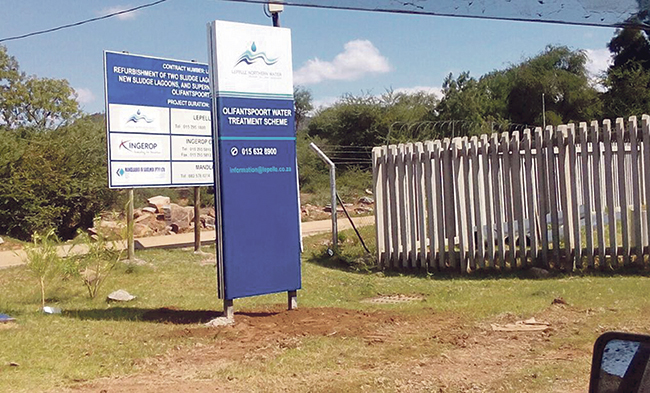
As a result of the heavy rainfall recorded in the catchment area of the Olifantspoort Water Treatment Plant, the facility had to be closed down on Monday evening and it may affect water supply to the city as reservoir levels drop.
Communications and Marketing Manager of Polokwane Municipality, Matshidiso Mothapo, confirmed that the municipality had received a notice from Lepelle Northern Water (LNW) on Tuesday morning to the effect that the plant had to be shut off due to the quality of raw water from the river following heavy rains in the Lepelle area.
“According to the notice, the plant is just receiving mud and this may damage filters and other systems, should extraction continue. This has already affected reservoir levels drastically and the operation will only resume once the quality of raw water improves,” Mothapo said and added that water is currently supplied from the Ebenezer Dam only.
“The public is advised to use water sparingly during this period to maintain reservoir levels and avoid serious impact of the situation,” Mothapo said and confirmed that water tankers would be deployed to affected areas.
Consumers are urged to report water issues including shortages on 015 290 2629 or 2376.
On Tuesday, Mothapo reported that the level of the Potgieter Avenue reservoir was at 40% while the 50 and 30 mega litre reservoirs were at 25% and 14% respectively. The old 30 mega litre reservoir was also at 14% and the Seshego reservoir was very low at 3%. The flow from Ebenezer Dam was 151 litres per second.
The schedule on the website of Lepelle Northern Water indicated that the levels of the Loskop and Blyderivierpoort dams were at 98,3% and 63,60%. The Tzaneen and Magoebaskloof dams were at 38,20% and 100% respectively, while the Ebenezer and Doorndraai dams were at 85,40% and 45% respectively.
Story: BARRY VILJOEN
>>barryv.observer@gmail.com