
Celri adapts to change; gets creative and excels at teaching
Celri Olley is a certified National Geographic and level one Adobe Creative educator, who encourages teachers to change their approach to learning design.
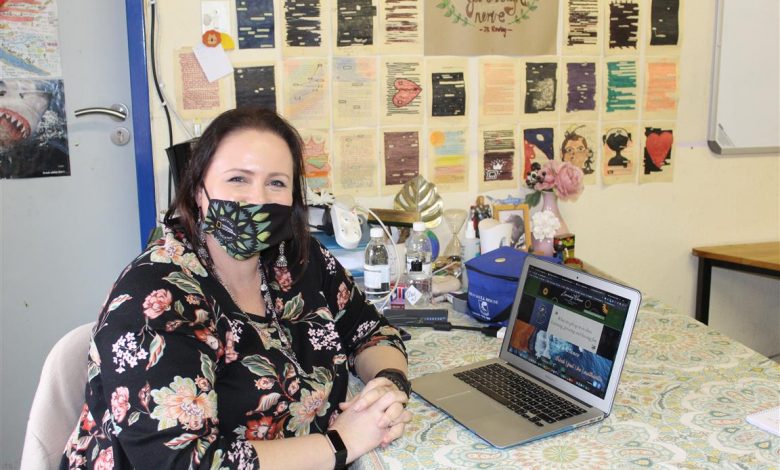
POLOKWANE – Local teacher Celri Olley has arguably made learning more fun and exciting, as she easily adapts to the digital age. The English teacher at Mitchell House is an integration coordinator for Gr 8 and Gr 9, who integrates or combines subjects and subsequently creates a more collaborative setting.
“I can seamlessly integrate my English lessons with subjects such as history, maths, science and geography.”
Celri completed five courses through the National Geographic Society and is therefore a certified National Geographic educator. She also boasts a level one Adobe Creative educator qualification and serves as a IEB Measuring Abilities and Thinking Competencies for High School (MATCH) senior sub-examiner, who moderates English.
Celri explains how they make use of various scales and perspectives, to connect the human and natural world in the learning process. According to her, objectives are discussed with the children in accordance with clear learning goals. In addition to the standards and skills of the objectives, learners will also be able to demonstrate 21st century skills such as using the appropriate technology and creativity to solve problems.
She believes that student voice and choice is essential in an effective learning environment as it promotes buy-in for students and they get to learn in settings that are safe and open to the topics that interest them.
“Teachers are moving into their students’ world in order to make effective connections to promote trust in the learning process,” she explains.
Celri makes use of Google Classroom and learners are encouraged to make use of a variety of learning tools such as Google Story Map, Canva and Adobe Spark. The inquiry process they follow consists of Ask, Collect and Visualise/Planning.
- Ask – They learn how to ask the right questions, how to think about a problem and how to ask questions in context.
- Collect – They have to gather data and resources and learn about fact-checking and reliable sources. They can take data from the internet and use their data and compare it. They also learn what information is relevant.
- Visualise or Planning – They have to be able to show how they learned and planned their project. They can use audio, visual, presentations, multimedia, or written work. All planning is done in writing first to encourage right-brain activation for creative problem-solving.
“This teaching method is process-over-product orientated and teaches children time management skills, communication skills, and other ‘soft’ skills needed in the real world while covering the curriculum objectives. Learners are assessed and assisted throughout the process. Debating is also a big part of the process and help learners to see the bigger picture.”
Celri encourages other teachers to take a small step and a chance by changing their approach to learning design. “There are so many platforms and tools available out there to expand your approach to how learning happens. All you need to do is take the first, small step to rejuvenate your career and grow your own teaching brand in this next normal stage of our profession. Do not be afraid to reach out to other teachers in your community or online for support and growth opportunities.”