The year that was: Part one
We take a look back at stories that included weather phenomena.
POLOKWANE – The year 2021 was one that brought with it a whirlwind of surprises.
We at Review take a look back at some of the top stories that included weather phenomena.
The common weather phenomena include wind, cloud, rain, snow, fog and dust storms. Less common events include natural disasters such as tornadoes, hurricanes, typhoons and ice storms. Almost all familiar weather phenomena occur in the troposphere – Google
The year started with the tropical storm Eloise which resulted in heavy rains and strong winds across large parts of the province. Limpopo’s disaster management teams were on high alert in January, when the storm moved inland.
Read more: Eloise: Damaging winds and heavy rain can still be expected
In a separate incident, various roads were flooded in the Mopani district and included parts of the R528, R71 and R36.

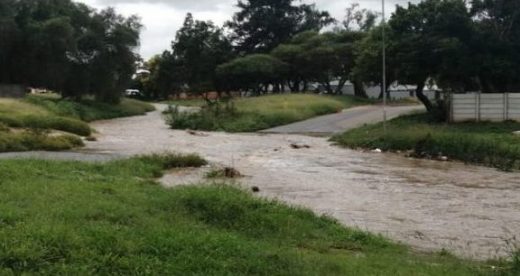
More flooding of roads occurred in February, most notably when the R81 in the Capricorn district was flooded.
By February 22, over 200mm rain fell in Musina under three hours led to the flooding of several roads, including the road to Tsiphise.

Rain was not the only weather phenomena to be experienced in the province. On July 3 at 21:21, a tremor was felt by residents in Tzaneen and even as far a field as Haenertsburg and Magoebaskloof.
Those who experienced the movement described the tremor as a wave of vibrating thunder, while others said they heard a loud explosion and felt light to moderate shaking.
“The Council for Geoscience can confirm that an earth tremor was felt at 21:21 on Saturday, July 3, 2021. The earthquake registered a preliminary 2.1 on the local magnitude scale as recorded by the South African Seismograph Network. The epicentre was located in the Tzaneen area.”
Earlier reports suggested the epicentre was approximately 15km from Tzaneen near between Mieliekloof and Deer Park and was 10km wide. The termor was felt mostly in Tzaneen and lasted between 5-15 seconds.
Fires also caused havoc in the province. In Polokwane, 248 fires were attended to by the fire and rescue department between April and June, of which 68 of the incidents were reported at residences.

Another light tremor was felt in Polokwane on October 25.

The light shaking started at around 17:30 with the epicentre reported just north of the city. “The epicentre of the seismic-like event was approximately 3.7km north of the city with a depth of 10kmm” reads the report on Volcano Discovery.