ANC reflects on Polokwane election loss
The party says improved service delivery was not enough to win over voters and is now preparing for coalition talks to retain control of Polokwane.
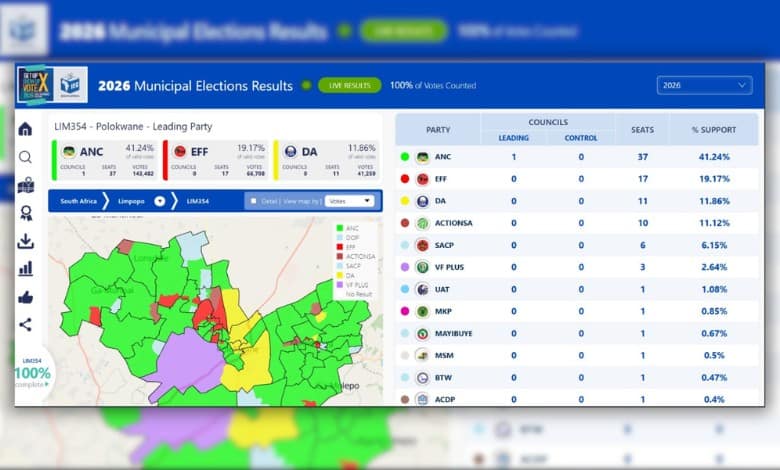
POLOKWANE – The ANC’s Peter Mokaba Region has admitted it is disappointed after losing its outright majority in both the Polokwane and Lepelle-Nkumpi municipalities, despite saying it had improved service delivery over the past five years.
Preliminary Electoral Commission of South Africa (IEC) results show both municipalities are among 10 hung councils in Limpopo, meaning the ANC will need coalition partners if it wants to retain control.
ANC regional spokesperson Adolph Rapetswa told Review Online the party believed voters would recognise improvements made during the current term.
“We thought that the electorate would notice our efforts over the last five years of improved roads, access roads, water supply, and being rated the best municipality in different ways across various platforms reflecting the best the ANC could do for the city,” he said.
However, residents have continued to raise concerns about unemployment, housing shortages, poor roads and municipal rates.
A source close to the regional executive believes many voters judged the ANC on the conduct of some of its leaders and councillors rather than service delivery alone.
“Ward councillors are expected to meet residents on a monthly basis to report on progress being made on providing services and also report concerns to the municipality, but they barely do so. Instead, they move out of the community to a fancier area and become alienated, only returning when there are opportunities to campaign,” the source said.
The source also claimed public disagreements among party leaders had damaged voters’ confidence.
“The airing of discomfort over resolutions taken in internal party meetings on social media by staunch members and leaders, without raising them internally, has also created a perception that the party is bewildered, causing obvious factions and resulting in a loss of hope for the people.”
Polokwane heads for coalition talks
Final provisional results showed a fragmented council in Polokwane.
In the 90-seat council, the ANC secured 37 seats with 41.24% of the vote, down from 56 seats and 60.08% in 2021. The EFF followed with 17 seats (19.17%), the DA won 11 seats (11.86%), ActionSA secured 10 seats (11.12%) and the South African Communist Party (SACP) claimed six seats (6.15%).
The Freedom Front Plus won three seats, while the United Africans Transformation, uMkhonto weSizwe Party, Afrika Mayibuye Movement, Magoshi Swaranang Movement, Born to Win and the African Christian Democratic Party each secured one seat.
The ANC requires 46 seats to govern Polokwane on its own. With 37 seats, it will need coalition partners to remain in power, with one-seat parties alone unable to provide the required majority.
Polokwane is among 10 hung municipalities in Limpopo, alongside Lepelle-Nkumpi, Elias Motsoaledi, Maruleng, Ba-Phalaborwa, Mogalakwena, Lephalale, Thabazimbi, Bela-Bela and Modimolle-Mookgophong.
Coalition framework awaited
Rapetswa said the regional executive committee would meet next week, after the IEC officially declares the election results on Monday night at The Ranch Resort, to reflect on the outcome.
He said the party was also awaiting a coalition framework from the ANC’s provincial leadership and Luthuli House to guide negotiations ahead of the formation of new municipal governments.
Meanwhile, the ANC has yet to announce its mayoral candidate for Polokwane, with incumbent John Mpe, council speaker Welhemina Modiba and ANC veteran Soviet Lekganyane among those in contention.
The party previously resolved that mayoral candidates for major cities and metros would only be announced after the elections.
It remains to be seen how the ANC will balance coalition negotiations with selecting a mayoral candidate capable of leading a coalition administration. Lekganyane, regarded as one of the stronger contenders against Mpe, was also absent from the councillor list previously provided by the IEC to Review Online.
All 2026 figures remain provisional until the IEC officially declares the election results.