Female entrepreneurs upskill to run successful businesses
The entrepreneurs who graduated in the Musina Municipality own a variety of businesses such as dressmaking, catering and events planning and more.
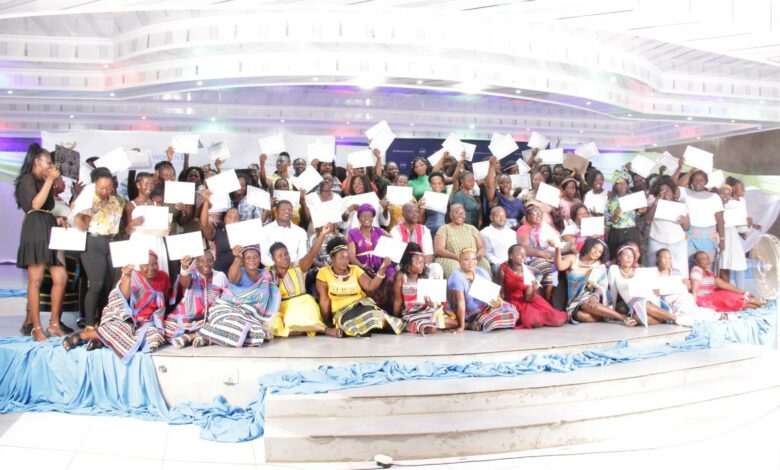
LIMPOPO – The mood was jovial at the RGCC Church Hall at the Accelerating Women Owned Micro-Enterprises (AWOME) programme graduation in Masisi, Musina Local Municipality, where 260 women entrepreneurs celebrated completion of the programme on 15 December 2022, hosted by the Musina Municipality.
The programme is a partnership between UN Women and implementation partner Hand in Hand Southern Africa and supported by De Beers Group in South Africa, Botswana, and Namibia.
The group of entrepreneurs participated in the programme between 2020-2022 under one or more of the three Start and Improve Your Business (SIYB) training packages namely, Generate Your Business Idea, Start Your Business and Improve Your Business where they were empowered with the practical skill to formalise their businesses.
Representing De Beers Group, Venetia Mine’s Socio-Economic Development Manager, Livhuwani Nwachukwu said: “As De Beers Group, we recognise the importance of working in collaboration with our communities. This programme forms part of our larger plan and is guided by our Building Forever sustainability framework, through which we are committed to supporting a lasting positive impact that will endure well beyond the end of life of our mine. In particular, we are proud to have made great strides in establishing partnerships such as this one, to ensure that we collectively create socio-economic opportunities and development for everyone, but especially women and the youth within the Blouberg and Musina areas.”
The entrepreneurs who graduated in the Musina Municipality own a variety of businesses offering services such as dressmaking, catering and events planning, poultry farming, bakeries and more.
Phiri Nelly. 33-year-old entrepreneur from Folovhodwe village, started to sell clothes from the farms in 2008.
The business turned into an eating house in 2019 that selled cooked food and kotas to local people and mostly targeted school children and people who come to the nearby bar lounge.
At the time, Nelly struggled with record keeping and unable to see whether she is making profit or loss because she used to mix business and personal finances.
In 2021 she was referred by a friend from LIMA to the AWOME programme and for Nelly the knowledge she gained has transformed her business.
“I can now keep financial records and track money going in and out of the business. I also now know my operating cost and advertise my business on social media using Facebook and Whatsapp,” says Phiri.
Her business is formally registered with the municipal authorities and she has created employment to her community.
“UN Women is proud of our partnership with De Beers Group on this much-needed training for women entrepreneurs to empower them with skills they can use to put structures in place that will help move their business from the informal sector into the formal economy. Given the high unemployment rates and inequalities, these amazing businesswomen have taken their future into their own hands so they can provide for themselves, their families, and their communities. To be able to support that through AWOME helps us fulfil our mandate of empowering women and contributing to development that takes every woman along,” said Aleta Miller, Country Representative of UN Women Multi-Country Office.
About AWOME:
The AWOME programme is implemented under the partnership between the UN Women and De Beers Group.
The De Beers Group made global commitments under the HeForShe campaign to support women-owned micro-enterprises in building their capacity in business management.
The focus on micro-enterprises recognised the challenges that these women are faced with due to the informal conditions under which they operate.
The programme is implemented in three countries: South Africa, Namibia, and Botswana.
In these countries, the socio-economic conditions for women in the informal sector are almost similar.
The implementing partners in the three countries are as follows: South Africa through NGO Hand-in-Hand Southern Africa, Namibia through the Ministry of Gender Equality, Poverty Eradication and Social Welfare, and in Botswana by the Ministry of Youth, Gender, Sport and Culture.
In South Africa, the programme is implemented in two municipalities located in Limpopo; Blouberg and Musina.