Deaf residents on sign language becoming 12th official language
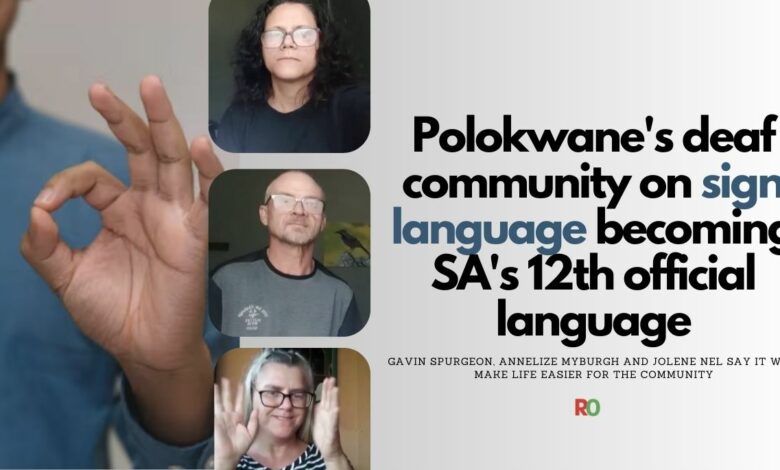
WATCH: Polokwane residents Gavin Spurgeon, Annelize Myburgh and Jolene Nel say they are thankful as the landmark decision will make life easier for deaf citizens across the country.
POLOKWANE – The Constitution Eighteenth Amendment Bill that makes South African Sign Language (SASL) the country’s 12th official language went unopposed in Parliament and its recognition has been welcomed by deaf South Africans.
The bill was recently passed with a supporting vote of two thirds needed by members of parliament. There were 306 votes in favour of the bill, no abstentions and no-one voted against it.
This landmark move follows many years of campaigning by DeafSA, the deaf community and supporters in recognition of their language and the right to access public services such as health and education using SASL.
The national director of the Deaf Federation of South Africa Bruno Druchen said in a press release that the passing of the bill is a momentous occasion for deaf people and a historic moment for all SASL users.
“This bill will mean that there is more accountability to recognise the rights of deaf people to access services as minority language users in our own language, but also to promote SASL as a language for all. When President Cyril Ramaphosa ascends the bill, it places responsibility on the South African government to provide improved guidance to public services and government departments across all provinces on the use of SASL, with the support from DeafSA.”
The Polokwane Observer spoke to deaf residents in the city regarding how they feel about the landmark moment.
*every effort was made to correctly interpret what was said in the following video.
Gavin Spurgeon:
I am completely deaf and communicate in Afrikaans. I mainly use a pen and paper to communicate with other people. I am thankful that South Africa finally agreed to make sign language an official language. I struggle to communicate with people and we need translators in court since we cannot communicate without translators. I trust government will help us by assigning translators.
Annelize Myburgh:
I am hard of hearing and read people‘s lips. Since I am Afrikaans, it is difficult to read someone speaking English. If a person can translate, I use a pen and paper to communicate. I am thankful for those who can translate since sign language is now compulsory like English, Afrikaans and all other official languages. It will help deaf people to have access to any place they want to go. I hope there will be more translators available.
Jolene Nel:
I am very excited and look forward to this addition. I feel that deaf people will finally become part of South Africa and we can support each other together as neighbours. People will start to recognize the deaf and possibly make an effort to learn to communicate with the deaf.