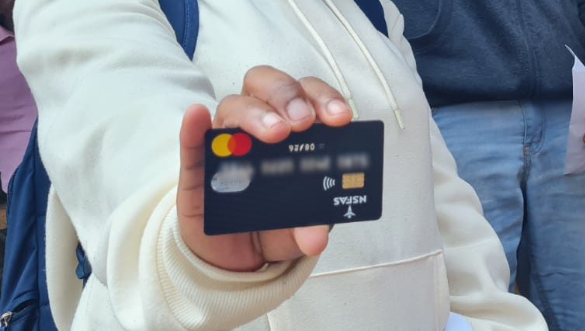
Photo of a student holding an NSFAS card. Photo: NSFAS; Facebook.
POLOKWANE – Students from various universities say the new, direct eZaga system has several challenges that hinder them from getting their allowances.
The National Student Financial Aid Scheme (NSFAS) recently introduced the payment system to allow students to receive a direct payment.
On August 2, students from the University of Limpopo, the University of Venda and the Tshwane University of Technology, among others, marched to the Union Buildings to hand over a memorandum of grievances to the Minister of Higher Education and Training Blade Nzimande, which included the removal of the system and for NSFAS to address unlawfully defunded students.
The NSFAS spokesperson Slumezi Skosana at the time condemned the students’ actions as the protest turned violent and said they would explore all avenues available to ensure the assailants are held accountable.
“The scheme remains committed to providing financial aid to deserving students while also ensuring a safe and conducive environment for its officials,” Skosana said.
NSFAS says the main objective in their take-over of direct payment is to ensure its accountability on student allowances and to establish a better coordinated system of the transfer of funds to students.
“NSFAS expects the new system to be not only convenient to students but also to provide for allowances in a manner that is both dependable and predictable to students,” a statement read.
In light of recent events, the Polokwane Observer asked students from different universities to share their views on the new payment system.
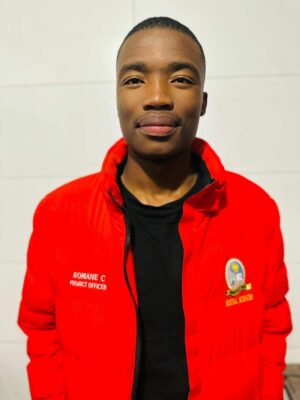
Komane Comfort (University of Limpopo): We reject eZaga for the following reasons: It is a new company that does not have a track record of facilitating finances. Secondly, there are no offices or delegates on campuses for students to make inquiries. We also reject it on the basis that we are charged a lot of money to log in to their app and it is not progressive or user friendly. The last and most fundamental reason why we reject eZaga is because ever since its implementation, we have seen many students defunded. To us, there is no logic because these students were approved by NSFAS.Ethel Malatji (Tshwane University of Technology): I am not happy with the new payment system because their bank charges are out of this world. It is also difficult to withdraw money from their app.Amanda Nhlengethwa (Tshwane University of Technology): When they first introduced eZaga, I thought it would be easier to receive money straight from NSFAS not knowing what was about to come. What I don’t understand is why eZaga has led to students being defunded.Nhlavutelo Maluleke (Tshwane University of Technology): I don’t understand why it is so difficult to withdraw money from the app. Their system also always has some technical glitch. This new system is not good at all, especially for students from disadvantaged families.Kamogelo Poto (University of Limpopo): eZaga and the entire direct system must be rejected because they have no track record of dealing with students finances and students have been defunded as a result. This is a disadvantage to students. Their app is also faulty as it shows that we have money at times but when we try to withdraw using their card, it says we have insufficient funds.For more breaking news follow us on FacebookTwitter Instagram or join our WhatsApp group
At Caxton, every story is written by humans. We use AI only to perform quality checks - never to generate the news. Happy reading!
Raeesa Sempe is a Caxton Award-winning Digital Editor with nine years’ experience in the industry. She holds a Bachelor’s Degree in Media Studies from the University of the Witwatersrand and started her journey as a community journalist for the Polokwane Review in 2015. She then became the online journalist for the Review in 2016 where she excelled in solidifying the Review’s digital footprint through Facebook lives, content creation and marketing campaigns. Raeesa then moved on to become the News Editor of the Bonus Review in 2019 and scooped up the Editorial Employee of the Year award in the same year. She is the current Digital Editor of the Polokwane Review-Observer, a position she takes pride in. Raeesa is married with one child and enjoys spending time with friends, listening to music and baking – when she has the time. “I still believe that if your aim is to change the world, journalism is a more immediate short-term weapon." – Tom Stoppard