A look into Limpopo’s performance in the Census 2022
From the lowest divorce rate in South Africa, to Sepedi being the fourth spoken language in the country, we take a look at Limpopo highlights in the Census 2022.
POLOKWANE – Results from the long-awaited Census 2022 was released by the statistician-general Risenga Maluleke on Tuesday.
The census, which is meant to take place every 10 years, was delayed by the Covid-19 pandemic, lockdown and other factors including the July riots in 2021 and was the fourth population and housing count in post-apartheid South Africa.
The census is meant to provide comprehensive data on population size, demographic trends, and other service delivery related information.
Growth in population:
The population of South Africa increased from 51,7 million in 2011 to more than 62 million in 2022 which accounts for a growth rate of 1,8%.
Females constituted 51,5% of the total population, while 48,5% were males.
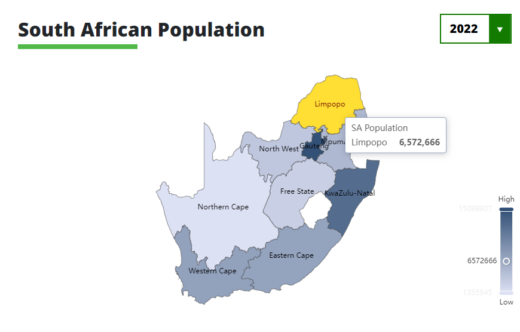
Black Africans remain the dominant population group in South Africa at 81,4%, followed by the coloured population at 8,2%. The white population percentage declined to 7,3% in 2022 from 8,9% in 2011, while Indians/Asians increased slightly from 2,5% in 2011 to 2,7% in 2022.
Limpopo’s performance in the Census 2022
Demographics:
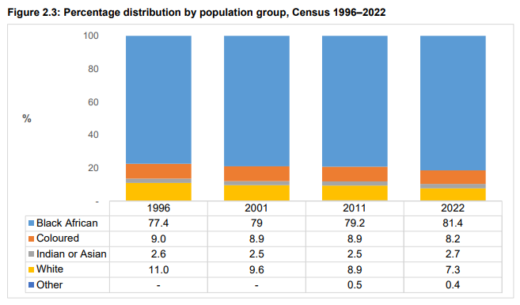
As of February 2022, there are 6 572 720 people in Limpopo with the province recording the highest proportion of females at 52.8% (3 473 304) than men (3 099 416).
This was more than the other eight provinces and the national percentage (51,5%).
The distribution of races in the province is as follows:
- Black Africans: 6 341 601
- Coloureds: 18 409
- Indian/Asians: 35 958
- Whites: 167 524
- Other: 7 172
Limpopo recorded the highest percentage of children between the ages of 0 and nine-years-old with 11.5% and 10.1%, respectively, while the province recorded the second highest percentage for the 10-14 age group with 10.1%.
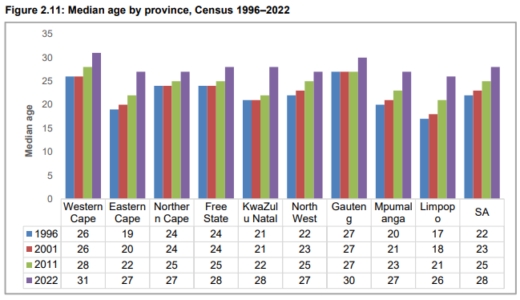
While results indicate that the median ages increased consistently over the last 22 years, Limpopo was the only province to record a low median age (26) across all four censuses.
The median age provides an indication of whether the population is young, intermediate or old.
Limpopo was also one of two provinces that recorded the lowest divorce rate in the country at 0.8%, while 63% of the province has never been married.
An overall 86,8% of the province practice Christianity while 6.3% of the population cite Traditional African as their religion. A total of 5.1% of Limpopo residents say they have no religious affiliation.
Language:
Sepedi was recorded as the fourth most spoken language in South Africa, with 55.5% of the province recording it as their home language.
Sepedi is also spoken in Gauteng (12.6%), Mpumalanga (10.3%) and the North West (2.1%).
Other languages spoken in the province include Tshivenda (17.4%) and Xitsonga (17.3%) with only 2.3% and 1% of the province listing Afrikaans and English as their home languages, respectively.
Migration:
Limpopo recorded the largest negative net-migration which is due to the largest out-migration rate in the country with 215 274 people migrating out of Limpopo.
Among persons migrating into Gauteng, a high number of them indicated that they were born in Limpopo (1 378 304) and outside South Africa (1 185 925).
Education:
Limpopo is among three provinces that showed the largest growth in attendance at educational institutions betweem 1996 and 2022 with 5.8% while it is also one of four provinces that has consistently displayed attendance levels at schools above the national average across all the census years.
However, Limpopo had the highest percentage of persons with no schooling, which was above the national average of 6,9% at 14.1%.
Water and Sanitation, Housing and Electricity:
Limpopo recorded 1 811 565 households during the Census 2022 with an average of 3.6 people per household.
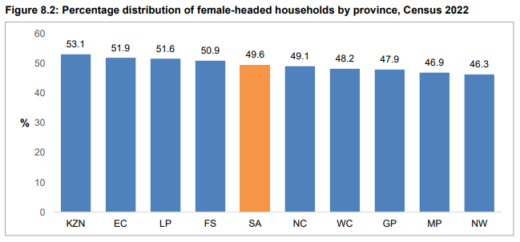
The province recorded the third highest prevalence of female-run households in the country at 51.6%, while results show that almost all households in Limpopo (94,7%) resided in formal dwellings.
Stats also show that slightly less than two-fifths (37,9%) of households in Limpopo occupied their dwellings rent free.
Households in Limpopo also recorded the lowest proportion of government subsidised dwelling/RDP housing (18,3%) which is well below the national average of 29,9%.
Less than one-third of Limpopo’s population (31.4%) had access to piped water inside their dwelling while a sizeable 20,5% of households have no access to piped water.
A total of 54.5% of households in the province recorded water interruptions, placing the spotlight on access to basic services across Limpopo.
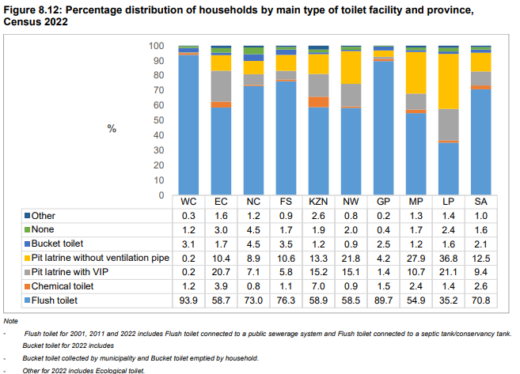
The issue of pit latrines remains a problem in the province with majority of the households in Limpopo, i.e. more than half (57,9%), used a pit latrine with/without ventilation pipe as their main type of toilet facility.
Agriculture:
Limpopo was one of three provinces with most agricultural households (16,3%) in 2011 but declined in both 2011 and 2022, recording a low 21,1%.
However, the province leads as the top province in terms of production of grains, food crops and industrial crops at 38,5%.
Limpopo recorded 480 680 backyard farmers, 19 902 people with farm land, 12 907 people with communal land and 6 567 with ‘other’.