Rising cost of living: Locals downgrade standards
Small business owners have not expressed confidence in the level of their growth over the past year and predicted heading for the worst in the coming years.
POLOKWANE – Residents in middle to low income groups in and around the city are downgrading their standard of living to accommodate the rising costs of not only consumables, but also services such as transport, municipal bills and electricity.
Many are struggling to maintain their vehicle and bond repayments, often extending their repayment terms, while others simply opt for cheaper alternatives. This is according to local economist Baneng Nape, who added that residents in townships are often at an advantage in tough economic times, as they have the benefit of either free or low-cost housing, cheaper public transport, electricity subsidies, sufficient space and the will to use fire to cook or boil water compared to city residents who rely on more expensive and convenient energy sources such as solar panels and inverters.
Nape’s analysis is based on Finance Minister Enoch Godongwana’s budget speech last week in which he aimed to inspire economic confidence in citizens, projecting average growth of 1.6% in the domestic outlook between 2024 and 2026. This is from an estimated real gross domestic product (GDP) growth of 0.6% last year, a figure that was down from the 0.8% reached in 2022.
Godongwana’s positive outlook was supported by “expected easing of power cuts as new energy projects begin production, and as lower inflation supports household consumption and credit extension”, according to government strides presented by President Cyril Ramaphosa during his 2024 State of the Nation Address earlier this month.
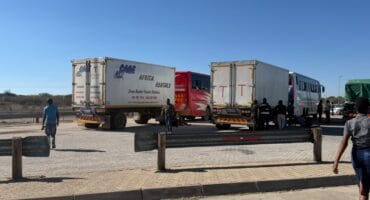
Nape, however, argued that if political interference does not seize soon and administrative government not act fast enough to repair persistent constraints in the electricity supply, freight rails in Limpopo and beyond; the two classes of society prominent in Polokwane may scale down their basic needs even further – “a recipe for disaster”, he warned.
Limpopo Chamber of Commerce and Industry president, Albert Jeleni also forewarned that local tourist attraction sites, information technology consultants, and mines among other domestic economic contributors may sell off their establishments to overseas investors due to the financial losses attached to poor road conditions and power cuts observed in intervals, among other reasons.
“Foreign owners will easily exacerbate prices and reduce local skilled and bright business minds to labourers,” he warned.
It has been reported over the last year that global enterprises employing thousands have threatened to take business elsewhere if loadshedding does not end soon. This would create an increased reliance on the Social Relief of Distress (SRD) grant received monthly by 8.5m South Africans from tax payers in the 2022/23 financial year.
But, said Jeleni, agriculture, mining and tourism remain fertile grounds for business but require collaboration among small and medium-sized enterprises (SMEs) to succeed at it.
“Buy raw materials from fellow local businesses when you manufacture, consider close transport services first and encourage growth. Be loyal to each other in selling goods and services. Avoid negative competition in order to compete with the global market,” he advised.
Government has also offered various support through development agencies to many start-ups.
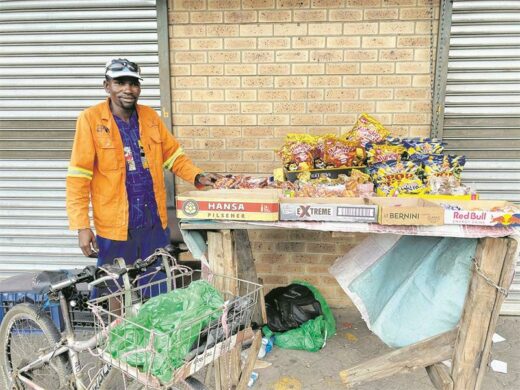
Even so, some small business owners have not expressed confidence in the level of their growth over the past year and predicted heading for the worst in the coming years if the cost of the products they sell continue to escalate.
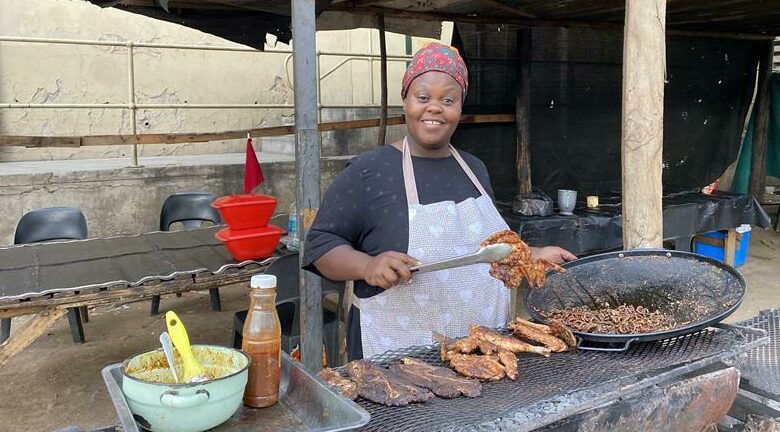
Mokgadi Mokwele said she barely makes R100 profit a day from selling a plate of food at R30 after paying her business expenses.
“Last year this time, frozen chicken retailed for around R43, and today I bought it for R70. I pay my helper R100 and R30 for transport daily plus another R100 for equipment storage paid weekly. Business is, however, slightly better in the first and last weeks of the month,” she explained.
In what is presumed to be his final State of the Province Address at the Jack Botes hall today (Thursday), Premier Chupu Mathabatha who served two terms, is expected to “illustrate how Provincial Government improved socio-economic conditions of the ordinary people in Limpopo”.
This is according to the Speaker of Limpopo Legislature, Rosemary Molapo who updated members of the media on Tuesday on their readiness to deliver the address.
A group of unemployed graduates also said they would protest in graduation regalia outside of the venue today, calling on government to fulfill on its promise for permanent professional work. Most of them claim to have been funded by tax money through the National Student Financial Aid Scheme.