WW2 veteran (104) wants government to honour him
Sadiki recounted how black South African soldiers, after surviving the horrors of World War II, returned home only to be forgotten.
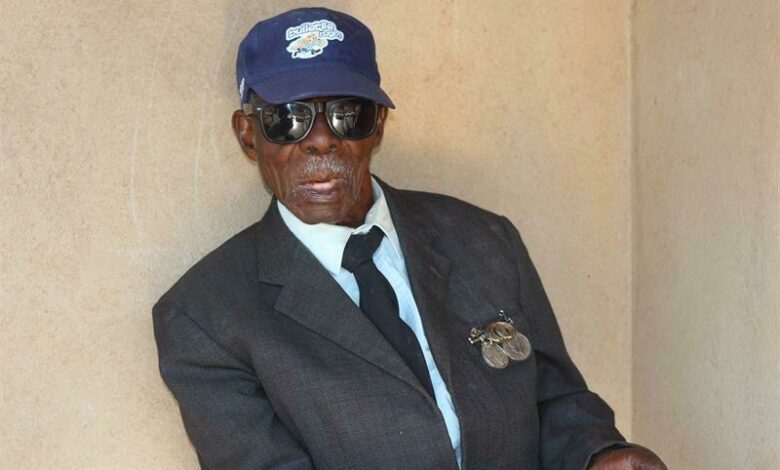
LIMPOPO – William Sadiki, a 104-year-old veteran from Manavhela in the Kutama area, who fought in the Second World War, is concerned that the government is turning a blind eye and not honouring him while he is still alive.
Sadiki, who serves as a role model to many, said most of those who fought in World War II have already passed away and expressed a desire to meet President Cyril Ramaphosa to share his wartime experiences before he dies.
Sadiki is now too weak to walk, his eyesight has greatly diminished, but his hearing remains strong, and despite speaking slowly, his mind is sharp enough to communicate.
“A long time ago, we lived in makeshift thatched huts. There were no houses like you see today, no schools, no clinics, no hospitals, or roads. We travelled long distances on foot because there were no cars. Elders tilled the land for food, while young boys and girls, like us, looked after the goats. We drew water from fountains, not from taps as we do today,” Sadiki reminisced.
Sadiki recounted how black South African soldiers, after surviving the horrors of World War II, returned home only to be forgotten. He believes he is the last surviving black South African who fought in that war. His memory is fading, and his eyes wander.
Under the Defence Act of South Africa at the time, black soldiers like Sadiki marched into battle without being allowed to bear arms. However, testimonies have emerged over the years revealing that black soldiers were sometimes given arms on the battlefield as a survival strategy, leading to black and white soldiers fighting side by side.
Trained in military policing, first aid, convoying, and propaganda, Sadiki was posted for service in 1941 at the age of 21 with the Native Military Corps and was discharged in 1945.
“After the war, we were given awards, including the certificate of service, the war medal, and the Africa Service Medal. The war was quite an unusual experience for me,” he said.
Sadiki explained how he ended up in the army. “I was working on a farm near Kutama when two white men who visited the Kutama royal kraal recruited me. I received training in Springs and went to the battlefield for a year. I became a corporal, training new recruits in gun handling, convoying, and physical exercise.”
Sadiki has eight surviving children from two wives, four of whom are now deceased. He says he is proud of his contribution to the history of the country but is disappointed that he remains poor despite his wartime contributions.
He has requested that the government honour him while he is still alive, rather than posthumously.