
Polokwane’s 4IR ambitions hampered by equipment shortage
Despite skilled youth ready to enter the fourth industrial revolution, industrialisation efforts are hindered by a lack of essential equipment.
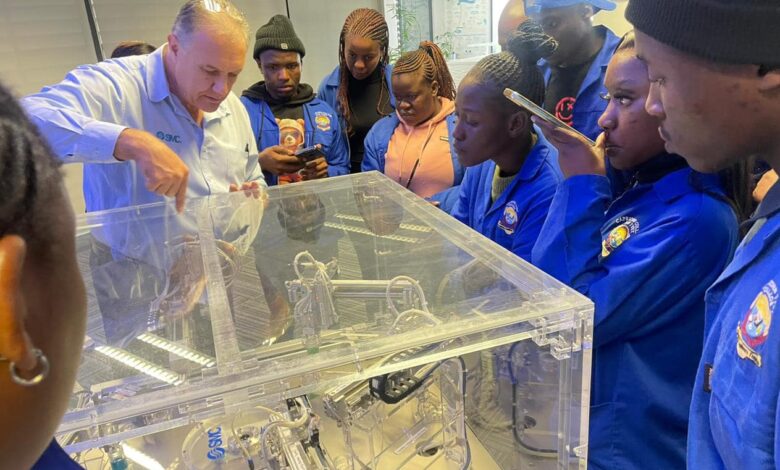
POLOKWANE – “Polokwane possesses the skills necessary to elevate industrialisation to the standards of international regions already exploring the fourth industrial revolution (4IR). However, a lack of support in acquiring essential equipment hampers the city’s efforts to eliminate unemployment among its skilled youth.”
Johannes Mamabolo, acting senior lecturer in mechatronics at the Capricorn TVET College (Polokwane campus) recently told BONUS that his students demonstrated their readiness to enter the internationally competitive 4IR market, which involves complex robotics, mechanical and engineering systems, during a two-day educational excursion to several mechatronics factories in Gauteng last week.
Unlike on-campus practicals that involve simulation equipment, these visits provided students with exposure to real-life solutions involving machines and equipment relevant to their course, he said.
This initiative is part of the college’s commitment to work-integrated learning, according to college spokesperson Madire Mashabela.
Mamabolo believes that the students’ acquired skills could yield significant benefits if there was sufficient support for acquiring or manufacturing the necessary equipment to maximise the potential of the mechatronics industry.
“We honestly cannot say we are not skilled to compete on the international market for the 4IR; we just need more production line equipment, and that requires support in the form of finance,” he said.
Increasing support for this industry would create a diverse job market and help to address the pressing issue of unemployment in the country and its regions.
The unemployment rate in Limpopo increased to 32.7% in the first quarter of 2024, up by 2.4 percentage points from the previous quarter, according to the Quarterly Labour Force Survey released in May.
The survey highlighted significant job losses in several sectors: • Agriculture: 6 000 jobs lost.• Construction: 57 000 jobs lost. • Community and Social Services: 16 000 jobs lost.
Recently appointed Premier Dr Phophi Ramathuba expressed her commitment to improving industrialisation to create jobs and tackle the triple challenges of unemployment, poverty, and inequality.
Her administration aims to provide the necessary support to leverage the region’s skilled youth and advance industrialisation in line with 4IR standards.