Premier Ramathuba calls for urgent infrastructure reform in Limpopo
Limpopo Premier Phophi Ramathuba has issued a strong warning over poor infrastructure planning and project failures, citing delays, deaths and rising public mistrust.
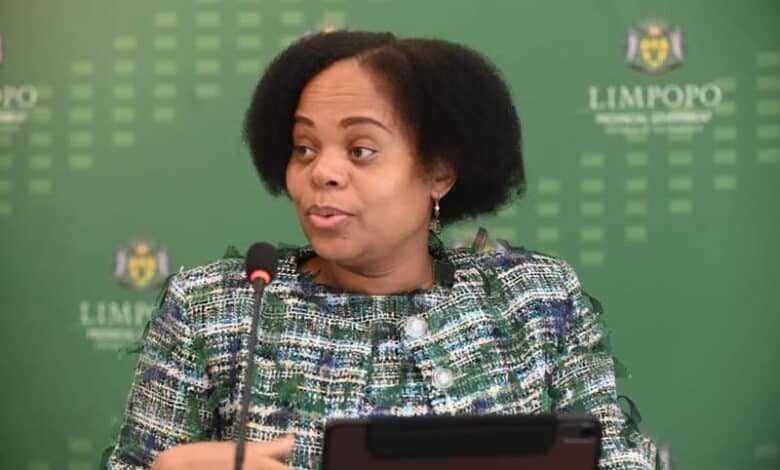
POLOKWANE – The Premier, Dr Phophi Ramathuba delivered a scathing critique of the province’s ongoing infrastructure challenges, calling on government officials to urgently address poor planning, stalled projects and the failure to uplift rural and marginalised communities.
Speaking at the Limpopo Provincial Infrastructure Workshop held at Mekete Lodge last Wednesday, she acknowledged the growing dissatisfaction among citizens.
“Are we equal to the tasks at hand? The current state of our infrastructure management leaves much to be desired.
Poor planning has, at times, led to projects without budgets to match our bold declarations,” she remarked.
She warned that the province faces mounting pressures, including rising unemployment, shrinking economic opportunities and a deteriorating public trust in government.
“Our society’s despondency is tangible. Their impatience waits for no invitation, and this emphasises the urgency with which we must act,” she said.
The workshop brought together representatives from provincial departments, municipalities, state-owned entities, and the private sector to discuss strategies for accelerating critical infrastructure delivery.
Key goals included identifying existing bottlenecks, strengthening interdepartmental coordination, and exploring innovative funding models to tackle Limpopo’s growing infrastructure backlog.
The premier furthermore highlighted the need for competent leadership, warning that continued project failures, such as flooded roads or incomplete health facilities, not only undermine public trust but also cost lives.
She cited the example of Maputa Malaji Hospital, where the budget spiraled from R300m to over R900m, resulting in delayed access to healthcare and contributing to increased mortality rates.
She further criticised the trend of under-expenditure in infrastructure budgets, urging departments to ensure monies are fully utilised and not returned to the Treasury.
In contrast, she commended the Department of Cooperative Governance, Human Settlements, and Traditional Affairs for effectively spending its allocated funds.
Drawing comparisons with international best practices, Ramathuba referenced China’s strict accountability measures, where non-performance is treated as seriously as corruption, sometimes resulting in dismissals or arrests of public officials.
Her message was clear: Limpopo’s infrastructure sector must undergo urgent reform, adopt stricter accountability mechanisms, and deliver tangible results, or risk losing the trust and lives of the very citizens it is meant to serve.