
Look up! The southern lights may be visible from South Africa
Experts say parts of South Africa could witness a rare Southern Lights display as a G4 geomagnetic storm peaks this week.
POLOKWANE – A rare solar storm is expected to light up the night skies across parts of South Africa this week, with experts saying that the Southern Lights (Aurora Australis) could possibly be visible from dark areas across the country.
The South African Space Weather Centre has confirmed that a powerful geomagnetic storm, triggered by multiple solar eruptions from the sun, is heading toward Earth.
The storm, classified as a G4 (severe) geomagnetic storm, is expected to peak between today and tomorrow (November 12-13).
This is one of the strongest solar events in recent years, with scientists comparing it to the rare display seen in May 2024.
Why is this happening?
Three massive bursts of energy, known as coronal mass ejections, were launched from the sun over the past few days.
When they reach Earth, these charged particles interact with the planet’s magnetic field and sometimes cause the breathtaking light displays known as auroras.
Where and when to look
According to Vox Weather, the aurora was already visible on Tuesday night and is expected to be brighter from tonight.
@vox_weather_girls 🌌 SOUTH AFRICA, LOOK UP TONIGHT! The Southern Lights might just light up our skies 😱🔥 Don’t sleep on this – between 9PM & 4AM, you could witness the Aurora Australis right from home 🇿🇦✨ #AuroraAustralis #SouthernLights #WeAreSouthAfricans#greenscreen #greenscreenvideo ♬ Space – Andy Ms
While Polokwane residents are not in the best position to see the aurora directly, areas farther south, including the Northern Cape, Eastern Cape highlands, and coastal regions, could be in for a treat.
However, according to the We Are South Africans Facebook page, the eastern escarpment of South Africa, including Limpopo, may be able to see the spectacle with the use of a camera.
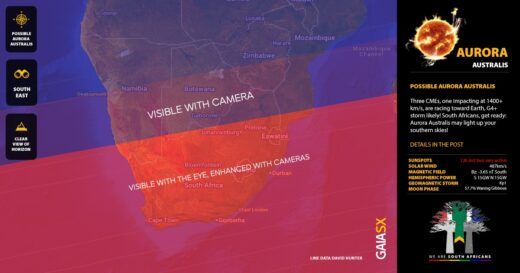
Anyone hoping to see the Southern Lights should head away from city lights, find an open view of the southern sky and look low toward the horizon.
Using a camera with a long exposure might help reveal colours invisible to the naked eye.
The best time to try and spot the aurora is between 21:00 and 04:00.
“Watch for feint green or red arcs low on the southern horizon,” Vox Weather says.
What residents should know
The storm may also cause minor disruptions to GPS and satellite signals, and possibly affect power systems in certain areas, although experts stress there is no direct danger to people or animals.
Authorities are urging anyone relying on GPS or communications equipment, such as pilots and mariners, to stay alert for temporary signal interference during the peak storm period.
If skies remain clear, South Africans could be treated to a rare natural spectacle, one that most people only ever see in photographs from Antarctica or New Zealand.