Polokwane residents face water, electricity tariff hikes from July
Polokwane's draft budget proposes increased water tariffs and electricity prices from July, with DA warning of unaffordable service hikes amid poor infrastructure.
POLOKWANE – During the recent council meeting of the Polokwane Municipality, Mayor John Mpe tabled the local authority’s 2026/27 Integrated Development Plan (IDP) and draft budget for the 2026/27 financial year, amounting to R7.442b – made up of an operating budget of R6.148b and a capital budget of R1 488 370 610.70 (incl. VAT).
Water and electricity up from July
The draft budget provides no relief for residents, and the water and electricity tariffs will, in particular, hit consumers who are already cash-strapped, hard.
Tariff increases will be between 4.7% and 9.01% for municipal services and assessment rates.
Tariffs for services (other than electricity and water) will increase by 4.7%, which is CPI plus 1%, while water tariffs will increase by 7.43%, which is the tariff increase by the Lepelle Northern Water.
Electricity tariffs will increase by 9.01%. However, this is subject to Nersa finalising the process before May.
Assessment rates on properties will be based on 4.7% and a tariff increase of 4.7% for sewerage services and waste removal from July 1, 2026 is proposed.
Provisions made, but with strict income caps
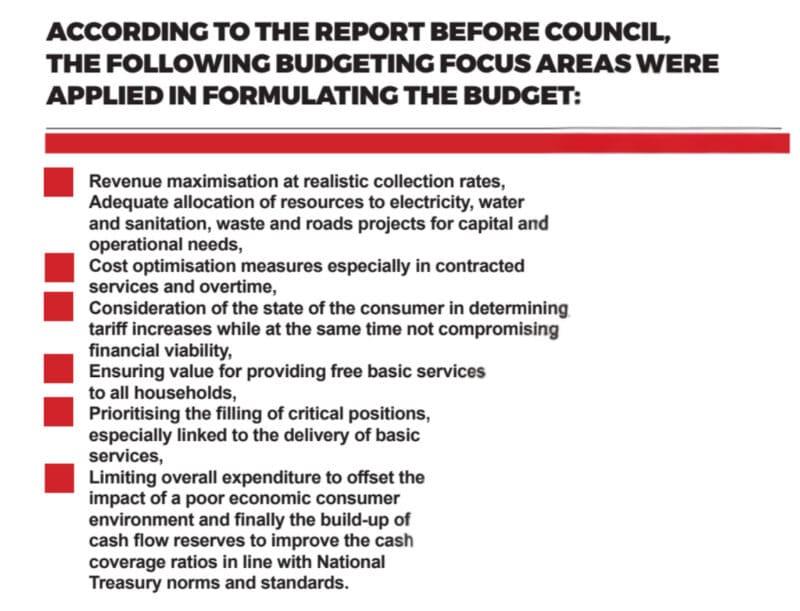
Provision is made for the subsidising of indigent households to around R187m. This subsidy includes a free 6Kl of water, 100 units of electricity and a 100% subsidy for refuse removal and sewerage charges.
A 100% rebate on assessment rates will also be given for indigent households. To qualify as indigents, the household income must not exceed R5 960.
The policy is reviewed to also cater for child-headed families and the qualifying people with disabilities.
The municipality further grants 80% rebates to owners of residential properties who depend on pensions or social grants provided the household income does not exceed R11 532.80.
Challenges to setting the budget
The primary challenges faced while setting the budget were the ongoing difficulties in both the national and local economy, as well as the rising costs of bulk water and electricity. These factors are putting upward pressure on service tariffs for residents.
Continuous high tariff increases are not sustainable, as there will come a point where these services become unaffordable.
Huge backlogs in service delivery projects and further demands due to urbanisation, economic slowdown and unemployment impacts on revenue collection, and limited own funding to fund much-needed infrastructure were also factors.
DA concerned with increases amid poor infrastructure
“Although the electricity and water increases are informed by increases from the bulk suppliers, Eskom and Lepelle Northern Water (LNW), the DA is concerned that the increases are proposed without performing any cost analysis that was confirmed by the chairperson of the audit and performance audit committee,” according to Jacques Joubert, DA Polokwane spokesperson on finance in the municipality.
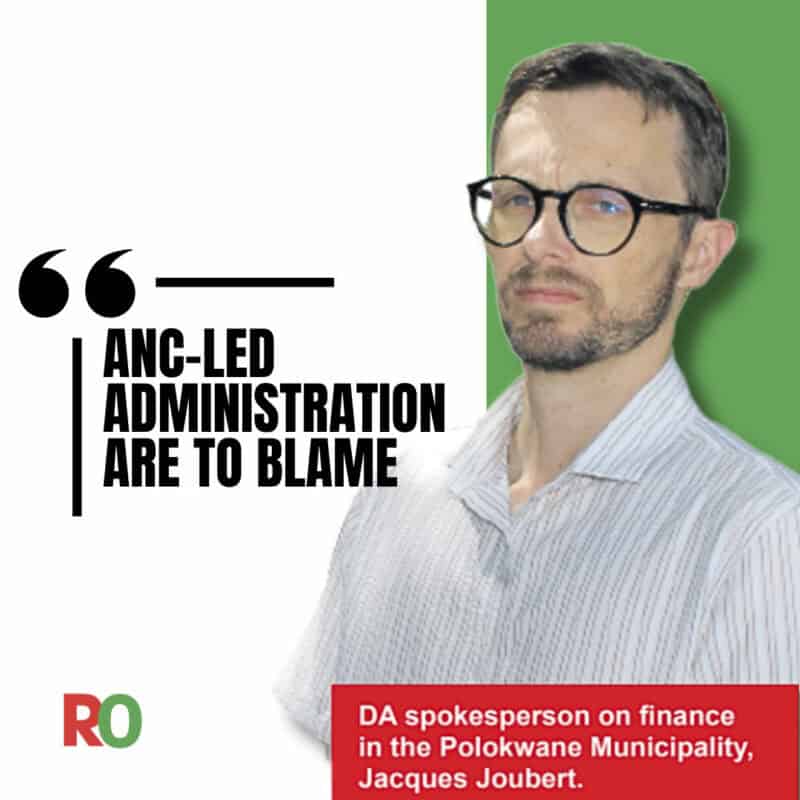
“Tariff increases in the midst of periods of dry taps and deteriorating infrastructure, especially road infrastructure, will leave a sour taste in the mouths of residents. This, whilst once again, strategic planning sessions were held at luxurious golf estates at great expense outside the borders of the city. Tariff increases and the required service delivery outcomes are interlinked,” Joubert reckons.
The DA also raised serious concerns that the current proposed capital budget does not adequately cater for the current roads infrastructure crisis.
They implored the administration to consider all avenues, including approaching National Treasury and the Infrastructure Fund, to adequately address the crisis.
ANC-led administration to blame, says DA
“Sufficient road maintenance has not been done for decades on many roads and are past their economic lifespan which requires total resurfacing in numerous roads all across the city.
The recent heavy rains are not the problem here, poor planning and spending on infrastructure maintenance by the ANC-led administration are to blame,” Joubert explained.
Public encouraged to participate
Public participation meetings will be held across all clusters of the city during this month, and Joubert urges the public to do their part and participate in these democratic processes.
The city cluster, comprising Wards 19, 20, 21, 22, 23 and 39) will convene on April 9 at the Jack Botes Hall at 18:00.