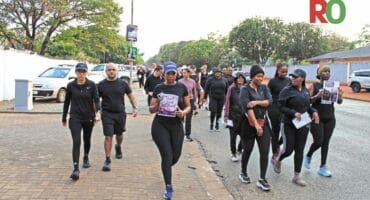
Legal Aid strike disrupts court schedules in Polokwane
While the protest lasted only two days, its effects may be felt in local courts for much longer.
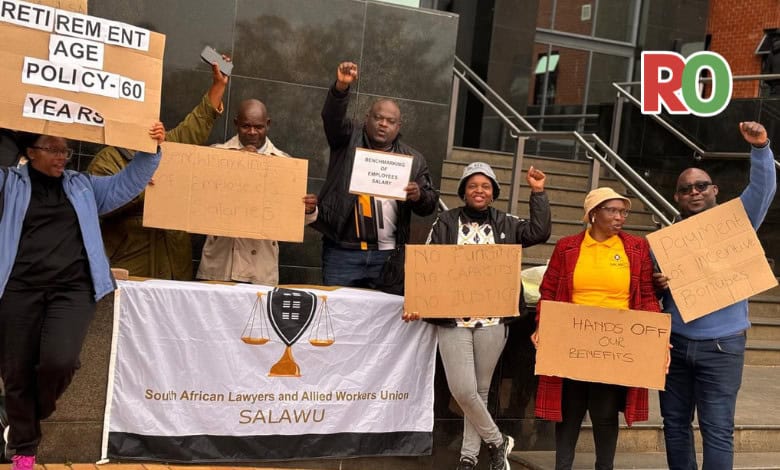
POLOKWANE – The recent two-day strike by lawyers and other staff members of Legal Aid South Africa has disrupted court schedules, with postponed cases now having to be accommodated on already congested court rolls.
More than 50 Legal Aid employees in the city alone downed tools to participate in the labour action.
Labour dispute spills into the justice system
This is according to South African Legal Workers Union (Salawu) convener for Limpopo and Mpumalanga, Desmond Nonyane, an attorney with the government-funded legal assistance body who regularly appears in the Polokwane High Court representing clients who cannot afford private legal representation.
The irony of legal professionals, whose work centres on defending rights, pursuing justice and resolving disputes, taking to the streets over labour issues was evident during demonstrations held in Gauteng on Wednesday and in Polokwane on Thursday.
Memorandums of demand were handed to both the Judiciary and Legal Aid South Africa.
Union outlines wide-ranging list of demands
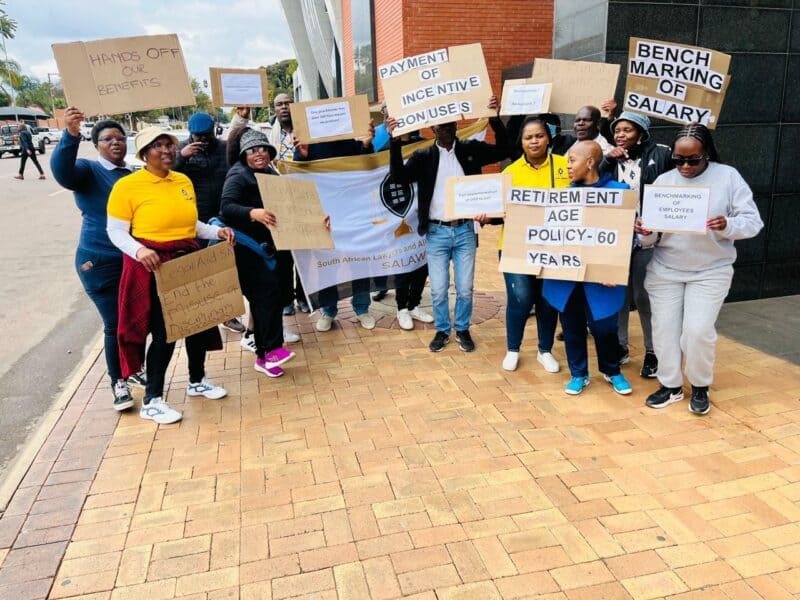
In Polokwane, Salawu members demonstrated outside the High Court, giving the recipients 10 days to respond to 11 demands.
These include meaningful consultation on matters affecting employees, reversing the retirement age policy from 60 to 65 years, reinstating employees retired since January under the current policy, improved incentive bonuses, salary increases, filling frozen posts, allocating reasonable workloads, investigating alleged abuse of authority and irregular disciplinary processes, and calling on the Board of Directors to resign over what the union describes as several failures.
The response deadlines fall on Saturday and Sunday respectively.
Impact on courts remains under scrutiny
Asked whether the strike had affected court operations, Limpopo National Prosecuting Authority (NPA) spokesperson Mashudu Malabi said matters she attended in the Polokwane High Court were not interrupted by the strike and that some Legal Aid staff members were present. She added that lower courts may have been more severely affected.
Nonyane acknowledged that the strike may have had the greatest impact on lower- and middle-income individuals who rely on Legal Aid services. He noted that under normal circumstances, private attorneys would still charge for court appearances, while prosecutors, magistrates, judges and other court officials continue reporting for duty.
“It costs both the state and independent representatives more money, but we had tried other avenues to engage the employer and it fell on deaf ears,” he said.
Backlogs and workloads remain key concerns
Nonyane said many affected matters had been on court rolls for months.
“There were efforts to reduce the backlog our absence would create, but there was no way around it. Even if we worked twice as hard, we are understaffed and carry too many cases each,” he added.
He said the union remains committed to engaging with its employer in good faith but would not speculate on possible action should the demands not be met within the stipulated timeframe.
Legal Aid South Africa and the Judiciary confirmed to Polokwane Observer that they had received the memorandums.