
Polokwane academic Dr Tiny Mona earns second PhD milestone
The University of Johannesburg graduate’s latest research examines gender gaps among senior public service managers in South Africa and the Netherlands.
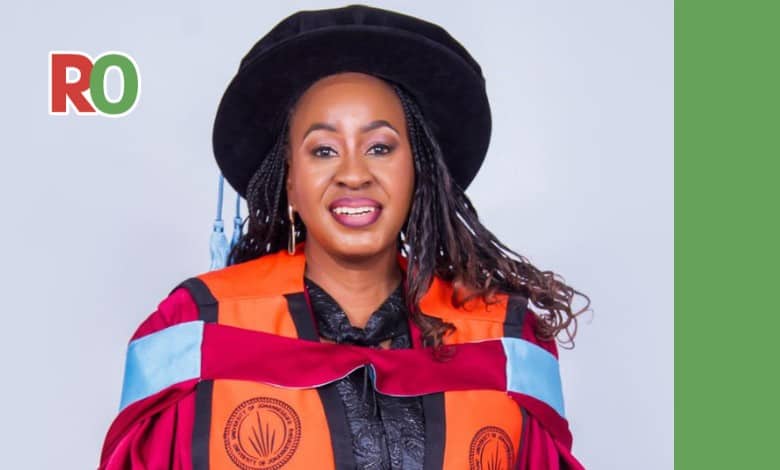
POLOKWANE – Walking on stage to receive a second PhD is a surreal, elite milestone achieved by only a fraction of a percent of academics worldwide.” These are the words of Dr Tiny Mona, who has achieved a remarkable feat by obtaining her second doctorate.
Sharing the moment with her 88-year-old mother, former principal Susan Thandi Mona, made the occasion even more meaningful.
The moment was filled with emotion – a sense of sheer relief as the crushing weight of the thesis deadline was finally lifted, and the closure of a chapter well-written. Her parents, including her father Elson Milaleni Mona, played a pivotal role in her intellectual guidance and education.
A rare achievement in academia
Dr Mona holds PhDs in both sociology and political studies. She explained that she chose sociology for her first PhD because she wanted to enhance and advance her analytical skills, to critically examine systemic inequalities and to develop evidence-based strategies for positive societal change.
“I was able to dive deep into sociological theory and advanced data analysis. I was able to understand human behaviour and social structures, and I was able to positively influence public policy by developing a family-centred and gender-sensitive antiretroviral therapy adherence model,” she explained.
Research focused on gender and social change
Her second PhD, obtained at the University of Johannesburg, is in political studies, focused on women in senior management within the public services of South Africa and the Netherlands. She said it was driven by the need to address persistent gender gaps in governance, to analyse the limits of current administrative policies, and to produce cross-disciplinary, advanced research on power dynamics.
“I chose to compare South Africa with the Netherlands because I studied gender studies at Utrecht University in the Netherlands as a young student and realised that the Netherlands had a robust, legally grounded gender framework for its public service, making it a leading model for public-sector diversity and inclusion in Europe,” she added.
Both of her PhDs took her three years to complete.
She explained that her family and supervisor walked her through the journey, providing tremendous emotional support.
The most challenging part of her second PhD research was data collection, which proved extremely difficult as it was hard to access research participants, particularly politicians in both countries. Through her second PhD research study, lessons are drawn between South Africa and the Netherlands, and a conceptual model has been developed which seeks to improve the experiences of women in senior management positions in the public service.
Dr Mona’s advice to people who want to embark on the same journey is to remain persistent and not to take no for an answer.
“Choose a topic that you are passionate about, so that when it becomes difficult, your passion for the subject can keep you motivated,” she added.
Dr Mona plans to share research findings
Now that she has completed her research, she plans to present and share her findings with all national and provincial government departments that participated in the research study in South Africa and the Netherlands.
She also plans to write and publish in Department of Higher Education and Training (DHET) accredited journals, and to publish findings in newspapers to coincide with calendar events such as Women’s Month.
“I remain actively involved in academia by attending supervision and mentoring seminars organised by the University of Johannesburg for academics and postgraduate students. I plan to attend post-doctoral seminars,” she added.