
Limpopo farmers urged to brace as record El Niño looms
The strongest El Niño on record is coming and Limpopo farmers are preparing, but this could eventually hit your food budget too.
POLOKWANE – On a farm just outside Polokwane, the Mockford family is already preparing for a summer the South African Weather Service (SAWS) says could be the strongest El Niño event in living memory.
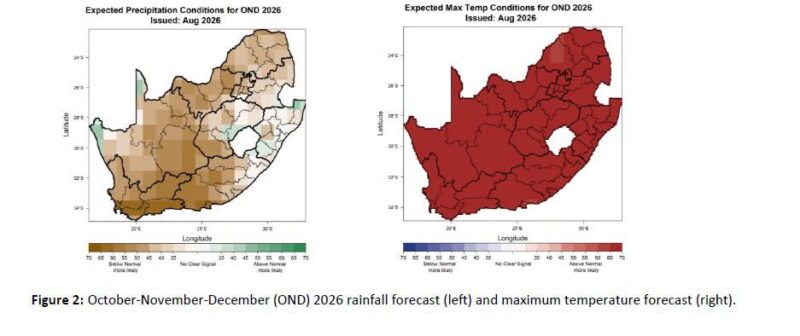
SAWS’ warning could not be clearer: below-normal rainfall and above-normal temperatures are expected across most of the country from October to December, with conditions likely to persist through the summer.
The current event is already showing exceptional ocean warming, with the latest forecasts indicating it could become the strongest El Niño on record.
READ MORE: El Niño set to bake Limpopo from October
“We have started to plan for a very dry October to February, March,” says Brad Mockford of Mockford Farms. The family operation, which spans three generations, includes pig, cattle and sheep farming.
Managing stock and water
Livestock farmers will be severely affected, according to the Endangered Wildlife Trust; poor rainfall reduces grass growth, weakens veld condition and lowers the land’s ability to support livestock.
Water sources run out faster, concentrating pressure on what remains and speeding up degradation through overgrazing. Animals experience lower fertility rates, slower weight gain, higher disease vulnerability and greater mortality when supplementary feeding falls short.
To manage these impacts, experts advise early reductions in stock numbers to match the diminished capacity of the stressed environment.
The Mockfords say the farm is checking its stocking levels across all enterprises.
“We make sure we are not excessively overstocked with game and cattle. As we get closer to the time with the pigs, we will check stock density and sell ahead where possible so that we do not carry excessive stock.”
The farm has also focused on water security.
“In terms of boreholes, we have cover and backup cover and will test them in September to see what their levels are. We made improvements to our dams to ensure that whatever rain we get, they will be able to hold it sufficiently.
“The general maintenance team has been instructed to make sure there are no leaks, and we preserve water wherever we possibly can.”
What El Niño means for food prices
Agriculture is one of the sectors hardest hit by El Niño conditions. When planting season rainfall is scarce, key summer crops suffer significant losses, while heat stress during flowering and grain filling further depresses yields and pushes up irrigation requirements.
The El Niño forecast arrives as farmers in Limpopo and across South Africa are already contending with higher input costs, which have been squeezing profit margins.
Despite these pressures, the country enters this period in a stronger position than during previous major droughts.
August data from the Crop Estimates Committee shows the 2025/26 summer grain harvest was exceptionally large, with the commercial maize crop expected to be the biggest on record at approximately 17.36 million tonnes.
This bumper crop, combined with existing stockpiles, should be enough to meet domestic needs while still leaving around three million tonnes for export markets.
However, the real concern lies further ahead. If the 2026/27 season brings poor rainfall, the next harvest could be significantly smaller. While this may not mean empty shelves, it could push up the cost of staple foods, hitting low-income households the hardest.
For farmers, the dry conditions could mean additional costs. Agriculture Minister Willie Aucamp has assured farmers that government will work alongside the sector to mitigate the impact of drought.
How long will it last?
El Niño is expected to strengthen and could persist until at least March or April next year. Once the system enters its weakening phase, rainfall conditions often improve.
Limpopo residents and farmers are therefore advised to brace for what could be one of the most challenging summers in years.