
What SA’s asylum ruling actually means, and what it doesn’t
Here's what you should know about the Constitutional Court’s asylum seekers ruling, what it really means and who it affects.
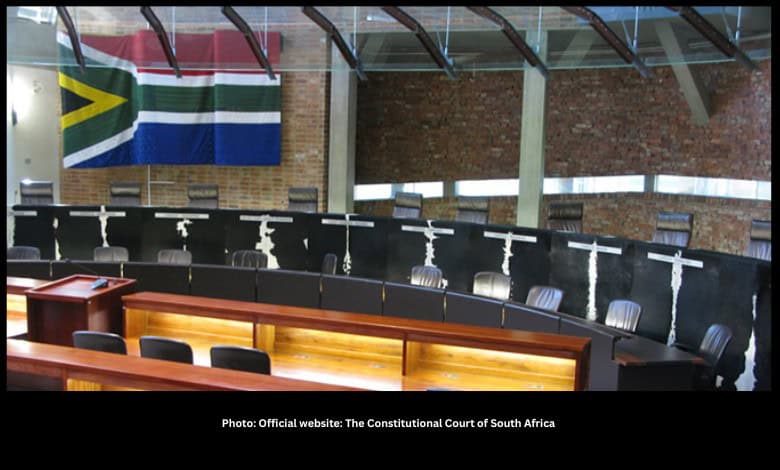
LIMPOPO – A Constitutional Court ruling on asylum applications has prompted confusion over who can apply for refugee protection, what rights asylum seekers have and whether the decision changes South Africa’s immigration laws.
The judgment, handed down on July 7, 2026, found that certain provisions of the Refugees Act were unconstitutional because they could prevent people from accessing the asylum system without their claims being properly assessed.
The ruling has since drawn renewed attention following long queues at refugee reception offices and the Department of Home Affairs’ withdrawal of an implementation directive on October 9.
In reality, the ruling does not automatically grant refugee status to foreign nationals, but it does mean certain procedural requirements cannot be used to block people from having their asylum claims assessed.
Here is what the judgment means and why it matters.
The Constitutional Court ruling
The case, brought by the Scalabrini Centre of Cape Town and another applicant against the Minister of Home Affairs and others, challenged provisions of the Refugees Act that restricted access to the asylum process.
The court found that people could be prevented from having their asylum claims considered because of procedural issues, including:
- Entering South Africa irregularly
- Not having an asylum transit visa
- Failing to report to a refugee reception office within the prescribed period
These requirements could prevent an applicant from reaching the stage where their reasons for seeking protection were properly considered.
The court declared the relevant provisions unconstitutional, reaffirming that asylum claims must be assessed in accordance with South Africa’s constitutional and international legal obligations.
Does this mean anyone can stay in South Africa?
No. Being allowed to apply for asylum does not mean an application will be approved.
The ruling concerns access to the asylum determination process, not automatic recognition as a refugee or permanent residence.
Applicants must still undergo the formal process through which authorities assess whether they qualify for refugee protection under South African law.
Applications that do not meet the legal requirements can still be rejected, and immigration enforcement remains in place.
Asylum seeker vs refugee, what’s the difference?
| Meaning | |
|---|---|
| Asylum seeker | Someone who has asked for protection in another country and whose claim has not yet been finally decided |
| Refugee | Someone who qualifies for protection under the applicable legal criteria, generally involving a well-founded fear of persecution on recognised grounds |
The two terms are not interchangeable.
The July judgment means that certain procedural obstacles cannot prevent people from accessing the process through which their claims are assessed. It does not mean every person who applies will be recognised as a refugee.
What ‘non-refoulement’ means
Non-refoulement is a legal principle that prohibits returning a person to a country where they face persecution or other serious harm covered by the applicable protection rules.
It is central to refugee protection because a person’s circumstances must be considered before they are returned to a place where they may face danger.
The Constitutional Court reaffirmed this principle in its July judgment, finding that procedural barriers should not prevent asylum claims from being properly assessed.
This does not mean that everyone who enters South Africa is automatically entitled to remain indefinitely. It only means the country must comply with its legal obligations when determining asylum claims and deciding whether a person can lawfully be returned.
Why the long queues?
Following the judgment, Home Affairs issued a directive on September 28 intended to guide refugee reception offices in accepting asylum applications.
The Inter-Ministerial Committee on Migration said on October 8 that the implementation process led to a surge in people seeking access to the system, overwhelming refugee reception offices.
The committee acknowledged that the department had struggled to cope with the numbers and said government was considering measures to improve processing capacity, identity verification and the handling of applications.
On October 9, Home Affairs announced that its director-general had withdrawn the directive.
The department said the implementation had overwhelmed offices, placed officials at risk and raised public-safety concerns. It said a fresh process would be undertaken to determine an appropriate and sustainable way to comply with the court order.
The withdrawal of the directive does not, by itself, overturn the Constitutional Court’s judgment.
Rejected applications
This is where a separate Constitutional Court ruling is important.
In May 2026, the court ruled in Director-General, Department of Home Affairs and Others v Irankunda and Another that the Refugees Act does not provide a right to submit repeated asylum applications after an earlier application has been finally rejected.
That case concerned whether applicants whose original claims had been rejected could submit further applications.
The May judgment and the July judgment address different legal questions. The May ruling dealt with repeat applications following a final rejection, while the July ruling dealt with procedural barriers that could prevent people from accessing the asylum system in the first place.
They should therefore not be treated as contradictory rulings on the same issue.
Why the ruling matters
The judgment raises questions about how South Africa balances border management and immigration enforcement with its legal duty to protect people who genuinely qualify for asylum.
For people seeking protection, the ruling addresses the risk of being excluded from the asylum process because of procedural requirements before their claims are properly assessed.
For government, it presents the challenge of implementing the court’s decision while managing applications, verifying identities, preventing fraud and enforcing immigration law.
For the public, it is important to understand that access to the asylum process is not the same as permission to remain permanently in the country.
The legal obligation to assess asylum claims and the government’s responsibility to manage immigration are not mutually exclusive. The challenge is ensuring that both are carried out lawfully and effectively.
The bottom line
The Constitutional Court did not grant refugee status to everyone entering South Africa. It ruled that certain procedural barriers could not be used to prevent asylum seekers from having their claims properly assessed. Whether an applicant qualifies for protection remains a separate legal decision.