
Buying property?
ALTHOUGH it is the appearance of a home that buyers often fall in love with, there is more to a home than meets the eye.
ALTHOUGH it is the appearance of a home that buyers often fall in love with, there is more to a home than meets the eye.
This is according to Adrian Goslett, CEO of RE/MAX of Southern Africa, who says that, regardless of whether a buyer is purchasing their first property or they have an investment portfolio of several properties, the fundamentals of purchasing a property never change.
“Property is a large investment. For many it is the largest financial investment they will ever make. For this reason it is important that buyers take their time and give their decision the consideration that it requires.
“While aesthetic appeal will play a role in the decision, other more crucial elements need to be considered such as the structural components of the property. Rectifying structural defects will be a costly affair that impacts on the home’s potential return on investment,” advises Goslett.
According to Goslett there is some protection offered to buyers by the Consumer Protection Act (CPA), in that it is the buyer’s right to be fully informed of all known defects that exist in the home they are purchasing.
However, it is worthwhile for a buyer to have the home inspected for defects that may have been overlooked.
“There is the chance that some defects may have been unintentionally missed or are simply unknown to the seller. If this is the case, those problems will not have been disclosed in the sale agreement and it would be in the buyer’s best interests to either inspect the home themselves or have a professional assist them, a small price to pay considering the size of the investment,” he says.
Defects to look out for:
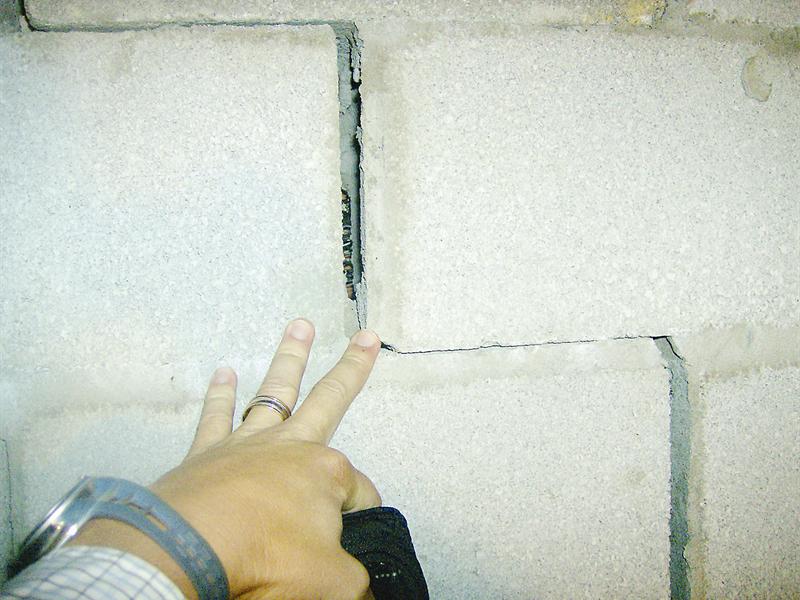
Cracks in the foundation walls:
Cracks can be hidden by layers of plaster and paint.
“Not every crack will mean that there is a major defect, in fact a fair number will be of little or no significance. However, some cracks could indicate structural damage that will be costly to fix. In some cases cracks occur in the walls when the foundation of the home has shifted. If this is what has happened, the crack will move along a horizontal plane, which is of more concern than a vertical crack,” Goslett explains.
The width of the crack is another consideration in determining the severity of the issue. Vertical narrow cracks are often not a sign of a foundational shift, while wide cracks should definitely be assessed.
The question is whether the cracked wall can continue to provide support to the structure or whe-ther it needs to be replaced.
Roof damage:
Yellowing marks on the ceiling is normally an indication that the roof is in need of repair. This should not be ignored as the roof provides the home with protection against the elements and if not repaired, could result in other problems forming such as structural damage or damp in the walls. Exposure to moisture will rot the wooden components inside the roof’s structure, which could lead to collapse.
If it is merely a matter of replacing broken or missing tiles, it can be a relatively cost-effective endeavour; however an old roof that has structural damage will cost a lot to replace completely.
Foundation drainage:
There must be sufficient and effective water drainage around the exterior of the home to avoid water pooling or damp problems in the low lying areas of the property. Not only can poor drainage cause mould and rot, but persistent water intrusion can compromise the structure of the foundation and be a very expensive problem to rectify.
Faulty electrical systems:
Legislation requires the homeowner to be in possession of a valid Electrical Certificate of Compliance (ECOC), which will ensure that that the electrical work and installations are safe and meet the required regulations of the South African National Standards.
It is important for a buyer to ensure the wiring installations in the home match those on the certificate and that they have been maintained throughout the period stipulated on the certificate.
Be aware of amateur repairs that have been completed by the homeowner, as these will not be covered on the certificate and could result in a faulty electrical system.