
The queen of gardens in your corner of paradise
Top rose grower, Ludwig Taschner, says, "it has to do with how much light falls on how large a leaf surface.
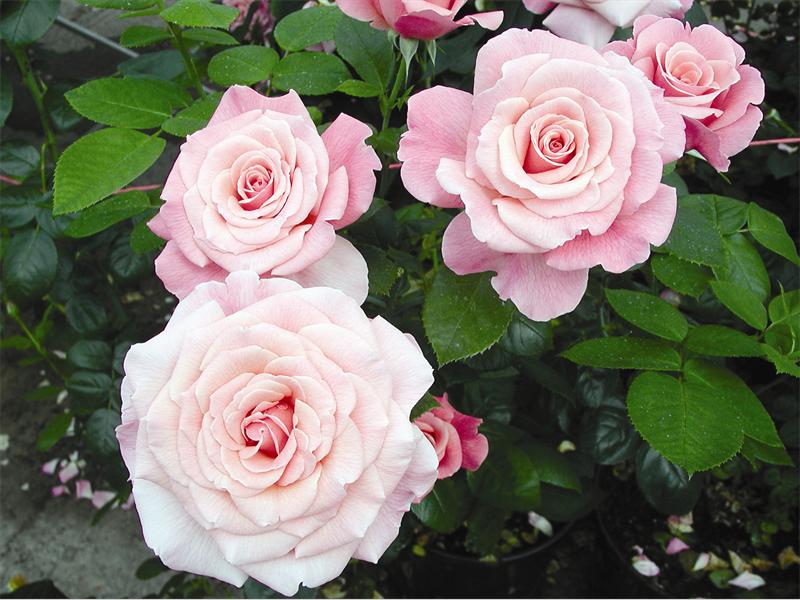
BREATHTAKINGLY beautiful and with a long flowering season, roses take pride of place in the summer garden.
There are very few gardeners who can resist the appeal of roses.
They are the star performers in a summer garden and, with a bit of care and attention, will reward you with months of colourful blooms.
Ideally, roses like a position in the garden that receives at least six hours of full sun a day.
Top rose grower, Ludwig Taschner, says, “it has to do with how much light falls on how large a leaf surface.
“Roses growing in a slightly shady position, like east of a house, wall or tall shrubs, in dappled shade, or at the edge of trees will develop much larger leaves than those growing in full sun.
“Even more shade will reduce the quantities of flowers and the leaves will become soft and are more susceptible to fungal disease.”
“Roses are known to be waterholics. The more water available at root level, the more growth can be expected.
“However, the soil condition and the initial soil preparation vary in every garden and the common advice of 20 litres of water per week per roses bush should be overridden by applying common sense.
“Sandy soil requires watering more often, even daily, whereas clay soil might hold water even too long, not allowing air to circulate at root level.
“Roses love water in motion. They cannot grow in standing water. In fact more roses die from drowning then they do from under-watering.”
Immediately after planting your rose bush, Ludwig advises that the fresh soil around the roses needs to be soaked with water.
After this a little water every second or third day will suffice until the bushes are showing signs of new active growth when watering has to be increased.
Roses benefit from regular monthly fertilising.
“Before a next flush of flowers can appear, new stems and leaves need to be produced.
“The quality of the new shoots determines the quality of the blooms,” says Ludwig.
Any manure, fertiliser or compost you applied in July will be used up in October and rose roots are not that vigorous to spread out finding new resources of nutrients, so make sure you feed roses regularly.
Best 15 rose varieties for small spaces:
• Dazzling Beauties, a blend of yellow-orange gold and red with a never-ending supply of blooms.
• Delicate Sunsation, deep cream with a faint pink fading to white in colour; fragrant blooms with several layers of petals.
• Forever Yellow, accustomed to hot sun with semi-double blooms with virtually no ageing or fading.
• Gnome World, coral to salmon-coloured flowers.
• Jealous Joey, pompom shaped blooms; can be grown in a pot or garden.
• Katja, clusters of rosette-shaped pink roses.
• Lava Glow, deep velvet red roses that should be planted in groups for best effect.
• Little Pink Hedge, when planted in a row it forms a clear pink low flowering hedge.
• Little Red Hedge, small, pointed buds of clear carmine-red will form a dense little red hedge in no time.
• Miss Daisy, butter-yellow flowers.
• Ocarina, considered best miniature to date; bears vermilion pink blooms.
• Petite Michelle, bright pink blooms.
• Red Manikin, very compact yet free flowering rose with single bright red blooms.
• Vanilla Whiz, snow white blooms; very floriferous.
• Xanadu, pink roses with darker pink paintbrush strokes.