
Home Affairs and border law enforcement agencies are geared for the festive season
The ports of entry with traditionally high volumes of movement will have their operating hours increased by between one and seven hours. This means that the Lebombo port of entry with Mozambique and the Oshoek port of entry with the Kingdom of Eswatini will operate for 24 hours on some dates during this period.
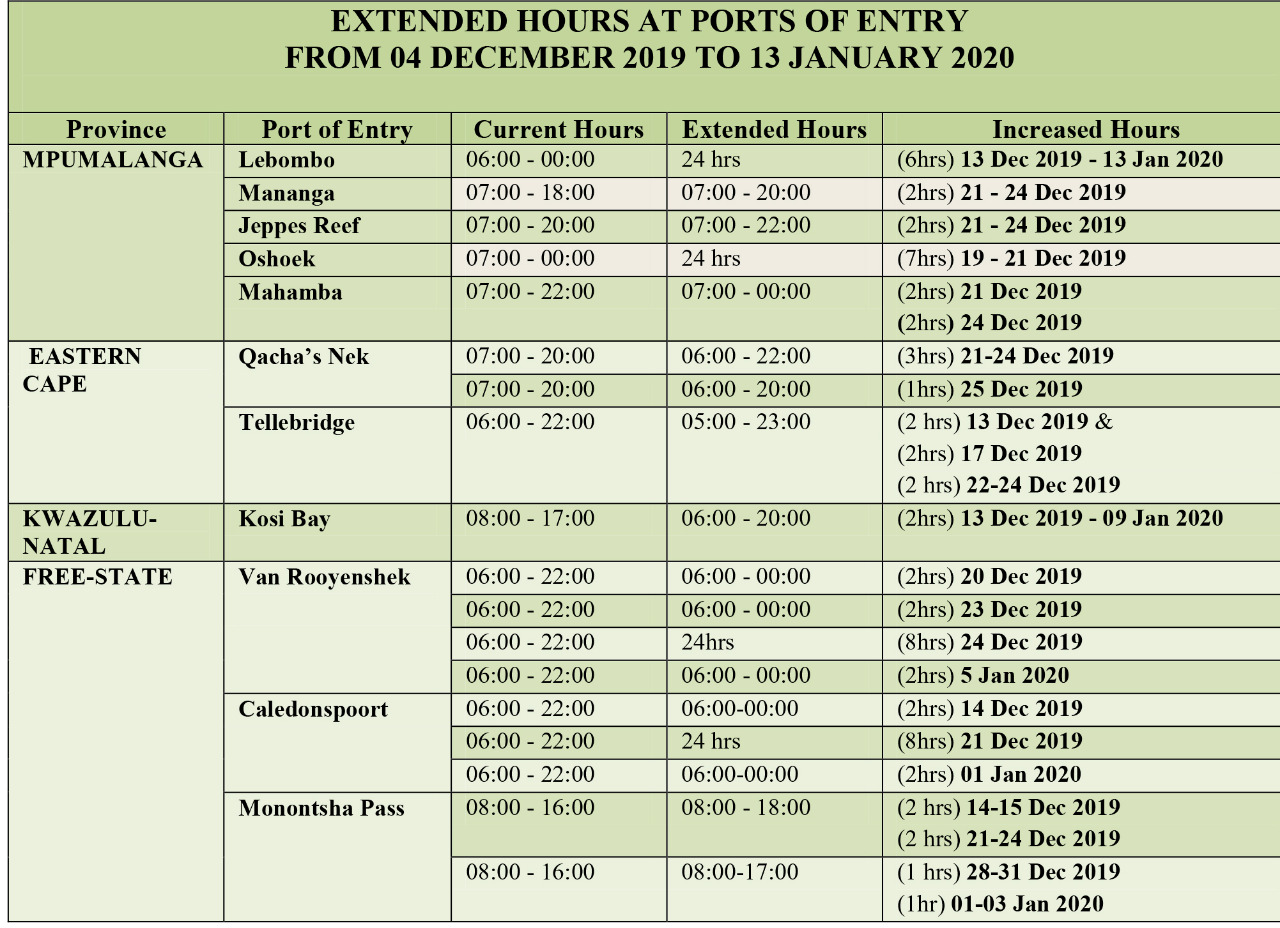
The Department of Home Affairs has finalised, with other border law enforcement agencies and the six countries sharing borders with South Africa, plans for the festive season.
Mr Siya Qoza, spokesperson for the Minister of Home Affairs, released a media statement stating that these plans will become operational from Wednesday, 04 December until 13 January 2020. These plans are aimed at helping navigate this period of heightened movement across South Africa’s ports in the interest of all travellers.
The ports of entry with traditionally high volumes of movement will have their operating hours increased by between one and seven hours. This means that the Lebombo port of entry with Mozambique and the Oshoek port of entry with the Kingdom of Eswatini will operate for 24 hours on some dates during this period.
Border law enforcement entities have confirmed readiness to handle increased volumes of travellers and goods at all ports of entry. This increase in movement of people and goods across borders, is due to the inflow and outflow of travellers such as tourists, cross-border workers, business, academics and educational activities.
The Department of Home Affairs will deploy close to 400 additional officials at selected ports, to assist with delivery of immigration services and offer technical support at the borders. Most of these officials will be at the Beit Bridge port of entry with Zimbabwe, Lebombo, Maseru Bridge port of entry with Lesotho and the Ficksburg port of entry with Lesotho.
The police increased police officials with an additional 80 members.
The South African Revenue Services (Customs) are deploying an extra 86 customs officials at selected ports, and the rest of the border law enforcement entities have also deployed limited numbers of staff as they will rely mainly on overtime for permanent staff.
“Increases in traveller movement exert additional strain on resources and pose security risks for South Africa, and for the six countries with which it shares borders in the region. It is therefore imperative for the border environment to prepare adequately to facilitate traveller movement and to curb illegal movement and other transgressions along the borderline. ”
Among main risks experienced during peak periods, are fraudulent documents, undocumented travellers and poor access control due to congested roads. Hence the need to plan meticulously for ports and borderline activities with other law enforcement agencies.
“Drivers of vehicles are urged strongly to refrain from lawlessness around our ports, with all ensuring traffic rules are not undermined on the way to certain ports, like Lebombo and Beit Bridge.
“We implore all travellers leaving and entering South Africa to ensure all their travel documents are in order to avoid unnecessary delays at ports. These include passports, visas, health certificates, permits for specified goods, plants and animals and vehicle insurance and bank authorised cross-border documents for vehicles,” said Mr Qoza.