Water lettuce invades Bethal Dam
Environmentalists will wait until after winter to release water agents into dam
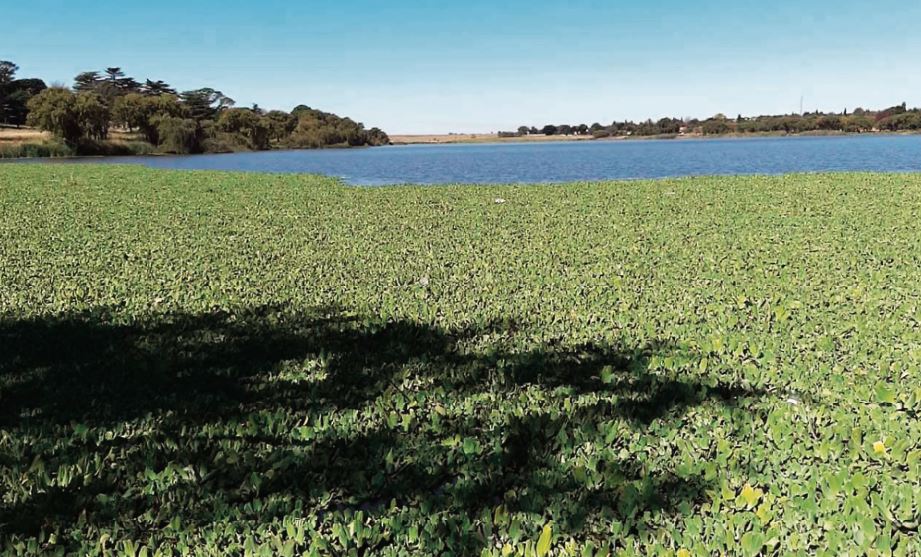
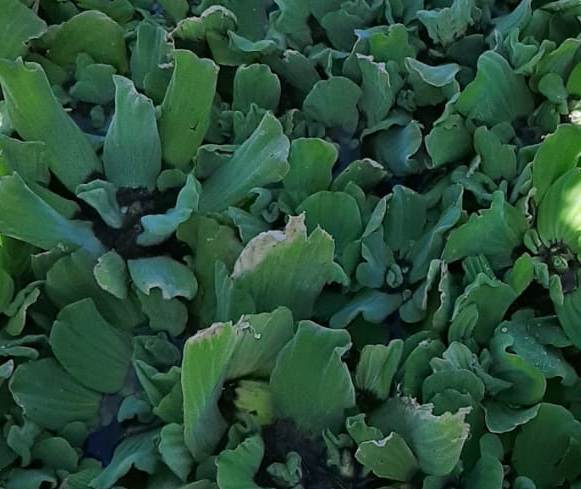
BETHAL – The plant growing in Bethal Dam that many residents thought was water hyacinth is actually water lettuce (Pistia stratiotes).
Ms Daleen Strydom, biodiversity officer of the natural resource management of the Department of Environmental Affairs, said she has been in contact with Ms Marie Prinsloo, health inspector of the Gert Sibande District Municiality about the water lettuce and that the district municipality is aware of the problem in Bethal Dam.
According to information from the Gert Sibande District Municipality, 30 per cent of the dam is covered with water lettuce.
“We are working on a solution to control the water lettuce,” said Ms Strydom.
“We will release biological control agents into the dam as soon as possible.
“However, there are currently environmental conditions playing a role in this process.”
Water lettuce is an alien invader plant that is classified as a category 1B plant under NEMBA according to law 10 of 2004.
According to Ms Strydom, this means that this plant is an alien invader plant which, as far as possible, must be controlled or removed and destroyed.
Any trading or planting of water lettuce is forbidden by law.
Ms Strydom said the water lettuce is a native plant of South America and was initially brought into South Africa to use as ornaments.
“Because it is an alien plant, there are no natural enemies (insects) in South Africa that can control this plant,” said Ms Strydom.
“Thus it can grow unabated without anything damaging it to control its growth.
“This plant grows very lush in aquatic environments that are high in nutrition.
“Any form of pollution that causes an increase in nutrition, will cause the plant density to increase faster than under normal circumstances.”
Ms Prinsloo said they are not sure how this plant ended up in Bethal Dam, but it is possible that the seed of the plant in the mud could be moved by water birds from one place to another.
She said it is also possible that somebody could have removed the plant form their garden’s water feature and threw it close to the dam or in the mud.
The water lettuce is a water weed that can create thick carpets on the water and in some cases it can cover the total water surface of a dam.
This thick carpet of water lettuce can cause problems such as the blockage of sprinkler equipment, limited water flow, limited navigation on the water and limited fishing and other recreational activities.
It provides breeding ground for mosquitoes and insects carrying bilharzia, minimises the amount of light reaching the water, minimises available oxygen in the water, causes lower water quality and it is a threat for native aquatic plant and animal life.
Ms Strydom said the best way to control the water lettuce plant is to make use of biological control, which is to let insects (plants natural enemy) free in the dam to control the plant.
“The insects will then damage the water lettuce and cause the density to go down drastically.
“However, it is important to remember that biological control does not work over night, but it takes time.
“The biological control agent for the water lettuce is environmental friendly and specie specific, thus these insects will not damage any other plants.
“If there is eventually no more water lettuce for this insect to feed on, they will die out.”
After discussions and assessing the situation, Ms Strydom and Ms Prinsloo decided it will be more effective to access the situation again after the winter and then release the biological agents into the water if it will still be necessary.
“We are now in the beginning of winter and because Bethal gets frost during the season, it will be better to wait until after the winter,” said Ms Strydom.
“The frost will damage many of the plants in the dam and they might even die, thus it is not the ideal time now to release insects into the water.
“If we release insects now and the plants are damaged because of frost, it will just be a waste of our resources.
“It will also give us enough time to increase insect numbers as we are eventually moving out of the lockdown phase now.”
The Agriculture Research Council will help with research regarding suitable biological agents for the dam.