Scientists find harmful bacteria in Bronkhorstspruit Dam’s river inflows
The presence of certain pathogens confirms fecal contamination, likely originating from upstream wastewater discharges and livestock waste inputs.

Urgent action is needed to curb the pollution in rivers flowing into the Bronkhorstspruit Dam, caused by sewage and agricultural runoff. If left unaddressed, the risk of contamination affecting humans and animals could become a reality.
Harmful bacteria such as Escherichia coli and Klebsiella pneumoniae, which are associated with gastrointestinal infections and urinary tract infections in humans, have been found at the inflows from the Bronkhorstspruit River (to the south) and the Osspruit River (to the west).
This is according to the results of a recent microbial water quality study conducted at the dam’s river inflows. The Bronkhorstspruit Catchment Management Forum (BCMF) commissioned the University of Johannesburg’s Process, Energy, Environment and Technology Station (PEETS) to carry out the study.
“A microbial study involves identifying microorganisms such as bacteria, viruses, fungi, and protozoa,” explained Paddy Waller, a director of the BCMF.
The study, which used DNA extraction and Next Generation Sequencing (NGS) analysis, focused on identifying dominant microbial communities, potential contaminants, and evaluating the presence of pathogenic or antibiotic-resistant bacteria in the water.
This NGS bacterial analysis of water samples is far more detailed and different from what standard field water quality test instruments are designed for.
The samples were used to assess microbial indicators of pollution, determining whether contamination is linked to urban runoff, agricultural activities, or wastewater discharge. The results of the study are cause for concern.
Bacteria
The dominant bacterial groups at both river inflows were proteobacteria, bacteroidetes, and actinobacteria. Proteobacteria included both natural aquatic bacteria and species associated with wastewater, industrial pollution, and opportunistic pathogens.
The high abundance of bacteroidetes in the Bronkhorstspruit River inflow highlights a strong fecal contamination signal, likely stemming from sewage input, wastewater treatment effluent, and agricultural runoff.
A higher abundance of actinobacteria at the Osspruit River inflow indicates nutrient-rich conditions and organic matter decomposition rather than direct industrial or urban influence.
Pathogens
A pathogen is an organism that can cause disease. Several World Health Organisation priority pathogens were also identified, emphasizing significant risks to water quality and public health.
The presence of Escherichia coli and Klebsiella pneumoniae confirms fecal contamination, likely originating from upstream wastewater discharges and livestock waste inputs.
WHO critical pathogens detected included acinetobacter baumannii and pseudomonas aeruginosa, both known for antibiotic resistance.
“Their presence suggests a low-oxygen environment and organic matter accumulation within the dam, raising concerns about water stagnation and oxygen availability,” explained Waller.
Additionally, salmonella enterica and citrobacter freundii were identified, further indicating potential contamination from livestock runoff or improperly treated wastewater, posing risks for gastrointestinal infections and typhoid fever.
Enterococcus faecium, detected in the Bronkhorstspruit inflow, is known for its drug resistance and acts as an indicator of persistent fecal contamination.
The sources
One might automatically blame failing municipal infrastructure and malfunctioning water treatment plants, which cause raw sewage and effluent to spill into natural water sources.
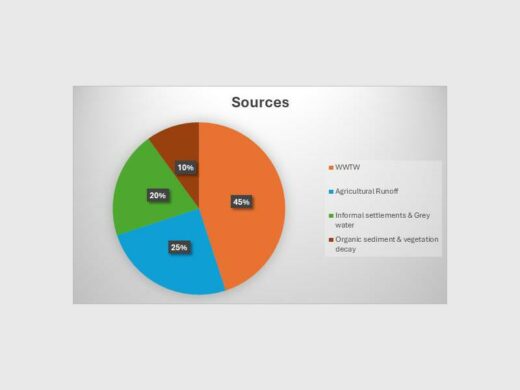
Although this is the main contributor to the bacterial contamination (45%), runoff from piggeries, poultry farms, and cattle farms also contributes 25%.
Grey water and runoff from informal settlements account for another 20%, while organic sediment and vegetation decay contribute 10%.
“The report highlights the dire need for public and private initiatives at the dam and throughout the catchment area to reduce pollution levels and the need to continue pathogen monitoring,” concluded Waller.