Standerton residents speak out about poorly built homes, health and safety hazards and broken promises
Waste, mold, electrical shocks and no water, these are only a few of the things extension 8 residents struggle with daily.
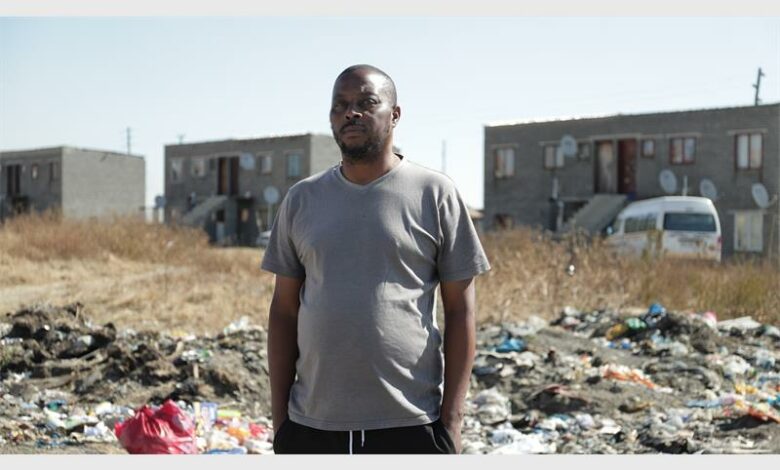
“I fear getting sick in my own home; it is dusty and mold grows on the walls,” stated Ext 8 resident Wandile Afrika Dlamini.
The residents of Ext 8 opened their hearts and homes to the Standerton Advertiser, inviting us in to witness the decaying circumstances firsthand.
The first home we visited was that of a blind woman, though she was not home at the time. Dlamini, one of the several residents who care for the elderly blind woman, pointed out the subtle dangers lurking in her home.
The blind resident has been living in her “temporary” government-funded home since 2016. According to Dlamini, she is one of many residents who applied for government-funded housing, only to receive an inhabitable home.
“When we moved into the flats, the government told us it would be temporary. We would only have to live in the flats for a month or so before moving into our own houses,” stated Dlamini.
However, residents have been left to make do with what they received; many still live in the so-called “temporary” homes almost 10 years later.
Dlamini explained that when they moved in, the houses did not have any electrical wiring. According to him, the municipality gave residents permission to connect to electricity boxes found all over the area.
Due to this, electrical wiring hangs loosely in houses and lies uncovered over footpaths, causing a hazard for residents. Particularly in the case of the blind woman.
In her home, electrical wiring cascades into her living and kitchen area, leaving her with little space for movement. The houses themselves were not built with any air vents, causing the air inside the houses to become dense.
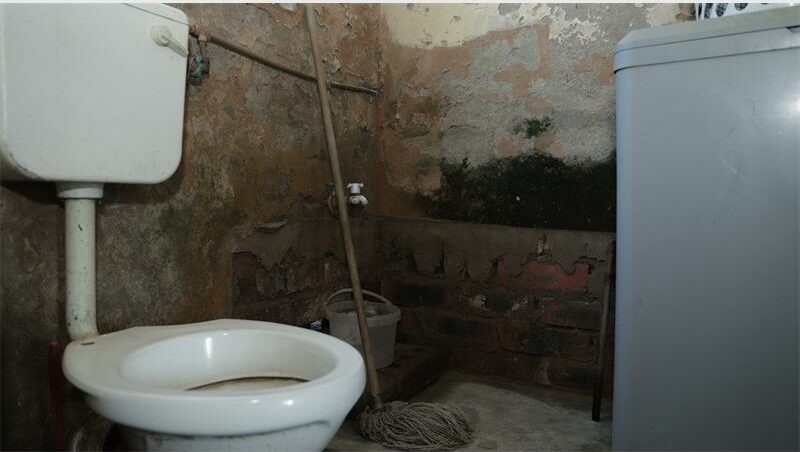
Photo: Josua van Hansen
Each home has its own distinct smell, and the culprit behind this smell is mold. Every home we investigated had mold growing on the walls in most rooms.
“Children living with asthma and other respiratory diseases cannot live in these circumstances; the air they breathe in their homes is toxic to them,” added Dlamini.
Another house we investigated posed an entirely new threat: an enormous crack in the wall that starts in the foundation and widens on the second floor.
Mandla Xaba, a resident in this flat block, moved into the flat in 2017; the crack started forming the same year. According to Xaba, he has reported the issue to the municipality multiple times, and they did come to see the complaint in April of this year.
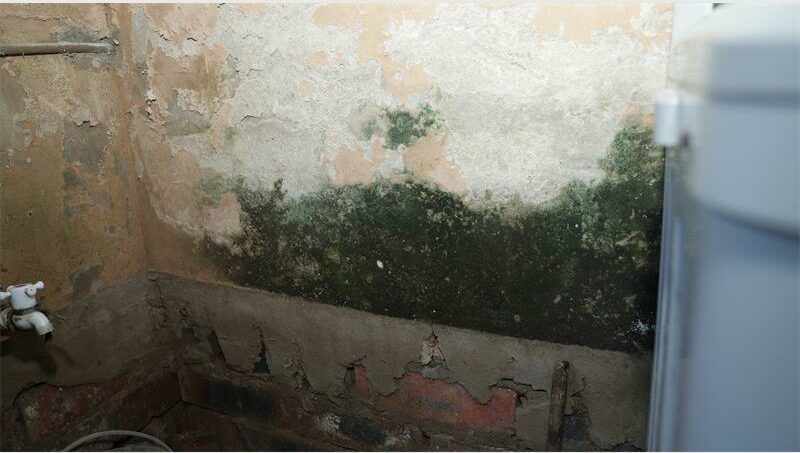
Photo: Josua van Hansen
“They said that the building looks like it might collapse if action is not taken soon,” stated Xaba.
However, no action was taken and residents still do not know what the municipality is planning to fix this issue. Xaba’s greatest concern is that he is unable to perform religious or cultural practices in the space that he has now.
“I live on the second floor, meaning that when I die, my family will not be able to carry my coffin into my home,” explained Xaba.
Many residents of the Extension 8 flats were moved in and promised that these living arrangements were only temporary.
Dlamini, Xaba and many more were promised houses as soon as the project was completed. This never came to be, and they are still living in poorly built, decaying homes 10 years later.
ALSO CHECK: Tweeling vier hul 90ste verjaardag saam op Delmas
ALSO CHECK: eMbalenhle Chris Hani section RDP housing project turns into a nightmare for residents