Meet ward councillor candidates for Govan Mbeki Municipality
In the Lekwa Local Municipality, only candidates from the Independent Lekwa Party answered our questions.

Standerton Advertiser invited ward councillor candidates from all parties to introduce themselves on our website.
In the Lekwa Local Municipality, only candidates from the Independent Lekwa Party answered our questions. Here are the candidates in order of their ward numbers.
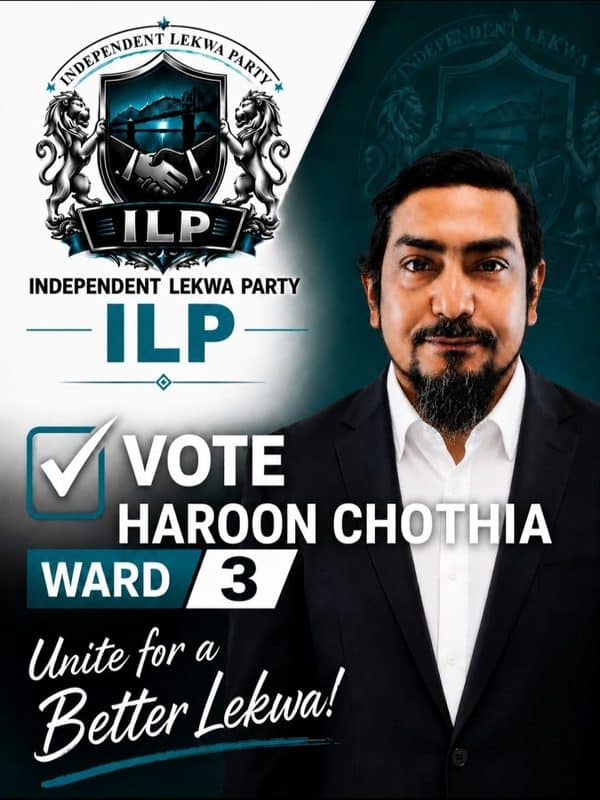
WARD 3
Haroon Chothia – Independent Lekwa Party (ILP)
Q: What are the three biggest challenges currently facing your ward, and how will you address them?
A: In my view, the three major areas requiring attention are:
1. Basic service delivery and infrastructure – including water, electricity, roads, streetlights, refuse collection and sanitation.
2. Safety and the living environment – including crime, illegal dumping, poorly maintained public spaces and areas where residents feel unsafe
3. Economic opportunities – particularly unemployment among young people and the need to create a better environment for small businesses and informal traders.
My approach would be to listen to residents, record problems systematically, raise them through the appropriate municipal structures and follow up on outstanding matters. I believe the role of a councillor should include consistent monitoring rather than simply reporting a problem once and moving on.
Lekwa’s own planning documents identify unemployment, crime, poor infrastructure and service-delivery challenges among the municipality’s concerns.
Q: How will you improve basic service delivery such as water, electricity, refuse removal and road maintenance?
A: My approach would be based on reporting, monitoring and accountability.
Residents should have accessible channels to report problems, while recurring issues should be recorded and escalated to the relevant municipal department. I would support regular feedback to residents on outstanding water, electricity, refuse and road-related complaints.
For issues that fall outside the municipality’s direct responsibility, such as certain electricity or road infrastructure, the appropriate government entity or service provider should be identified and engaged rather than allowing residents’ complaints to disappear between departments.
The municipality itself has previously identified poor roads, power outages and inconsistent water supply as significant challenges
Q: What specific plans do you have to improve community safety and reduce crime in the ward?
A: Community safety requires cooperation between residents, the municipality, SAPS, community policing structures and other relevant stakeholders.
My approach would include encouraging residents to report criminal activity through the proper channels, identifying areas where lighting or environmental conditions may contribute to safety concerns, and supporting constructive cooperation between community structures and law-enforcement agencies.
I would also encourage attention to abandoned or poorly maintained areas, illegal dumping and other conditions that can contribute to an unsafe environment.
The focus should be on prevention, reporting, cooperation and accountability, while recognising that criminal investigations and policing are primarily responsibilities of law-enforcement agencies.
Q: How will you ensure that residents are kept informed and involved in decisions affecting the community?
A: I believe residents should not only hear from their councillor during election periods.
My approach would be to encourage regular ward communication through community meetings, WhatsApp communication, notices and other accessible channels.
Important municipal information, such as IDP and budget consultations, should be communicated clearly so that residents understand how they can participate.
Lekwa Municipality already uses ward-based public participation processes for its IDP and budget planning, including consultations in Ward 3
Q: What will you do to support local businesses, informal traders and job creation in the ward?
A: A councillor cannot create employment personally, but can contribute to an environment where economic activity is encouraged.
I would support local small businesses, informal traders, entrepreneurs and skills-development initiatives by raising barriers that residents experience with the relevant municipal structures.
I would also encourage better communication about available government programmes, business-support opportunities, training and municipal processes.
Lekwa’s current planning documents specifically identify unemployment and the local business environment as areas requiring attention, while also referring to initiatives such as a Local Economic Development strategy and local business engagement
Q: How will you improve conditions in informal settlements and underserved areas within the ward?
A: The starting point should be to understand the actual needs of each community rather than applying the same solution everywhere.
My approach would be to document service gaps such as water, sanitation, electricity, roads, refuse removal and access to other essential services, and raise these matters through the appropriate municipal planning and budget processes.
I would also support communication with vulnerable households so that residents are aware of assistance and registration programmes available to qualifying households.
Lekwa Municipality has an indigent-support system covering qualifying households and basic services, making awareness and correct registration important for vulnerable residents.
Q: What is your plan to address infrastructure problems such as potholes, sewage spills, streetlights and illegal dumping?
A: I would support a ward infrastructure problem register where recurring issues can be recorded, categorised and followed up.
The important thing is not simply to report a pothole, sewage spill or broken streetlight once. There should be a record of the complaint, the responsible department, the date it was escalated and the status of the matter.
Illegal dumping also requires both enforcement and prevention, including identifying dumping hotspots and considering practical waste-management solutions.
Lekwa’s planning documents recognise infrastructure and service-delivery problems as ongoing municipal challenges. The municipality has also been developing and reviewing waste-management planning for the coming period
Q: How will you ensure municipal funds allocated to the ward are spent transparently and effectively?
A: I believe residents have a right to understand how municipal priorities are determined and how public money is being used.
My approach would be to scrutinise ward-related priorities through the appropriate council, IDP, budget and oversight processes and communicate relevant information back to residents in understandable language.
Where residents raise concerns about expenditure or projects, those concerns should be directed through the proper oversight mechanisms and followed up.
Lekwa’s budget and IDP processes are intended to connect community priorities with municipal planning and financial allocations.
Q: What programmes or initiatives would you introduce for young people, women and vulnerable residents in the community?
A: I would support initiatives focused on:
Youth skills development and entrepreneurship
Sports and recreational activities
Women-owned small businesses and entrepreneurship
Skills and employment information
Support for elderly and vulnerable residents
Greater inclusion of people with disabilities
Community-based awareness and support programmes
The emphasis should be on connecting residents with programmes and organisations that already have the resources or expertise to provide assistance, while identifying gaps that require further attention.
Lekwa has established engagement structures around disability inclusion, highlighting the importance of ensuring that people with disabilities participate in community planning and service-delivery discussions
Q: If elected, how will residents be able to hold you accountable and measure your progress over the next five years?
A: Accountability should be based on evidence rather than slogans.
I would support a system where residents can see:
What issues have been raised;
Which matters have been escalated to the municipality;
What responses have been received;
Which matters remain outstanding; and
What progress has been made.
Regular community feedback would provide residents with an opportunity to question, challenge and assess the work being done on their behalf.
I believe a councillor should be accessible, answerable to residents and willing to acknowledge when progress has not been made. The role is not to promise that every municipal problem can be solved by one person, but to represent residents properly, monitor the administration and keep the community informed.
My guiding principle would be: listen to the residents, represent their concerns, follow up consistently and report back honestly.
“My approach to Ward 3 is based on service, accountability and honest communication. I do not believe in making promises that are outside the powers of a ward councillor. Residents deserve a representative who listens to their concerns, raises them through the correct structures, follows up and reports back honestly. My focus would be on practical community issues, transparent representation and ensuring that the voice of Ward 3 is consistently heard within Lekwa Municipality
WARD 4
Jacobus Cornelius Stoltz – Independent Lekwa Party (ILP)
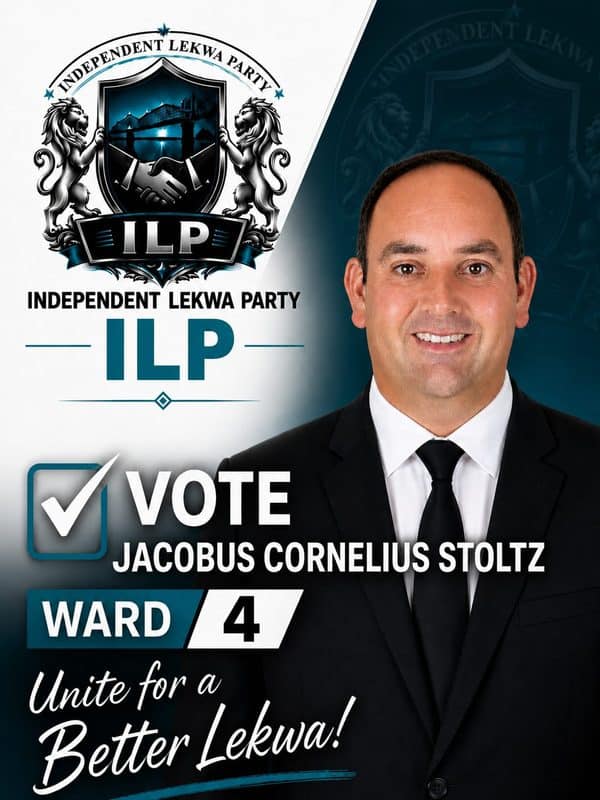
The ILP is a local party focused specifically on the interests of the people of Lekwa. Our principle is simple: people before politics and Unite for a Better Lekwa.
Q: What are the three biggest challenges currently facing your ward, and how will you address them?
A: The three biggest challenges I see are:
1. Basic service delivery and infrastructure – particularly electricity interruptions, water supply, sewage problems, roads and maintenance.
2. Municipal accountability and responsiveness – residents need a councillor who does not simply receive complaints, but follows them through the correct municipal structures until there is an answer.
3. Infrastructure that is not keeping pace with development – new housing and development must be matched by adequate water, electricity, sanitation, roads and stormwater infrastructure.
My approach will be to document problems, report them formally, monitor progress, raise unresolved matters through Council and its oversight structures, and keep residents informed. A ward councillor must represent residents and exercise oversight rather than pretend to be a municipal administrator. South African local-government legislation provides for community participation and councillor oversight of municipal policy, budgets and performance.
Q: How will you improve basic service delivery such as water, electricity, refuse removal and road maintenance?
A: I will establish a structured ward service-delivery register recording complaints, locations, dates reported, responsible municipal department and progress.
My priorities will include:
Following up water interruptions and infrastructure failures.
Escalating electricity faults and recurring outages.
Monitoring refuse-removal schedules and missed collections.
Recording potholes and road deterioration and ensuring that they are included in municipal planning and maintenance programmes.
Monitoring sewage spills and environmental risks.
Reporting recurring problems to the relevant municipal structures rather than allowing them to disappear after the initial complaint.
I will also push for preventative maintenance, because constantly repairing infrastructure after it fails is not a sustainable strategy.
Q: What specific plans do you have to improve community safety and reduce crime in the ward?
A: Community safety cannot be solved by a councillor alone. I would work with SAPS, community structures, neighbourhood watches, municipal law-enforcement structures and residents.
I would support:
Regular communication between residents and SAPS.
Identifying crime hotspots and poorly lit areas.
Reporting broken streetlights and other infrastructure contributing to unsafe areas.
Community safety meetings where residents can raise specific concerns.
Better communication during incidents and emergencies.
Partnerships with community organisations and businesses where appropriate.
The goal would be to create a stronger communication network between residents and the institutions responsible for policing and public safety.
Q: How will you ensure that residents are kept informed and involved in decisions affecting the community?
A: Communication must be continuous, not only during election campaigns.
I would use regular ward meetings, WhatsApp communication, community notices and direct engagement with residents.
I would also strengthen the role of the Ward Committee as a communication channel between residents and the municipality. Government guidance describes ward committees as a mechanism for participatory democracy and communication between communities, councillors and municipalities.
Residents should know:
What problems have been reported.
Who is responsible.
What the municipality has said.
What progress has been made.
What remains outstanding.
Where I do not have the authority to solve something myself, I will say so honestly and explain what action I have taken to get the responsible department to deal with it.
Q: What will you do to support local businesses, informal traders and job creation in the ward?
A: Local economic development must include small businesses, informal traders, entrepreneurs and established businesses.
I would advocate for:
Fair and transparent municipal processes.
Better communication of available opportunities.
Support for small and emerging businesses to understand municipal requirements.
Properly managed trading areas where appropriate.
Skills-development and entrepreneurship initiatives.
Encouraging local businesses to participate in community development.
Removing unnecessary administrative obstacles while ensuring that legal requirements are followed.
I will not promise residents jobs or contracts that a councillor has no legal authority to provide. Employment, procurement and appointments must follow the applicable municipal processes.
Q: How will you improve conditions in informal settlements and underserved areas within the ward?
A: Every resident deserves access to basic municipal services and to be treated with dignity.
I would focus on identifying the actual infrastructure requirements of underserved areas, including:
Water access.
Sanitation.
Electricity.
Roads and stormwater.
Refuse removal.
Street lighting.
Safe access for emergency services.
I would also ensure that these needs are properly raised during IDP and budget processes, because sustainable improvement requires planning and funding rather than promises made without a budget.
The Municipal Systems Act specifically provides a framework for integrated development planning, resource allocation and community participation.
Q: What is your plan to address infrastructure problems such as potholes, sewage spills, streetlights and illegal dumping?
A: I would introduce a Ward 4 Infrastructure Monitoring Programme.
Residents should be able to report a problem and receive a reference or record showing that it has been submitted.
I would maintain a list of: Potholes | Sewage spills | Streetlights | Illegal dumping | Water leaks | Electricity faults | Stormwater problems
The important part is not simply reporting these problems. It is following them through, identifying whether they were attended to, and escalating recurring or unresolved problems through the appropriate municipal structures.
Where infrastructure failures indicate a larger systemic problem, I would raise the matter at Council rather than treating every incident as an isolated complaint.
Q: How will you ensure municipal funds allocated to the ward are spent transparently and effectively?
A:I will insist on transparency, proper planning and oversight.
Municipal budgets must promote transparency, accountability and effective financial management.
As councillor, I would:
Examine the IDP and budget allocations affecting the ward.
Monitor whether approved projects are actually implemented.
Ask questions when projects are delayed or funds are not being used as intended.
Monitor municipal performance against approved plans.
Communicate relevant information to residents.
Support proper oversight through Council structures.
I will also distinguish between what residents want and what has actually been approved and budgeted for. I believe residents deserve the truth, even when the answer is not what they want to hear.
Q: What programmes or initiatives would you introduce for young people, women and vulnerable residents in the community?
A: I would work with existing community organisations, businesses, government departments and other stakeholders to develop practical programmes around:
Youth skills development.
Entrepreneurship and small-business support.
Job-readiness and CV assistance.
Digital and computer skills.
Sports and recreational activities.
Support networks for vulnerable households.
Programmes supporting women-owned businesses.
Community clean-up and environmental initiatives.
I would particularly like to see young people given opportunities to gain practical skills and experience, rather than only receiving temporary political promises.
Q: If elected, how will residents be able to hold you accountable and measure your progress over the next five years?
A: My commitment is that residents must be able to measure my work.
I would provide regular feedback to the community on:
Issues reported.
Issues resolved.
Issues still outstanding.
Council matters affecting Ward 4.
Infrastructure projects.
Service-delivery problems.
Matters escalated to municipal management or Council.
Progress against ward priorities.
I would also hold regular community engagements and make myself accessible through established communication channels.
Most importantly, I will not promise residents that I personally can do things that legally belong to the municipal administration. A councillor’s role includes policy, representation and oversight; implementation belongs to the municipality’s administrative structures. National Treasury’s councillor guidance specifically describes councillors’ role as including oversight of budgets, policies and municipal performance.
My commitment to Ward 4
I cannot promise that I will fix every problem overnight. I can promise that I will not ignore the problems.
I will listen to residents, report problems, demand answers, exercise oversight and keep the community informed.
People before politics. Local decisions. Local accountability.
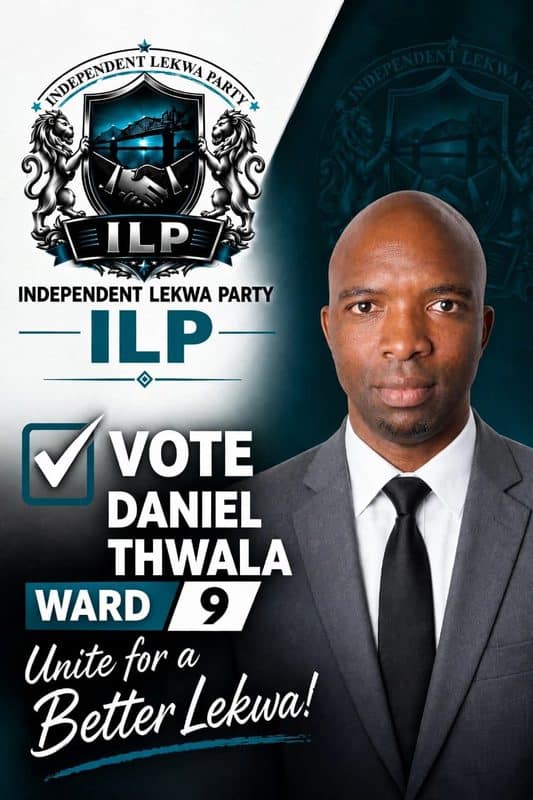
WARD 9
Daniel Twhala – Independent Lekwa Party (ILP)
Q: What are the three biggest challenges currently facing your ward, and how will you address them?
Youth unemployment:
Youth unemployment is one of the major challenges facing our community. I will advocate for practical skills-development programmes, job-readiness initiatives and partnerships with businesses and other stakeholders to create opportunities for young people to gain skills and access employment.
Poor road conditions and potholes:
Many roads require ongoing maintenance. I will ensure that road defects are properly recorded, reported and followed up with the relevant municipal departments. Where appropriate, I will advocate for proper drainage and paving solutions to reduce recurring potholes.
Water and electricity challenges:
Reliable water and electricity are essential basic services. I will actively monitor service interruptions, report problems to the relevant municipal departments and follow up until they are addressed. Where interruptions occur, I will ensure that residents receive timely and accurate information about the problem and expected restoration.
Q: How will you improve basic service delivery such as water, electricity, refuse removal and road maintenance?
A: My approach will be based on monitoring, reporting, follow-up and accountability. I will maintain a record of service-delivery complaints and ensure that they are referred to the responsible municipal departments.
I will also provide regular feedback to residents on outstanding issues, progress made and matters that require further intervention. My priority will be to ensure that service delivery remains at the centre of the ward’s development.
Q: What specific plans do you have to improve community safety and reduce crime in the ward?
A: I will work to strengthen cooperation between residents, SAPS, community policing structures, neighbourhood initiatives and private security companies.
The focus will be on improving communication, reporting suspicious activity, identifying crime hotspots and supporting community-based crime-prevention initiatives. I will also advocate for improved street lighting in areas where poor visibility contributes to safety concerns.
Q: How will you ensure that residents are kept informed and involved in decisions affecting the community?
A: Communication and public participation will be important priorities. I will establish appropriate community communication channels, including a Ward 9 WhatsApp communication platform, while ensuring that important information is also shared with residents who may not have access to WhatsApp.
I will encourage residents to participate in IDP and budget processes and will facilitate community meetings where residents can raise concerns, make proposals and receive feedback on municipal matters.
Q: What will you do to support local businesses, informal traders and job creation in the ward?
A: I will advocate for greater participation by local small businesses, informal traders and youth cooperatives in economic opportunities within the municipality.
Where municipal procurement policies allow, I will support measures that improve access to opportunities for qualifying local businesses, while promoting transparent and fair procurement processes. I will also encourage skills-development and entrepreneurship initiatives that can help residents create sustainable livelihoods.
Q: How will you improve conditions in informal settlements and underserved areas within the ward?
A: I will prioritise the basic needs of residents living in underserved areas, including access to communal water points, appropriate sanitation, refuse removal and other essential services.
I will also advocate for proper planning and, where legally and practically possible, the formalisation and upgrading of informal settlements so that residents can progressively gain access to sustainable basic services and improved living conditions.
Q: What is your plan to address infrastructure problems such as potholes, sewage spills, street lights and illegal dumping sites?
A: I will establish a Ward 9 Infrastructure Register containing information such as the location of reported problems, photographs, dates reported, reference numbers and progress updates.
This will allow problems to be monitored rather than simply reported once and forgotten. I will regularly follow up with the relevant municipal departments and provide residents with feedback.
I will also advocate for appropriate interventions at illegal dumping hotspots, including skip bins where suitable, improved refuse collection and community awareness initiatives.
Q: How will you ensure municipal funds allocated to the ward are spent transparently and effectively?
A: I will promote transparency and meaningful community participation in municipal planning and budgeting processes.
Residents should be informed about projects affecting the ward, their intended purpose and progress. I will encourage residents to participate in IDP and budget consultations and will monitor projects through the available municipal oversight and reporting processes.
Where information is available, I will communicate project progress and concerns to the community.
Q: What programmes or initiatives would you introduce for young people, women and vulnerable residents in the community?
A: For young people, I would support initiatives such as sports programmes, homework and study-support hubs, CV preparation, job-readiness workshops, skills development and access to employment information.
For elderly and vulnerable residents, I would encourage partnerships with social workers and relevant service providers to improve access to SASSA services, clinics and other essential support.
For women and other vulnerable groups, I would support initiatives that improve access to skills development, economic opportunities, social services and community safety programmes.
Q: If elected, how will residents be able to hold you accountable and measure your progress over the next five years?
A: Accountability will be central to my approach as a ward councillor.
I will develop a five-year Ward 9 development and accountability plan containing clear priorities and measurable objectives. I will provide regular feedback to residents through public meetings and appropriate communication channels.
I also intend to provide an annual Ward Report Card showing the issues raised by residents, actions taken, progress achieved and matters that remain outstanding.
My commitment is to maintain an open relationship with the community and to ensure that residents can see what has been raised, what has been done and what still requires attention.
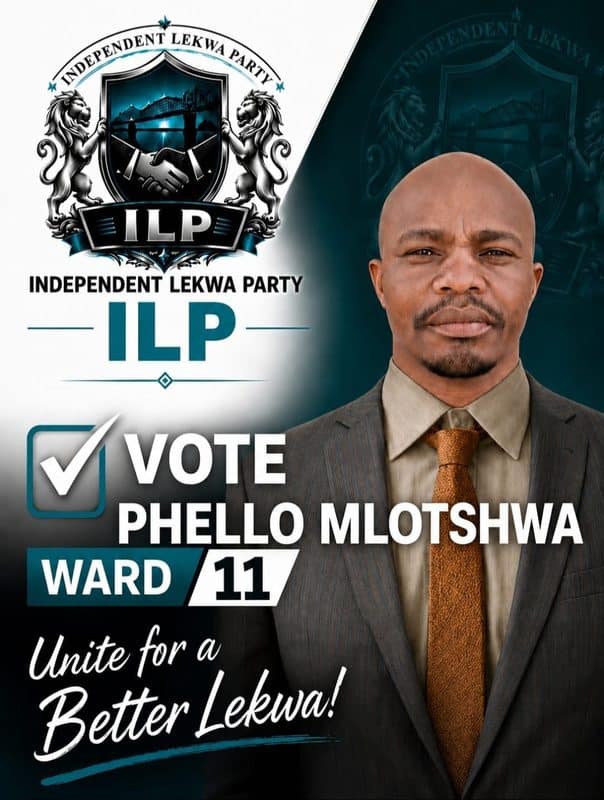
WARD 11
Phello Mlothswa –Independent Lekwa Party (ILP)
Q: What are the three biggest challenges currently facing your ward, and how will you address them?
A: The three biggest challenges I have identified in Ward 11 are water supply, road maintenance and electricity reliability.
My approach will be to actively monitor service delivery in the ward, report problems through the correct municipal channels, follow up until matters are resolved, and keep residents informed. Where the municipality has limited resources, I will focus on ensuring that available resources are used fairly and effectively.
Q: How will you improve basic service delivery such as water, electricity, refuse removal and road maintenance?
A: For water, I will monitor the water tanker allocated to the ward and ensure that scheduled deliveries are actually taking place, particularly in areas experiencing shortages.
Regarding electricity, illegal connections are a serious concern and can contribute to network instability and damage. I will work with the municipality and relevant authorities to ensure that illegal connections are reported and addressed.
Most roads in the ward are gravel roads. I will advocate for regular grading and maintenance and ensure that damaged roads are reported and followed up through the municipality.
For refuse removal, I will communicate collection schedules clearly to residents and follow up on missed collections.
Q: What specific plans do you have to improve community safety and reduce crime in the ward?
A: I would encourage the establishment of a community volunteer patrol initiative, working together with SAPS and other relevant safety structures.
I will also monitor the condition of high-mast lights and ensure that faulty lights are reported promptly. Proper lighting in public areas can contribute to safer conditions for residents, particularly at night.
Q: How will you ensure that residents are kept informed and involved in decisions affecting the community?
A: Communication will be a priority. I will arrange regular community meetings and make use of WhatsApp groups to communicate important municipal information, service interruptions, planned work and community matters.
Residents must also have an opportunity to raise concerns and receive feedback on matters that have been reported.
Q: What will you do to support local businesses, informal traders and job creation in the ward?
A: I believe local businesses and informal traders should be supported where possible. One practical way is to buy locally where appropriate and encourage residents and organisations to support businesses operating within the community.
I will also make myself available to listen to complaints from local businesses and ensure that municipal-related problems affecting their operations are reported and followed up without unnecessary delays.
As a councillor, I will not promise jobs or interfere in municipal employment processes. My role will be to support a functioning local economy and advocate for fair opportunities.
Q: How will you improve conditions in informal settlements and underserved areas within the ward?
A: I will encourage qualifying residents to register for available housing programmes, including RDP housing, through the correct government processes.
For areas experiencing water shortages, I will also approach local businesses and community stakeholders to seek assistance with practical initiatives, such as donations of JoJo tanks, where appropriate.
Q: What is your plan to address infrastructure problems such as potholes, sewage spills, streetlights and illegal dumping?
A: Ward 11 has many gravel roads, so regular grading and maintenance will be an important priority.
Sewage spills will be reported as soon as they are identified, followed up with the responsible municipal department and communicated to affected residents.
Faulty high-mast and streetlights will likewise be reported and followed up.
Illegal dumping requires both municipal enforcement and community participation. I will encourage residents to put their refuse out according to the scheduled collection days and discourage dumping in open areas. Where illegal dumping continues, it should be reported for appropriate municipal action.
Q: How will you ensure municipal funds allocated to the ward are spent transparently and effectively?
A: A councillor’s responsibility is to provide oversight and hold the municipal administration accountable, rather than personally managing municipal funds.
I will therefore monitor municipal programmes and expenditure through the appropriate council structures, ask questions where necessary, and communicate relevant information to residents. I will support transparency and expect municipal resources intended for communities to be used for their intended purposes.
Q: What programmes or initiatives would you introduce for young people, women and vulnerable residents in the community?
A: I would encourage sporting activities for young people and support community-based initiatives that give residents constructive opportunities.
I would also encourage community gardening projects, particularly where suitable land and water are available. These projects can provide food for households and potentially allow participants to sell surplus produce.
For women and vulnerable residents, I would support initiatives that promote self-reliance, skills development and access to existing government and community support programmes.
Q: If elected, how will residents be able to hold you accountable and measure your progress over the next five years?
A: My commitment is to remain accessible and accountable to the residents of Ward 11.
Residents must be able to contact me when they experience service-delivery problems. I will make myself available, attend to complaints as quickly as possible, report matters through the correct channels and provide feedback on progress.
My performance should ultimately be measured by whether I listen to residents, raise their concerns, follow up on municipal failures, communicate honestly and remain present in the community.
I will not make promises simply to obtain votes. I believe residents deserve honest representation, realistic commitments and accountability.
Disclaimer: The views and opinions expressed in this article are those of the candidate and do
not necessarily reflect the views or positions of the journalists or the newspapers (Ridge Times and Standerton Advertiser) and the company (Caxton) they represent.