Laerskool Secunda learners go to court
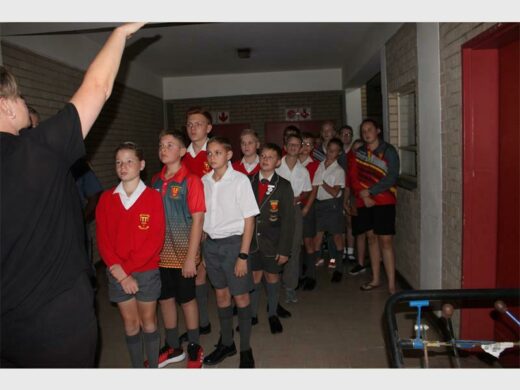
The Grade Sevens experienced the day-to-day running of Secunda Magistrate’s Court on April 14.
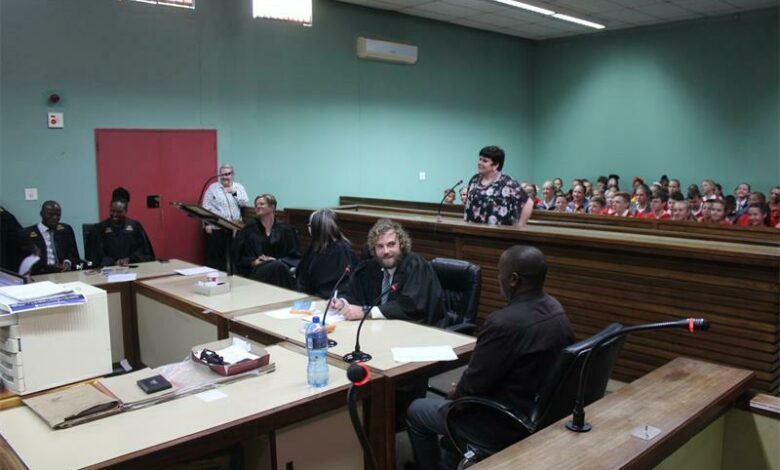
The Grade Seven learners from Laerskool Secunda were taken on a tour of the Secunda Magistrate’s Court on April 14 to experience how the courthouse operates.
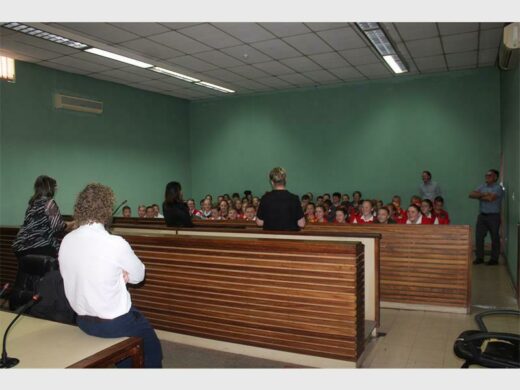
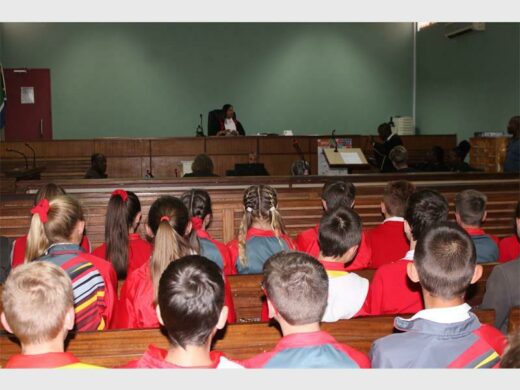
Eyes glued and ears peeled, the learners sat in courtroom A. Magistrate Chetna Singh introduced them to the team bringing wrongdoers to book.
She explained the oath that attorneys, advocates and magistrates take to uphold the Constitution and the black gowns they wear when court is in session.
The learners were introduced to the interpreter, the clerk and the police members who ensure order and safety in the courtroom and the prisoners’ movement to and from the court’s holding cells.
Regional Court magistrate Charmaine la Marque explained the Children’s Act and Justice Act and said the court must protect and safeguard children according to the Act, both inside and outside of court.
She also told the learners they are considered children up to age 18, whereafter they are classified as adults.
“The law says a child has the right to be heard. However, a child also has the responsibility to listen and respect others. A magistrate has the duty to always act in the best interest of a child in all circumstances,” said La Marque.
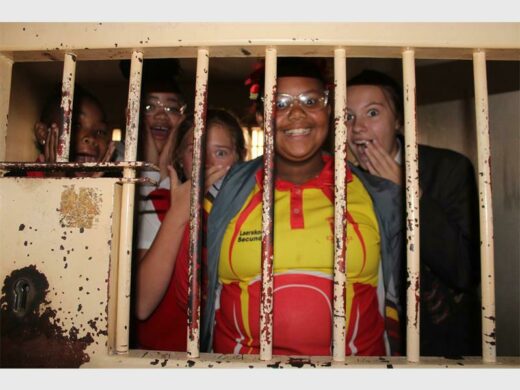
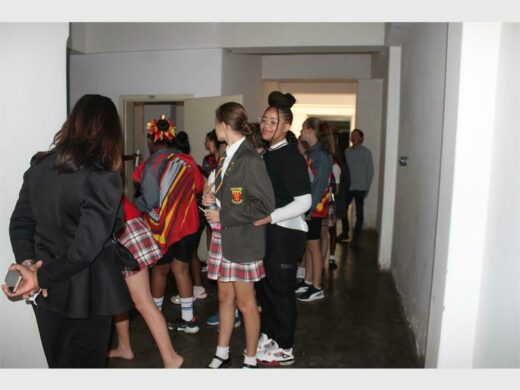
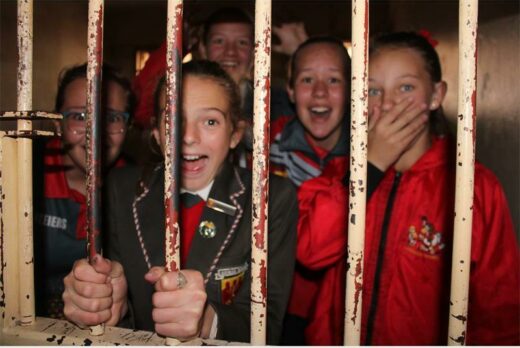
The learners went on an adventure down the cold, dark corridor to the holding cells where awaiting accused are usually kept.
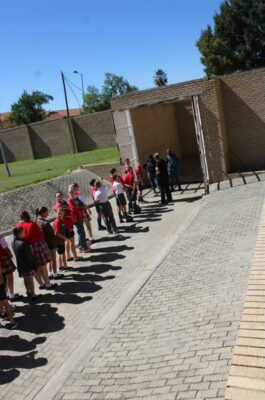
A small space with combined cells that can hold up to 220 people might appear intimidating and scary to those who have never experienced it.
Especially when that space has nothing more than a cold, hard concrete bench, single basin and toilet. People should also not forget the steel gate that ensures no escape.
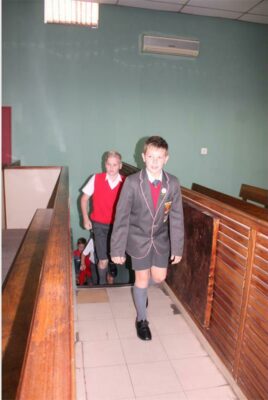
In a single file, the learners went up a flight of stairs to the dock, and then to the court’s public gallery.
They waited for the ‘all rise’ command before Magistrate Singh entered the courtroom and took her seat on the bench.
“You may be seated,” she said.
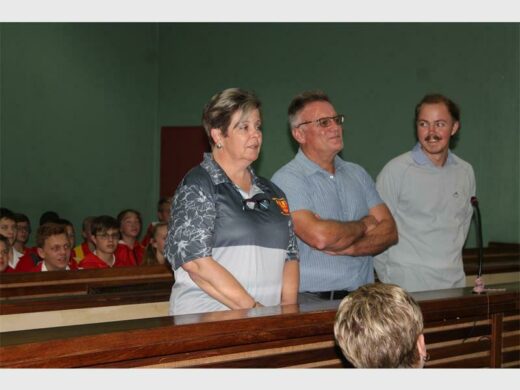
A mock court hearing, in which the educators were on trial, was held.
In two separate and unrelated cases, educators Erika Chamberlain, Klaus von Wielligh and Divan Liebenberg were found ‘guilty’ of stealing the chocolates from the school’s tuck-shop meant for the learners.
They were sentenced to 30 days of direct imprisonment and declared unfit to own a licensed firearm. Educator Elna Botha was accused of giving the learners excessive homework.
The court found that allegations made by the complainant, Bernice Meyer (acting as a minor), were fabricated.
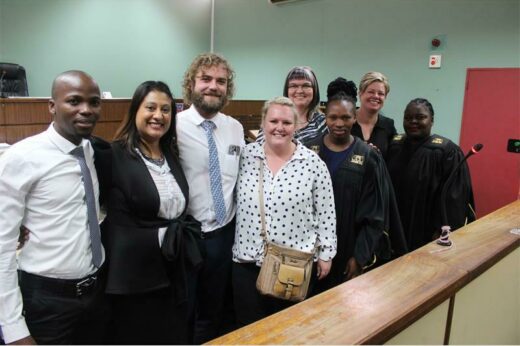
Meyer apologised to the court for lying under oath. She explained that her school friends pressured her to testify against Botha.
The court dismissed the charges against Botha, and the police took Meyer into police custody on perjury charges.
After the court adjourned, the learners left with a different opinion about the court system. It was an experience they might never forget.
Each learner was gifted a goodie bag made up by Teks Attorneys.