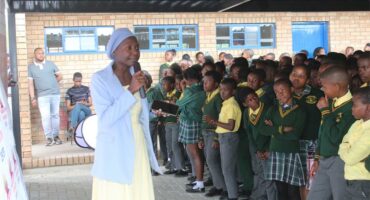
SAVF in Standerton holds discussion on breast cancer
De Sousa placed importance on the mammogram test, saying it is similar to an X-ray of the breasts and added that Cansa tries to arrange a free mammogram test for women once a year.
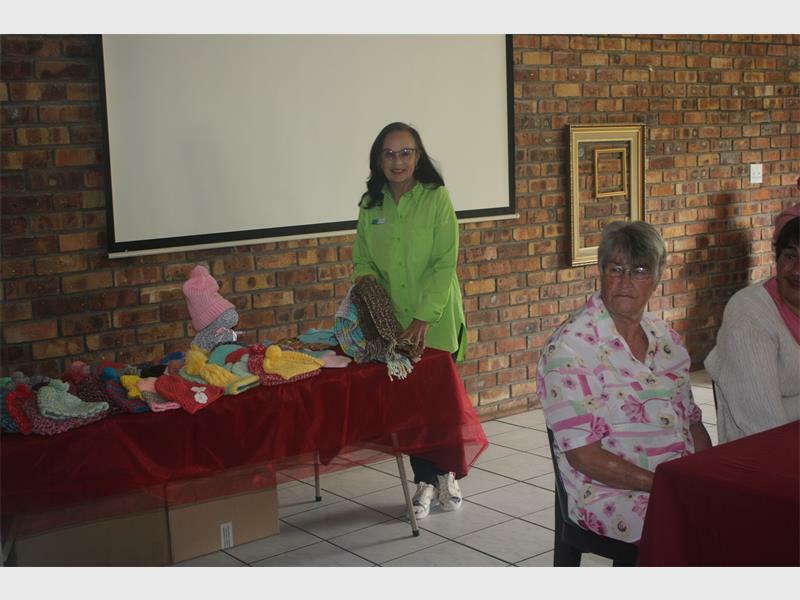
The SAVF on Schwikardt Street, Standerton, made their women’s group November 2 attentive to the circumstances regarding breast cancer.
Since October was Breast Cancer Month, the women knitted beanies for cancer patients suffering hair loss after therapy.
Several beanies in various colours were handed to Renette de Sousa, a Cansa volunteer. The women, most dressed in pink, applauded after the number was announced.
After Jeanette Roberts, who took charge of this initiative, opened the event with a prayer, De Sousa took the floor.
Mapedi Sebua from the women’s group translated the Afrikaans and English into isiZulu.
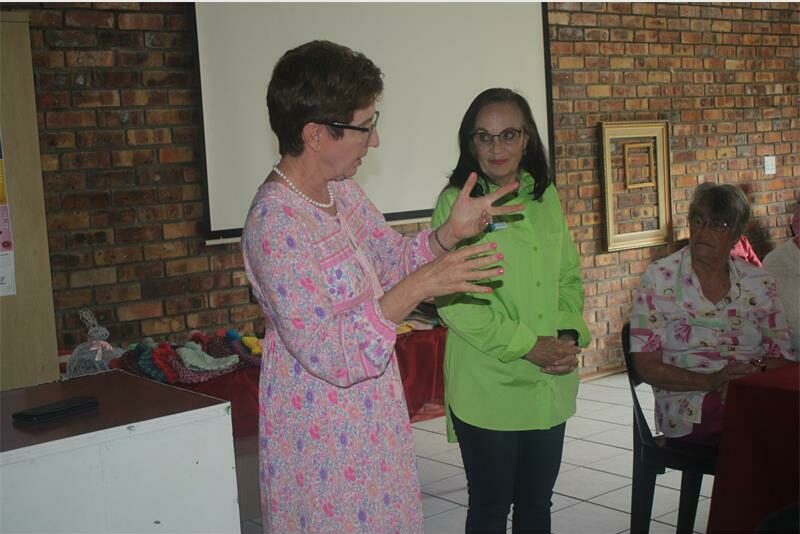
De Sousa was involved in patient care in the late 80s but now concentrates on fundraising and emphasises that breast cancer, after skin cancer, causes the highest number of deaths.
However, she admitted that while it is tragic, early detection makes treatment possible. According to statistics, one out of eight women will be diagnosed with breast cancer.
De Sousa placed importance on the mammogram test and said it is similar to an X-ray of the breasts and added that Cansa tries to arrange, once a year, a free mammogram test for women.
The tricky demonstration of examining one’s breasts followed, with the women carefully watching.
ALSO READ: No park and no money – residents want to know what happened to decade-old project
“Women should know how their breasts feel. We weren’t raised to lie on our beds and feel our breasts. Don’t be embarrassed or afraid,” she said.
De Sousa showed how one arm should be behind your head, with the other hand’s three middle fingers making circular motions outwards and inwards.
The nipples should be checked for any discharge, and if yellow, a doctor should be consulted. Any small lump in a breast can take anything from three to five years to become cancerous.
“Does everybody understand, and does it make sense?” she asked.
Questions were then asked. De Sousa said most of the time, women don’t feel pain when they have breast cancer.
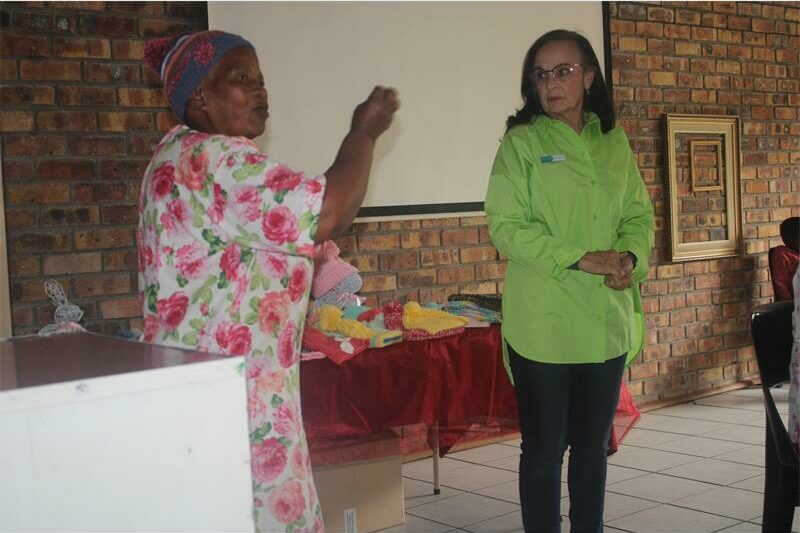
“You have to be examined to establish whether it is breast cancer.”
There was a short discussion on the lymph nodes, which are close to the skin surface.
“Don’t rush to the doctor every time lymph nodes are swollen. It could be a warning signal of an infection.”
The women were told to drink at least two litres of water daily. They also discussed chemotherapy and radiation.
“Nobody can predict beforehand what the effects on a woman’s body will be. You could become a cancer survivor.”