
New running club invites runners
SECUNDA – The international social running club Hash House Harriers has now also established a chapter in town. This non-competitive running social club can simply be referred to as hashing. The runners belonging to this club are called hashers. They have successfully completed two runs or hashes in the past to assist with the success …
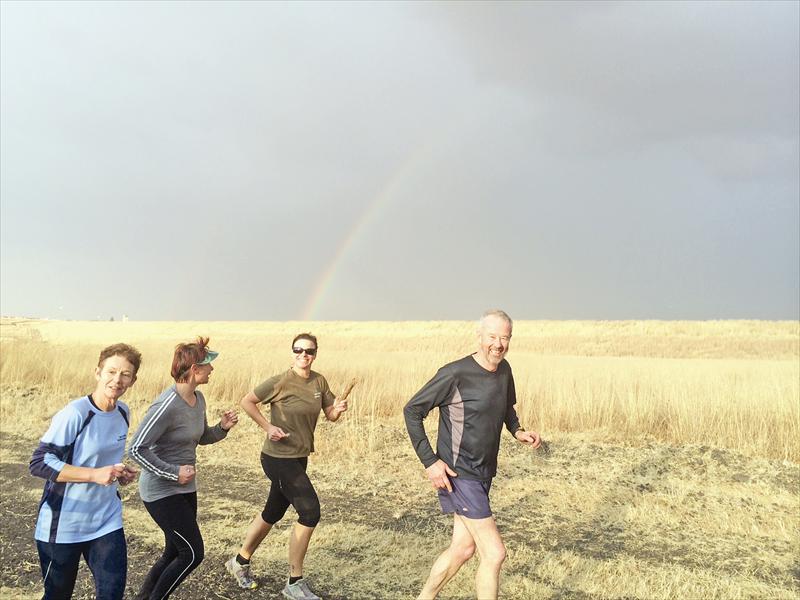
SECUNDA – The international social running club Hash House Harriers has now also established a chapter in town.
This non-competitive running social club can simply be referred to as hashing.
The runners belonging to this club are called hashers.
They have successfully completed two runs or hashes in the past to assist with the success of run number three.
Hash House Harriers run number three will be open to all who fancy a Saturday afternoon with a difference.
The run will begin at 3pm on Saturday, 19 July in Kuschka Street.
The location varies from run to run and details can be obtained from Mr Peter van der Meer who can be contacted at peter.vandermeer@sasol.com or 082 828 3468.
Hashing originated in December 1938 in Selayang Quarry, Selangor (now Malaysia), when a group of British colonial officers and expatriates began meeting on Monday evenings to run in a fashion pattern after the traditional British paper chase or “hare and hounds”, to rid themselves of the excesses of the previous weekend.
A. S. Gispert suggested the name Hash House Harriers after the Selangor Club Annex, where several of the original hashers happened to live, known as the Hash House where they also dined.
There are presently almost 2000 chapters in all parts of the world, with members distributing newsletters, directories and magazines and organising regional and world Hashing events.
As of 2003, there are even two organised chapters operating in Antarctica.
The Hash is of particular interest to people who have been transferred to a new place of work looking to make contact with people in a similar situation.
Secunda can be considered a place like this as many people countrywide and worldwide come to work here.
Hashing has not strayed far from its roots in Kuala Lumpur.
The hares mark their trail with paper, chalk, sawdust, or coloured flour, depending on the environment and weather.
There is a possibility that a circle is drawn at intersections. In hash terms this is called a checkpoint which means that section of the run is complete and a new route will begin at the circle.
The new route can go many ways, but obviously only one route is the correct one. Generally the fitter runners will begin searching for the correct route.
As soon as he finds an arrow, generally within 70 metres from the checkpoint, he will indicate to his fellow runners by shouting “On, on” which means “I am on the trail, follow me”.
If this runner is unfortunately on the wrong trail that is marked out by a triangle, he may shout “Falsie”.
He has to head back to the circle and again search for the correct trail.
That is if nobody else has found it.
He is now probably at the back of the pack as the correct trail was found by another runner.
This process continues until the runners get back to the beginning, generally a direct route of 5km to 8 km, but it is possible to run much more if you hit all the falsies. Trails may pass through any sort of terrain and hashers may run through back alleyways, residential areas, streets, deep mud or shopping malls and may climb fences, streams or explore storm drains in their pursuit of the hare. A good Hash House Harriers Run is when the whole pack completes the trail in more or less the same time.