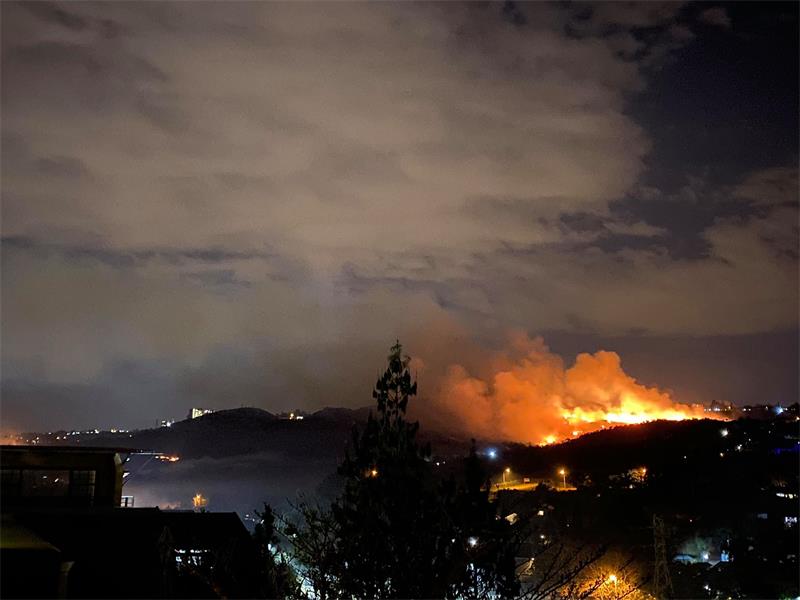
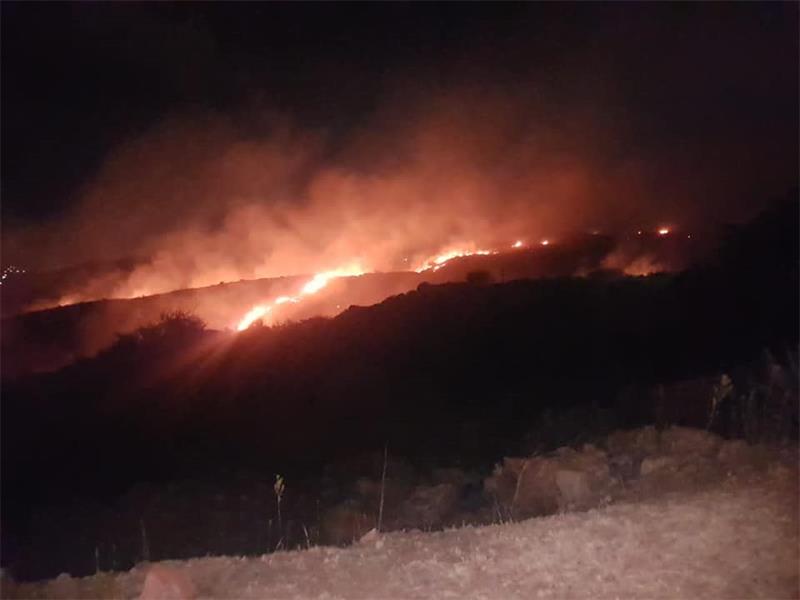
Residents of Kloofendal and the surrounding areas were overcome with panic when they noticed a large area of the Kloofendal Nature Reserve engulfed in flames on Monday evening, 14 September.
The reserve manager, Phillip Mkhombo, was quick to attempt to sooth the residents’ unease by assuring them that the fire was controlled via neighbourhood groups, but onlookers found it difficult to believe that a fire of that magnitude was controlled. Phillip further stated the important reasons the reserve needs to make use of controlled fires, saying that the issue of bush encroachment (which occurs when trees take the place of dead grass), is unfortunately a very apparent problem at the Kloofendal Nature Reserve, which should predominantly be grassland.
Read initial article here: The Kloofendal Nature Reserve fire was controlled
Johannesburg City Parks and Zoo (JCPZ) responded to the concerns, giving reasons for the size of the flames, explaining why the process was carried out at night, and addressing the concern residents showed for the animals living on the reserve.
Jenny Moodley, the JCPZ spokesperson, explained that the reserve is split into six blocks which are burned in different years. She continued to state that the size of the fire was normal, considering that the last time this specific block was burned was in August 2018, so when the wind picked up, the fire spread into shrubbery and vegetation, making the flames over two metres tall.
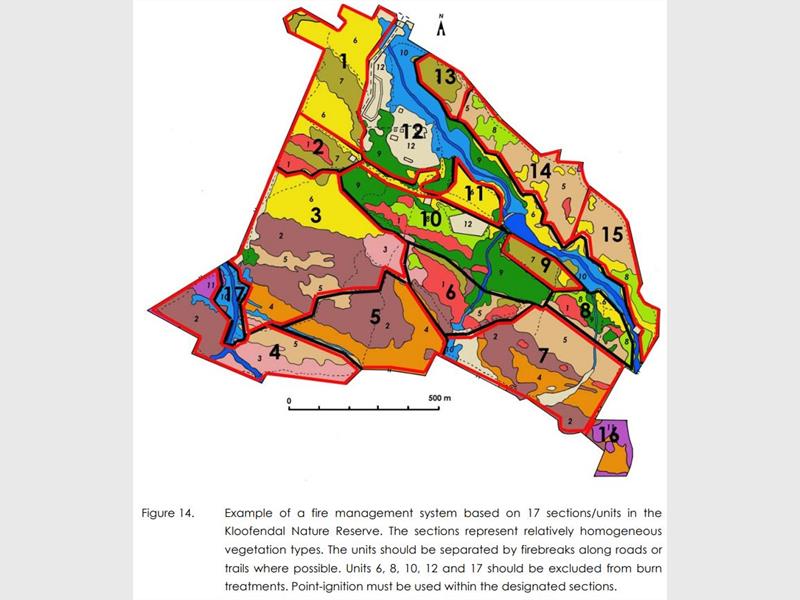
On that night, two sections of the reserve were burned, one being from the wetland to above the dam, and the other being the section between the Red Trail and the Yellow Trail next to Wilgespruit.
Jenny confirmed that the fire team burned from the bottom of the ridges to ensure that the animals would have ample time and space to escape the blaze. The burned areas were then searched on Tuesday morning and no animal was found dead or injured by the fires.
Another concern residents expressed was the fact that the blocks were burned at night, when there would be limited visibility. The fire was confirmed to have been started just after 6pm, and was monitored until shortly after midnight when the flames showed signs of fading.
The JCPZ firefighting team was on site, and all necessary precautions and preparations were in place (including the new fire breaks that were burned in July this year). JCPZ has also said that it is common practice in the nature conservation industry to burn late at night or very early in the morning, when temperatures are low and wind speeds are down. In addition, the reserve is open to hikers during the day, so it would have been extremely risky to burn the allocated blocks with civilians on the premises.