Expert dives deep into the crisis – ahead of festive season
“How often does someone actually stop and ask a homeless person what their needs are?” he asked.
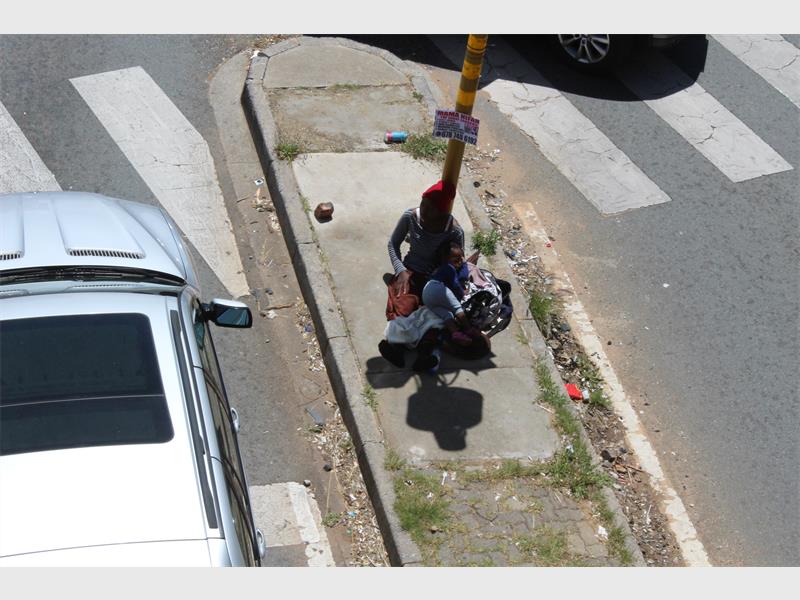
As we rapidly move towards the festive season, this period usually is marked by a number of symbols to welcome the holiday break.
Despite the colourful Christmas decor in the malls, and large volumes of traffic literally on every main road, the reality is that it’s also a time when begging becomes rife in Roodepoort.
Whether you are travelling on Ontdekkers or Hendrik Potgieter Road (the busiest routes in the area), you might have caught a glimpse of a beggar at an intersection or even worse, a woman with a child sitting sorrowfully on the pavement enduring any form of weather thrown at her.
Being empathetic and eventually tossing some loose change at them are normal reactions, especially if you believe in the ideology of blessings. However, DA Member of the Gauteng Provincial Legislature, Crezane Bosch, an expert in dealing with issues of homelessness and street begging, detailed the bedrock of this crisis.
“A large number of people flock to large cities such as Tshwane, Johannesburg and Ekurhuleni with the hope of finding a job. They often only have accommodation for the first few days, where after they are forced to the streets due to the lack of job opportunities as the demand by far exceeds the supply,” she explained the most common factor.
Other contributing factors she cited were LGBTI stereotypes and rejections, abuse or gender-based violence, substance abuse, poverty, eviction and mental-health issues.
With street life comes dangers, and Bosch cited some of them. “Danger is a two-way street – it could potentially be dangerous for motorists, as some homeless people resort to survival measures which could include criminal activities,” she said.
She also clarified that not all homeless persons are criminals. “We cannot generalise or assume that they are dangerous merely because they are homeless. However, the homeless who stand at intersections are also in danger, as they face the risk of being hit by a moving vehicle. There are also health risks as there are no ablution facilities available either,” Bosh further explained the dangers.
As their presence at the intersection leaves one in an awkward position, Bosch was asked if it’s okay to continue sparing that coin for them. “There are various reasons why someone ends up on the street. Food and money are not the only reasons or motivation for people to remain on the streets. Food and money are just a temporary solution, but it does not solve or address the root of the problem,” she responded.
“How often does someone actually stop and ask a homeless person what their needs are?” she asked, adding that it would be important to try and identify what the root of the problem is and why they resorted to living on the streets.
“Once this has been identified, one can identify what the best possible solution would be. There are various shelters across the province; although not sufficient, it would be a great starting point to assist in identifying the problem and how to address it,” she explained.
She added that there are also drop-in centres. These are not shelters but provide the homeless with a plate of food, ablution facilities, clothing and in some instances even counselling, medical treatment or skills development.
She also mentioned that local Community Policing Forums and councillors should have an idea of where these shelters or drop-in centres are located, where homeless people can be referred to.
Above all, Bosch suggested that the government be more proactive in supporting non-profit organisations dealing with the homeless.
“The government should join hands and partner with the NGOs who are the experts in this field to find tangible solutions to address homelessness,” she concluded.