Month of love for Makatsa and Mahlori
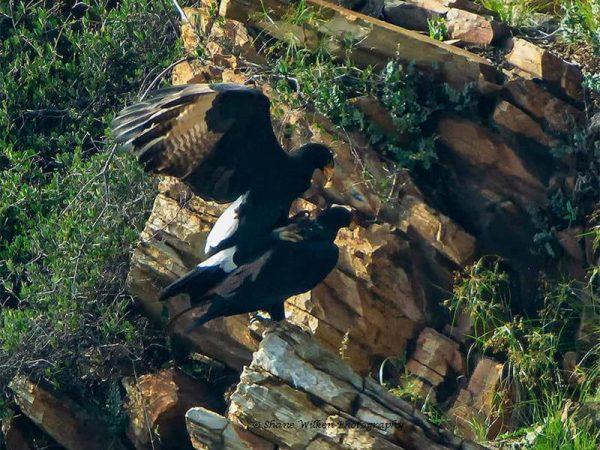
“As witnessed this morning, mating took place between the pair and this can carry on for a few weeks. Early in April two eggs are laid about four days apart.”
After some heavy rains and cold weather the eagles of Walter Sisulu National Botanical Garden (WSNBG) are still in their rest period and are seen very infrequently during this period.
Although the Black Eagle Project Roodekrans (BEPR) monitors witnessed some nest building in the last few days, on Wednesday, 10 February at 7.20am Makatsa and Mahlori were spotted by the monitors mating, which they believe is an indication of an early start to the breeding season.
According to BEPR, each year the Verreaux’s eagles bring fresh branches and sprays of leaves to the nest around the end February.
“This year began a little earlier. Sooner than I expected, courtship also started around this time to build and strengthen their bond.
“As witnessed this morning, mating took place between the pair and this can carry on for a few weeks. Early in April two eggs are laid about four days apart,” said BEPR photographer, Shane Wilken.
Incubation is expected to take up to 40 days for the first egg to hatch, and the second egg should hatch about four days later.
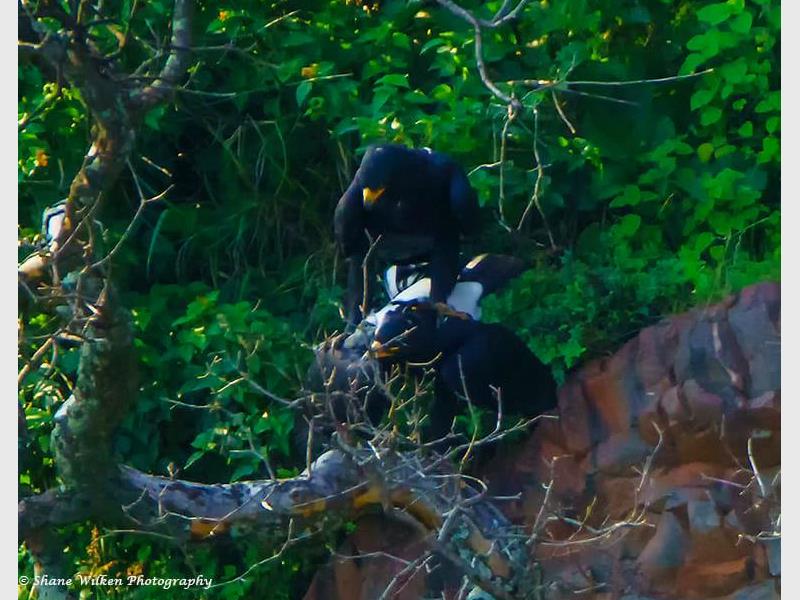
Unfortunately nature cannot be disturbed and sometimes seems cruel. As a result of the wild nature of the eagles the stronger chick will feed on the weaker one.
When in its juvenile stage, the surviving eaglet should fledge around mid-November, and will leave the nesting area around mid-December.
“But as witnessed last year, Motsumi hatched two weeks earlier, also fledged two weeks earlier and left the nesting area in the beginning of December,” said Shane.
BEPR monitors will continue to watch and photograph this year’s breeding season with the same excitement and enthusiasm that was displayed in 2020.