What you need to know about our BEE-autiful bees
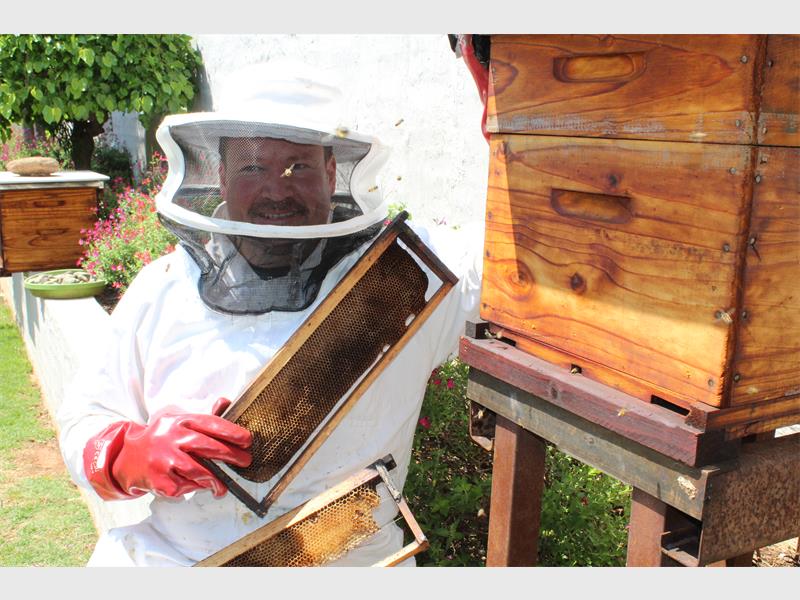
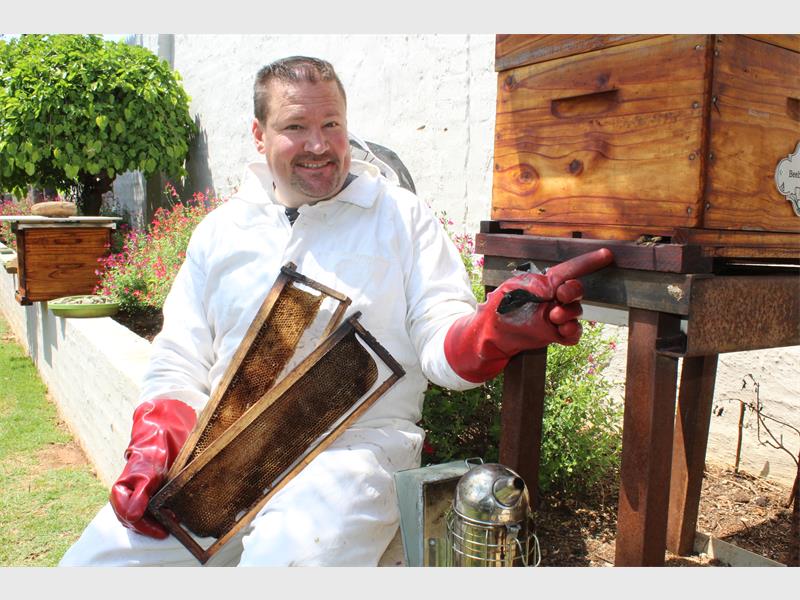
For the past seven years Garry Cook has taught himself the ins and outs of the buzzing kingdom.
Bees are the wispy sprites that connect the plant kingdom to the animal kingdom; they are the ties that bind the natural world together. Because of bees, flowering plants grace our planet with both beauty and food.
It is about time we honour them by learning more about these often under-appreciated little animals. Who better to take us through the hives, strives and daily lives of these enchanting creatures than the passionate and enthusiastic beekeeper, Garry Cook?
For the past seven years this nature lover has taught himself the ins and outs of the buzzing kingdom of one of the most hardworking species alive. When approached by the Record, he was more than willing to share his knowledge and exciting observations. So put your reading glasses on, sit back and prepare to bee amazed.
First and foremost, it’s important to acknowledge that Africanised honey bees exhibit far greater defensiveness than other bees around the planet. So, whenever you see bees peacefully buzzing around a rather provocative threat on TV, chances are it’s an international production.
Luckily, if you don’t speak Angry Bee, Garry urges you not to worry too much as there are ways bees communicate with you. When they feel threatened they either give you a yellow card by bumping into you, or a red card by stinging you. And where better to hinder a human than their eyes? Bees usually aim for the eyes which would cause it to swell and lead to obstructed vision.
It’s no wonder they are considered highly intelligent in areas relating to mathematics, communication, and emotion.
Now, if you were to be a honey bee you would be able to smell a human’s breath, and most likely associate it with that of another omnivore, such as a bear hungry for some honey. Needless to say they are instantly threatened and on the defence. In essence, by just keeping your mouth closed or covered, you would pose much less of a threat opposed to someone who is screaming or talking in the presence of these tiny workers.
“Another myth-buster is that bees are actually less likely to attack when they are in a swarm. When they are in this formation it’s like they are waving their white flag – if you don’t hurt their queen, they won’t hurt you,” Garry explained.
Talking about queens … did you know that she isn’t actually the one in charge? Well, not entirely. One would rather believe that a swarm, or super organism, rules the hive on a daily basis.
With this time of year being the start of the bee season, the queen bee lays up to six replacement eggs. As soon as the first egg has hatched the bees would then view her as their next queen. Some queens even get killed by their replacement. However, it’s important to remember that each hive is unique and subject to its own swarm.
In some cases the colony would even get their current queen ‘fly-fit’ by feeding her less and less in preparation of their new ruler that is about to hatch. What if the first hatchling is a male? According to Garry that is highly unlikely since 99% of bees are in fact female. However, there are males in the hive called drones. Drones usually fly off to reproduce with other young queens who will start a new colony.

How many bees in a colony, you ask? Some bigger, sturdier swarms can comprise between 20 000 and 80 000 bees. And what’s more interesting, is that each one of these bees is busy with something from the moment they are born.
According to Garry, some are responsible for nursing baby bees, while others keep guard at the entrance of the hive. Some bees are dedicated to collecting pollen while others feed and look after their queen.
An interesting fact is that while ordinary bees usually live up to 40 days, a queen bee can live up to an astonishing six years. That’s a pretty long time considering all the pollen collected by the colony in that time.
By the way, have you ever thought about how a bee gets the extracted pollen back to the hive? Two words; pollen pants. These clever little bug-gers collect pollen by packing it onto their hind legs. They comb it out of their hair, mix it with nectar and press it into a special bowl-like structure on the leg called a corbicula.
If you thought that was cool, wait until you discover how honey is made. Once back at the hive, the nectar is delivered to one of the indoor bees and is then passed mouth-to-mouth from bee to bee until its moisture content is reduced from about 70% to 20%. This process transforms the nectar into honey. Garry went on to say that the nectar can be passed between the bees up to eight times.
As you can see, these small dedicated creatures aren’t just another insect to swat away; instead they are wonderful organisms from which we as humans can learn a great deal.
If you feel inspired to help these tiny buzzzy bodies, Garry suggests putting out trays with water and small pebbles inside to help keep them hydrated during their pollen-collecting journeys.
The plight of the bee is not one that should be taken lightly. That’s why it is our responsibility to care for them and look after them wherever possible. There are other ways you can help them too. If you would like to know how, feel free to contact Garry the beekeeper on 082 787 4991.