‘Snakebite Symposium a crucial development for South Africa’
Until now, medical organisations have relied on their own snakebite management guidelines.
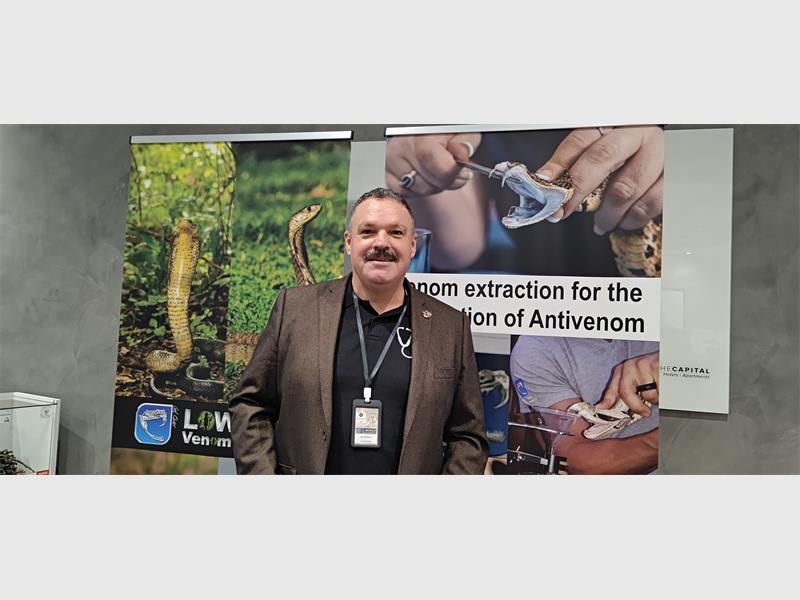
Jonathan Leeming, a local conservationist, attended the South African Snakebite Symposium on July 29 and 30 in Mbombela. The symposium aimed to attract top snakebite medical and envenomation experts, medical and veterinary students and professionals.
Also read: https://www.citizen.co.za/roodepoort-record/2022/04/27/learn-about-creepy-crawlies-in-new-book/
The symposium was made possible by the generosity of the Gift of the Givers Foundation.
“There used to be no forum in South Africa for the development of an understanding of snakebite. Each medical organisation that treats snakebite has its own management protocols and understanding. This was the first time that a snakebite symposium was held in South Africa to address the fate challenge of snakebite,” elaborated Leeming.
It was the start of something special that will change the outcome of snakebite for hundreds of patients not only in South Africa, but in neighbouring countries as well. This was an opportunity for participants to network with panel members, form alliances, and share information.
“Snakebite disproportionately affects rural and impoverished communities. The only effective treatment for life-threatening bites is antivenom, which is not always available or understood. The cost of treatment can also be prohibitive for impoverished communities,” explained Leeming.
“For many patients, medical treatment cannot be avoided; however, the cost of treatment leads to crippling financial debt. Effective bite and sting treatment necessitates both an understanding of the animals and a medical professional who is experienced in treating bites and stings. It is a collaborative effort that divides the patient’s best possible outcome,” he added.
The difficulties in effectively treating snake bites, according to Leeming, are numerous. The majority of bites occur in rural areas, where medical facilities may lack the knowledge, equipment and capacity to treat bites effectively. Another issue to consider is the availability of antivenom, which is critical for preventing death or limb loss, but it is not always available, and medical professionals do not always know how to use it.
The symposium was aimed at medical and veterinary students and professionals. Most of the attendees were South Africans, however there were attendees from Namibia, Botswana, Eswatini, Mozambique and Zambia as those countries share the challenge of snakebite.
“Spider bites and scorpion stings are my specialty. I was there to assist with organising the symposium and to speak to the audience about spider bites and scorpion stings in southern Africa, which present similar difficulties in treatment. During the question and answer sessions, I was a member of the expert panel and presented on spider bites and scorpion stings,” explained Leeming.
Until now, medical organisations have relied on their own snakebite management guidelines. The symposium resulted in national snakebite guidelines being set, partnerships between medical organisations and individuals being formed, and increased education for medical and veterinarian professionals.
The fact that the top experts all got together in the same room to discuss the challenge of snakebites, according to Leeming, was a major step for everyone who has been bitten by a snake or spider, or stung by a scorpion.
Partnerships have been formed that can only benefit all South Africans, and there is no doubt that the attendees developed a new understanding of snakebites.