
Thousands of graves could be destroyed
LINKSFIELD - A PROPOSED development on the open ground that houses Sizwe Hospital is opening up rigorous and often angry debate about the preservation of Johannesburg's history.
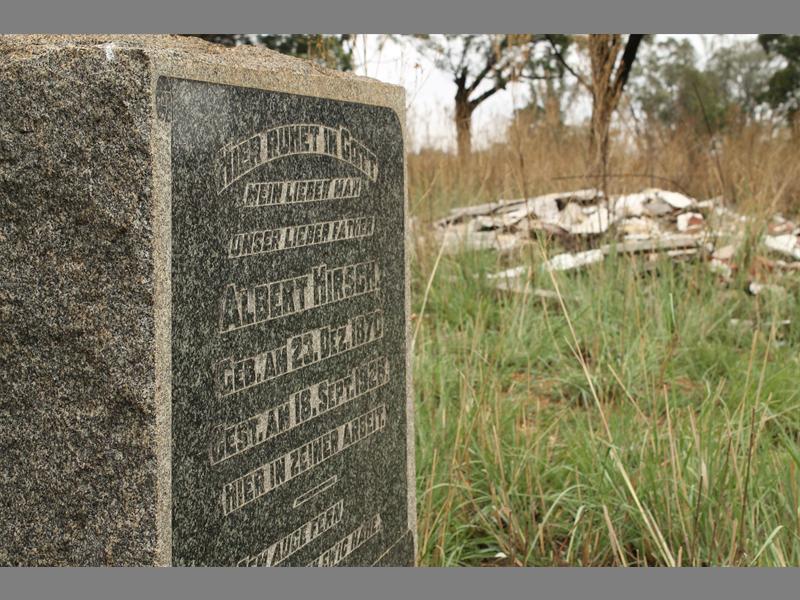
Exploring the undeveloped portion of Rietfontein Farm is a melancholy experience.
In the rough terrain of this apparently empty area, rubbish recyclers, a nursery and occasional motorcyclists mix incongruously with historic Rietfontein Lazaretto – now renamed Sizwe Hospital which treats drug-resistant tuberculosis. Nestled almost invisibly among long grass and occasional rubble heaps, meanwhile, lie thousands of graves representing more than a century of Johannesburg’s history.
These graves are one point of heated contention in the proposed Linksfield mixed-use development that may soon see this hitherto relatively untouched grassland making way for housing, municipal buildings and commercial interests.
Click here to read the previous article.
A report by Bokamoso Environmental Consultants recommends preservation of three graveyards as heritage sites, but Naomi Dinur and David Fisher of the Rietfontein Heritage Action Project argue that the true burial area is far greater. They estimate 7 000 graves in five graveyards, and believe irreparable damage to the area’s heritage will ensue when ground is broken.
The oldest graves lie in swampy riverside ground, where, according to Dinur, victims of an 1895 smallpox epidemic were first buried onsite – then a full day’s wagon ride from town. Causes of death for the estimated 730 individuals buried at the riverside include bubonic plague, which killed young nurse Emily Blake when she contracted it from a patient. The burial site was moved up the hill after flooding brought bodies to the surface.
The remaining graves spread, Fisher estimates, from the Jukskei River to Linksfield Road. Many victims of smallpox, plague, Spanish flu, syphilis, tuberculosis and typhoid, who were buried according to disease and separated by lines of trees, were paupers, buried without a tombstone. Thousands of metal markers indicating and numbering the graves were stolen several years ago for scrap, while fire destroyed wooden crosses that marked some graves. The history this site represents is gradually sinking with barely a trace.
The historic graves onsite are only one reason for the thousands of objections received in response to the proposed development. Community members are concerned about health risks involved in disturbing the ground, destruction to historic hospital buildings, bridges and the turn-of-the-century superintendent’s house, as well as ecological damage – the debate rages on. One thing is certain, however. The site’s 194 hectares contain a Johannesburg heritage worth preserving.