
Hospital closes gap with its Breastfeeding Week campaign
A mother’s breastmilk provides nutrition tailored to the baby's needs, boosting immunity and reducing the risk of infections.

Charlotte Maxeke Academic Hospital launched breastfeeding week from August 1–7 with a seminar under the theme: ‘Closing The Gap’.
According to the Department of Health, South Africa is experiencing low exclusive breastfeeding rates, furthermore, the 2023/2024 District Health Information System data showed that exclusive breastfeeding in Gauteng was at 42.7% at 14 weeks of infancy, dropping drastically to 7.4% at six months.
This contributed to undernutrition, with Gauteng reporting a fatality rate of 6.4% for severe acute malnutrition in 2023/2024.

Gauteng’s MEC for Health and Wellness Nomantu Nkomo-Ralehoko pointed out that in response to this year’s theme, the Department of Health was implementing several initiatives aimed at promoting, protecting, and supporting breastfeeding, such as providing comprehensive services to help mothers in exclusive breastfeeding for six months and continuing up to two years.
ALSO READ: Miss World and six continental queens spread joy at Nelson Mandela Children’s Hospital
“All public hospitals in the province are implementing the Mother Baby Friendly Initiative (MBFI) and Kangaroo Mother Care (KMC) which are initiatives that focus on improving the care and outcomes for mothers and their newborn babies. Furthermore, the MBFI outlines 10 steps hospitals and maternity centres can implement to become baby-friendly and promote breastfeeding.”

Through the KMC method, healthcare workers at public hospitals will ensure that low birthweight and preterm infants have skin to skin contact with the mother and stay close to the breast for feeding as much as possible. This method has proven effective in promoting breastfeeding, reducing the risk of infections, and improving long-term growth and development outcomes.
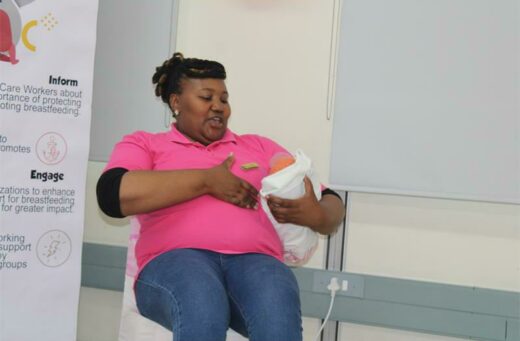
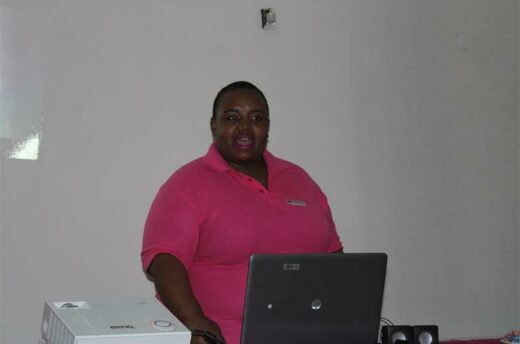
Professional nurse Thandeka Jwaha kicked off the breastfeeding seminar in the maternity ward by explaining the different temperatures at which expressed breastmilk could be kept.
The following situations can affect how long breastmilk lasts:
• After being expressed breastmilk can last between 3–4 hours at room temperature.
• On a countertop at 16–29ºC, the freshly expressed milk can last 6–8 hours.
• After frozen breast milk has been thawed it can last 1–2 hours at room temperature.
In an insulated cooler box, which should be from 4–15°C:
• The expressed milk should last 24 hours.
In a fridge, which should be at 4°C:
• It can last up to 72 hours.
In the freezer compartment of a fridge, which should be -15°C:
• The freshly expressed milk can last up to two weeks, but after thawing do not refreeze it.
In a deep freezer, which should be kept at -18° and -20°C
• The freshly expressed milk can be preserved for up to 12 months.
Speech therapist Ammarah Moola explained that when working with neonatal babies, her role was to ensure that the baby was feeding safely, weening the baby off the feeding tube and onto oral feeds.
ALSO READ: Life Brenthurst Hospital staff revitalise old age home on Mandela Day
“Oral feeds include breast, cup, or syringe. Speech therapists always advocate for babies to be breastfed and if for whatever reason the baby is unable to breastfeed, we encourage moms to express the milk and try oral feeding by cup or syringe using the expressed milk.”
Moola added that one of the things therapists did was to assess the baby’s suck to ascertain if the baby could feed safely on oral feeds, as well as if it could feed actively by sucking to remove or extract the breast.
“As therapists, we use a clean glove finger and test if the baby can suck and breathe safely. The signs are important because they let us know if the baby will find the mother’s breast instinctively or latch onto the breast. Are the tongue, cheek, and jaw working well together to massage the mom’s breast to stimulate milk production and remove the milk, and will the baby complete the feed fully?”
The reason why therapists want the tongue, lips, and jaws to work well together is because there are milk ducts that need stimulation to encourage milk production.
ALSO READ: Smile Foundation commemorates Mandela Month through Smile Relay
Signs of a good suck:
• Good awareness. Does the baby open its mouth, turning its head to see the food? Is there gagging or biting down?
• Closing lips around the finger alerts therapists to if the baby can latch onto the breast.
• Tongue moving backwards and forwards in a sucking pattern. Can therapists feel pressure from the baby’s suck?
• Are the tongue, cheeks, and jaw moving well together?
An unhealthy suck:
• If the baby is not closing their mouth around the finger.
• Little to no movement of the tongue.
• Lack of awareness when the baby is touched around the cheeks to see where food is coming from.
• Tongue is pushing past the teeth and out the mouth.
A good suck is important because it increases the chances of breastfeeding, promotes good weight gain, and is good for later speech and language development because it allows for the use of muscles in the mouth and reduces the lengths of stay in the hospital.
Professional Nurse, Lungile Zwane explained that the following positions could be explored by breastfeeding moms:
• Cradle.
• Laid-back (ideal for post C-section)
• Rugby hold.
• Nursing in a sling.
• Breastfeeding while lying on your side.
A first-time mother, Navy Maru said the staff at the hospital were patient with her through her difficult breastfeeding journey.
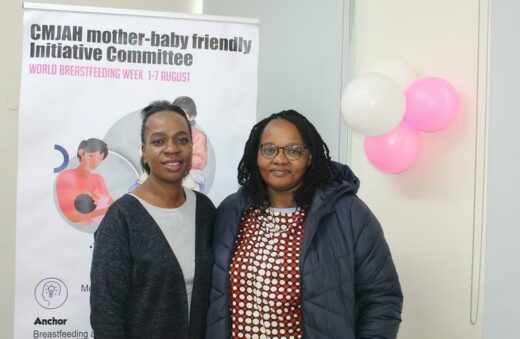
“The staff have supported me through a tough journey; my milk dried out due to stress, but they have offered a helping hand and provided my baby with donated milk and my baby is now growing.”
Another mother, Nonhlanhla Radebe noted that although she had a rocky start to motherhood, she was grateful for the hospital’s support.

“After Khanya was born, I struggled with producing enough breast milk and suffered from postpartum depression. Khanya was still too small to have formula so I had to receive a milk donation because she was diagnosed with necrotizing enterocolitis which is a serious condition that resulted in her not being able to have formula.”
Radebe added that Khanya was thriving and in a healthy state and was grateful for the milk donation supplies she received through her hospital stays.
Follow us on our Facebook, X, Instagram and TikTok pages. Join our WhatsApp group for any story ideas you may have.