
Gauteng department of education reviews de-centralisation model
The de-centralisation process has had significant negative impacts, especially regarding non-payment of municipal services.
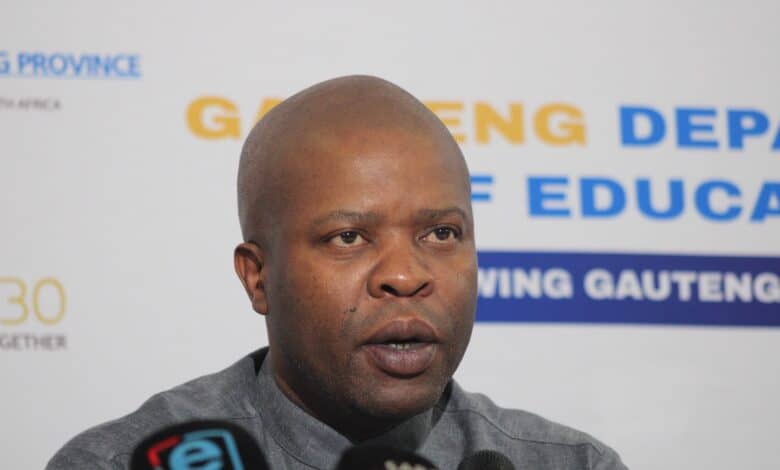
To address the ongoing water and electricity disruptions in Gauteng schools, Lebogang Maile, MEC for Education and Sports, Arts, Culture, and Recreation confirmed that the department of education is reviewing the de-centralisation model.
Speaking at Lyndhurst Primary School on May 17, Maile explained. “De-centralisation of municipal services to public schools in Gauteng refers to the process where responsibility for paying municipal accounts, such as water, electricity, refuse removal, and sanitation, is shifted from the Gauteng department of education to individual public schools and their school governing bodies (SGBs).”
Read more: The importance of ECD Education
Under the de-centralised system, schools receive allocations from the department and are expected to manage and pay their own municipal accounts. The management of finances by public schools in Gauteng provides several important benefits. Financial de-centralisation allows schools and SGBs to exercise greater control over budgeting, procurement, and expenditure to meet the specific needs of their schools and it allows for faster decision-making by schools. Schools can respond quickly to urgent needs without waiting for approval from the department.
Maile made reference to the high court in Pretoria, which recently ordered the City of Tshwane to immediately restore electricity to schools disconnected over unpaid property rates in the administrative capital. “The ruling prohibits further power cuts, confirming that schools should not face disconnection for property rates owed by authorities. This is an important ruling that affirms the importance of protecting the education system in Gauteng and South Africa, broadly. “
The MEC added that the department’s assertion that teaching and learning should not be interrupted is not intended to minimise the importance of revenue generation on the part of municipalities. “We recognise that municipal revenue is vital for funding essential public services, infrastructure development, and local economic growth, enabling municipalities to function effectively, maintain financial sustainability, and reduce reliance on national grants.”
Although the de-centralisation’s benefits are clear, it has had significant negative impact as well, especially regarding non-payment of municipal services.
Also read: Cyril Ramaphosa Education Trust (CRET) celebrates its students’ achievements at Melrose Arch
Some of the challenges that have been seen include for no-fee and low-income schools, who struggle to pay increasing municipal tariffs using limited state allocations. Some schools inherited historical municipal debt that accumulated before the de-centralisation policy was implemented. This could lead to service disconnections, as evidenced in the case that led to the ruling in the City of Tshwane. Municipalities have disconnected electricity and water services at several schools due to unpaid accounts.
This has led to the department’s decision to review the model. “This has been made necessary by challenges with financial management and sound governance, which result in the non-payment of municipal services.”
Follow us on our Whatsapp channel, Facebook, X, Instagram and TikTok for the latest updates and inspiration!