
Bryanston post-summit roundtable discusses how AI is changing businesses globally
In Bryanston, tech leaders came together to discuss the effect of AI on the world's businesses, exclaiming that those that ignore AI today will struggle to compete in the near future.
Six years ago, maybe three-quarters of locals did not understand what artificial intelligence (AI) was.
Today the common question is no longer What is AI? but rather are you using it? These days, people write emails, summarise meetings, and analyse data using AI, showing that AI has entered working life.
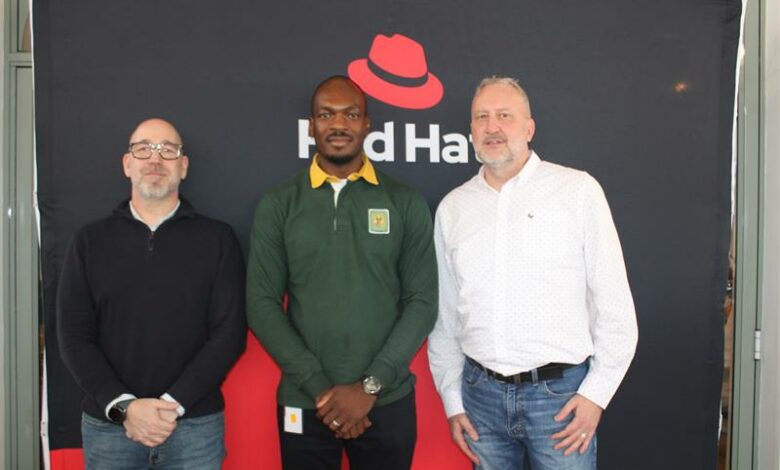
For many companies, it is no longer just another technology trend, but a tool that is already changing productivity, costs, and the future of work. At a post-summit media roundtable, hosted by Red Hat in Bryanston, industry leaders had a conversation about how AI and automation are reshaping businesses globally, and what that could mean for South Africa and the African market.
Bruce Busansky, application platform specialist at Red Hat, elaborated on the shift using a simple comparison. “Think of it like an intern. Same cost, same system, but now it works 24 hours a day and produces ten times more output.”
Read more: Artificial intelligence is no longer the future; it is the now
Busansky pointed out that while AI increases productivity, it also introduces a growing financial challenge, known as the token economy, where businesses are charged based on how much AI they use. He said that many organisations may underestimate how quickly costs can rise as AI systems become more active and automated. “The challenge today is that the world is becoming compute-constrained.”
He highlighted that companies are consuming far more AI resources than they were just two years ago, further highlighting that many businesses are still exploring with large AI models but do not yet fully understand the long-term costs and control required to manage them properly.
He said organisations are now moving from being token consumers to potentially becoming token producers, by developing internal AI systems that they can control themselves. “Certainty is difficult in the world we are in right now, but the organisations that build early will have the advantage.”
Oluwafiropo Tobi Ogundare, territory sales lead for West Africa and Mauritius at Red Hat, said infrastructure remains one of Africa’s biggest challenges in adopting AI effectively. He said that many companies still rely on outdated systems that were never designed for modern AI workloads. “Infrastructure optimisation, modernisation, standardisation, and long-term support are critical.”
Also read: Artificial intelligence to recognise weather conditions
Dion Harvey, regional general manager for Sub-Saharan Africa at Red Hat, said that despite AI’s rapid growth, human judgment remains essential. Using the example of his wife, who is a teacher, Harvey explained that AI should support skilled professionals rather than replace thinking entirely. “She uses AI to assist her, but she knows how to evaluate whether the output is correct or useful.”
Harvey advises against blindly trusting AI-generated information without reviewing it critically. “If you just take whatever AI gives you and use it without thinking, you should fail.”
Harvey pointed out that AI is already transforming workplaces around the world, and that South African businesses cannot afford to ignore the shift.
Follow us on our WhatsApp channel, Facebook, X, Instagram and TikTok for the latest updates and inspiration!