Unsung heroes in public health demand stronger government support and resources
Community media reporters are on the frontlines of public health crises, but they struggle with limited resources and inadequate government engagement. They call for sustained partnerships and better communication to combat mental health stigma and disease outbreaks.
In South Africa’s fight against disease outbreaks and a rising mental health crisis, community media outlets play a critical yet often overlooked role.
However, reporters say they are hindered by a lack of resources, inconsistent information, and limited government engagement, which challenges their ability to effectively serve their communities.
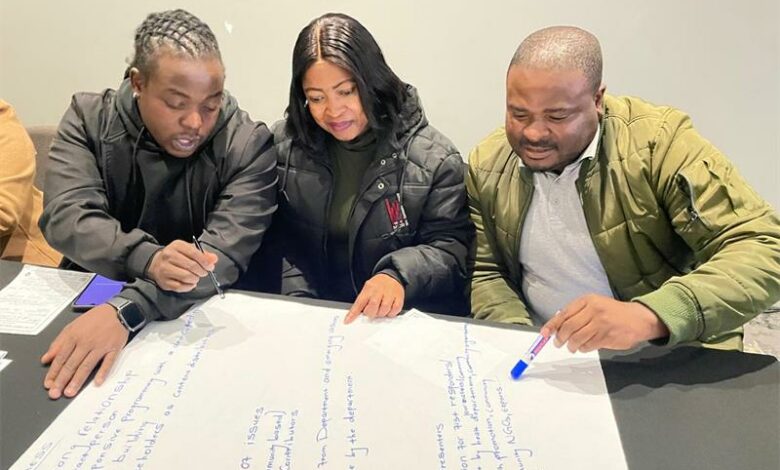
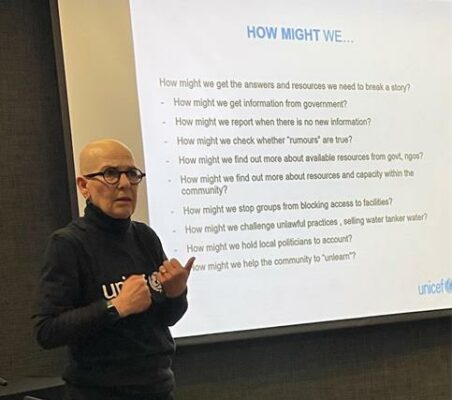
At the recent Community Media Framework for Action in Disease Outbreaks workshop hosted by Unicef, the Department of Health, and Jhpiego, at The Capital on Park, journalists shared firsthand stories illustrating the urgent need for better support.
Also read: Community media calls for greater government support in tackling health and disease outbreaks
Tshidiso Hlakotsa, a community radio presenter, recounted a heartbreaking tragedy in a township where a mentally ill elderly woman was killed after being wrongly accused of witchcraft.
“This happened because of misunderstanding and stigma around mental health. If communities had the right information, lives could be saved.”
Mental health stigma is pervasive, with young people particularly vulnerable to its devastating effects. Hlakotsa also shared the story of a young man lost to suicide after battling untreated depression, underscoring the dire consequences of systemic gaps in awareness and care.
Reporters stressed that their work goes beyond news; they are educators, first responders, and trusted voices in communities where access to formal healthcare and reliable information is limited.
Also read: Generator keeps Wendywood Clinic running
Reporter Mfanelo Dzanibe pointed out the logistical challenges. “Without access to archives, libraries, or updated contact lists, it’s difficult to provide accurate, timely public health information. We often work with outdated resources.”

Dzanibe shared how mental health issues are dismissed or misunderstood in many communities, especially in black households, where children are often labelled ‘lazy’ or ‘moody’ rather than being seen as needing professional help. “Stigma is still winning. Even within our families.”
A resounding frustration was aimed at government officials and politicians who only engage with community media during elections and neglect ongoing dialogue or support.
A reporter who asked not to be named said, “They jump for mainstream media but ignore us locals who speak for the people. We’re treated like we don’t matter, even though we’re the ones embedded in the very communities these utilities are supposed to serve.
“But when it’s time for elections, you don’t even follow them; they are the ones who come to you, they can even buy you a KFC. But the moment elections are over, we never see them again. It feels like an emotionally abusive relationship.”
Also read: Mediclinic Sandton hosts successful women and child health CPD symposium
Another major complaint was the lack of regular communication and predictable information from public institutions.
“If it’s your story and your money, you can tell us the publication time that suits you, but rather than that, we have our schedules, our priorities, and our people to serve,” said Dzanibe.
Department of Health communications manager Charity Bhengu acknowledged these concerns and highlighted ongoing efforts to centralise reliable information through platforms such as the National Institute for Communicable Diseases website and a dedicated WhatsApp group for journalists.
“We already have centralised platforms, such as the National Institutes for Communicable Diseases website that lists diseases from A to Z. We also work with public entities like the Health Systems Trust to update journalists during outbreaks with facts and contact numbers,” Bhengu said.
Bhengu emphasised the need for better coordination and awareness, even suggesting a more systematic approach to help journalists access updated information consistently.
“If every newsroom had a central contact list and knew where to go online for reliable data, it would ease the burden tremendously.”
Despite the frustrations, the workshop sparked hope for future collaboration. Reporters and officials alike agreed on the need to build sustained partnerships, create structured communication timelines, and ensure mental health campaigns and other health-related campaigns are ongoing, not just during crisis moments.
Hlakotsa summed up the vital role of community media. “We are more than reporters; we are educators and lifelines in our communities. To continue this, we need the government to stand with us, offering support, respect, and consistency.”
Follow us on our Whatsapp channel, Facebook, X, Instagram and TikTok for the latest updates and inspiration!