Can the private sector put South Africa back on track?
A panel of experts in Sandhurst weighs in on whether business has the power to fix what government cannot.
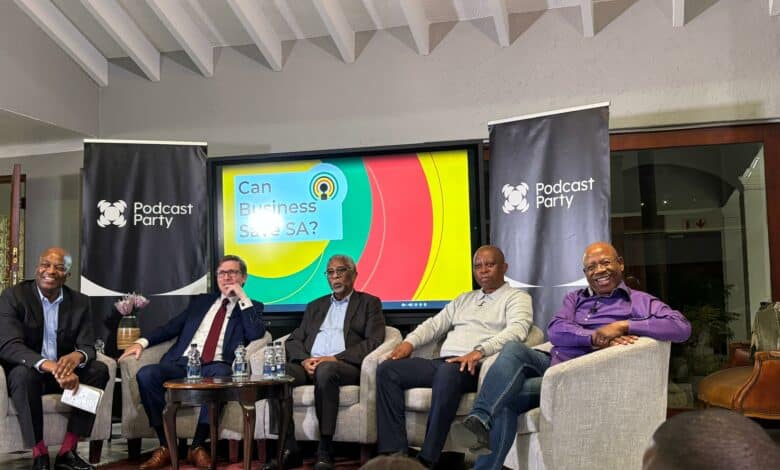
South Africa is running out of time. With unemployment, power outages, and corruption worsening, many are asking whether business can step in where government has failed. That was the central debate at the latest episode of Democracy Unplugged, the live podcast moderated by journalist and political commentator Justice Malala in Sandhurst on September 30, titled: Can Business Save South Africa?
That was the central debate at the latest episode of Democracy Unplugged, hosted by the Podcast Party, the live podcast moderated by journalist and political commentator Justice Malala in Sandhurst on September 30, titled: Can Business Save South Africa?
Read more: TVET Colleges hold the key to tackling youth unemployment
Mbeki also pointed out that, unlike in much of Africa, South Africa’s major companies are owned by its citizens, giving them both the incentive and the responsibility to rebuild.
Bonang Mohale, a corporate leader and outspoken advocate for ethical leadership, pointed out that business has not been blameless. “For years, business played along, but it still has an opportunity to redeem itself, because today only business has the project management skills and resources to steer the country back on course.”
For Mohale, credibility must begin with transformation. “If business wants to be trusted, it must look like the country it serves, in race, gender, and leadership.”
Also read: Unemployment in SA: Is There Any Hope Left?
Herman Mashaba, entrepreneur and former Johannesburg mayor, was far more sceptical. “I have seen first-hand how big business worked hand-in-hand with the leading party to protect corruption. If anyone tells me today that business can rescue this country, I have to ask: which business?”
Mashaba insisted that smaller enterprises and entrepreneurs hold more promise than entrenched corporations.
For Piet le Roux, CEO of Sakeliga, the real challenge is structural. “South Africa’s crisis is not the fault of business; it’s the fault of politics, but business must stop waiting for government to create a good environment. It needs to actively push back against harmful policies, and protect civil society.”
Follow us on our WhatsApp channel, Facebook, X, Instagram and TikTok for the latest updates!