Sandspruit River ongoing pollution crisis frustrates Sandown residents
For more than 20 years, residents living north of South Road and west of the Sandspruit River have watched helplessly as informal rubbish sorting, illegal dumping, and squatting turned their once-pristine greenbelt into a polluted wasteland.
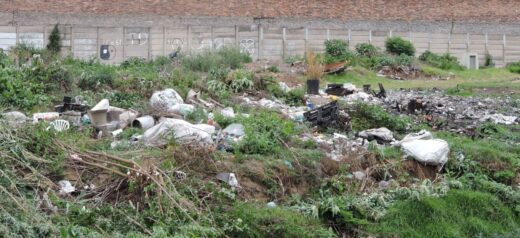
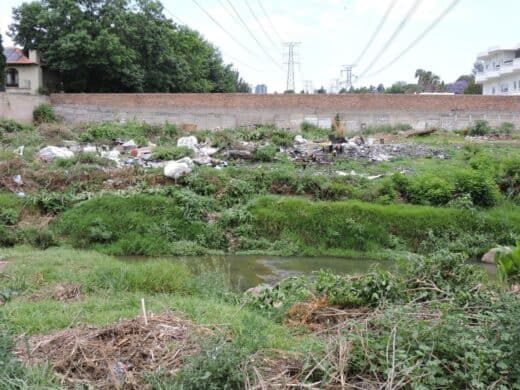
For Sandown residents living near the Sandspruit River, north of South Road, the scene is all too familiar: heaps of plastic, burnt waste, and effluent flowing into the river after heavy rains. The informal rubbish sorting area and squatter camp west of the bridge have, according to locals, been a source of pollution and frustration for over 20 years.
Resident David Alswang described the situation as ‘a complete disregard for the environment,’ saying that both the municipality and law enforcement have failed to act meaningfully.
“Their total disregard for the ecosystem and the municipality’s disinterest allows a level of pollution that’s heartbreaking,” Alswang said. “After every rainstorm, the riverbanks are covered in waste. It’s unsightly, unhealthy, and damaging to wildlife.
Even pets have fallen ill after playing in the water.” He said that residents have seen people in police uniforms at the site occasionally, and even the fire brigade when the area was set alight recently.
Read more: Ward 91 councillor raises year-end service delivery concerns
“Nothing changes. The collectors come, sort recyclables, and leave behind the residue; the city seems to ignore it.”
Councillors acknowledge slow progress.
Ward 103 councillor Lynda Shackleford has acknowledged the severity of the issue, saying she has been raising it with the City of Johannesburg since 2022.
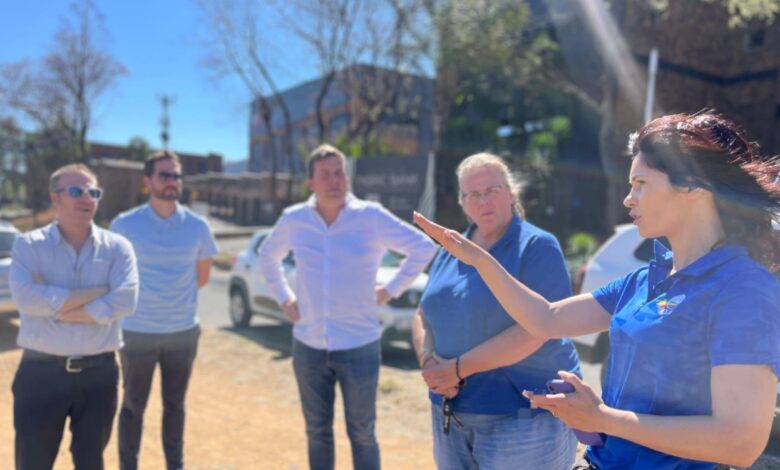
“This is an area I know very well, and I share residents’ frustration that meaningful progress has been slow,” Shackleford said. “We’ve seen clean-ups, but they are not enough. The problem keeps recurring.” She said she has been working with neighbouring Ward 91 councillor Andrew Stewart, local administrators, and city entities to secure and protect the open space.
“We are trying to coordinate efforts to fence and safeguard the area. Open spaces are vital for residents’ well-being and must be protected,” Shackleford said. She also noted that the presence of displaced individuals, many of whom are undocumented foreign nationals, has added layers of complexity for enforcement.
“While I have great empathy for the reclaimers, there’s a right place and process for everything. Sorting and burning waste along a riverbank causes immense environmental harm.” Despite clean-ups being conducted by the city’s Region E CRUM department, Shackleford emphasised that these need to be part of a sustained maintenance plan, not sporadic interventions.
“Residents have every right to demand action. I will continue pressing the city and its entities until we see real change,” she added.
Also read: 10-year Parkmore sinkhole blame game continues between city entities
Call for community action.
Ward 91 councillor Andrew Stewart, whose ward borders the affected area, said other neighbourhoods have faced similar challenges and found solutions through collaboration.
“Green spaces in Atholl and Glen Atholl were eventually fenced off thanks to partnerships between homeowners, businesses, and councillors,” Stewart said. “Private contractors now help keep those spaces clean and safe. We’d like to see the same happen along South Road and the Sandspruit.”
A growing city, a worsening problem
Stewart said Johannesburg is home to roughly 180 informal settlements, and officials admit that dozens of other green spaces have been overtaken by reclaimers and squatters.
“With the city doubling in size every 25 years, the pressure on its infrastructure, housing, and environment continues to mount. The Johannesburg economy cannot adapt fast enough, i.e. the city economy can’t produce enough jobs, accommodation for people.
“It has been a known, looming problem for Joburg for 30 years now. However, not just in the city, but at the national level, there is a shoulder-shrugging attitude towards the problem. The problem is admittedly complex, but a coordinated effort at both levels of government is needed to tackle a problem that will only get worse.”
The Sandton Chronicle reached out to Johannesburg City Parks and Zoo, and Johannesburg Metropolitan Police Department for a comment on November 2. No comment has been received. Updates will be provided once they become available.
Follow us on our WhatsApp channel, Facebook, X, Instagram and TikTok for the latest updates!