Everest summit changes Sandton resident’s views on life and leadership
Business leader and Everest climber Angela Yeung reflects on the mental battles, leadership lessons, and charitable mission that carried her to the top of the world’s highest mountain.
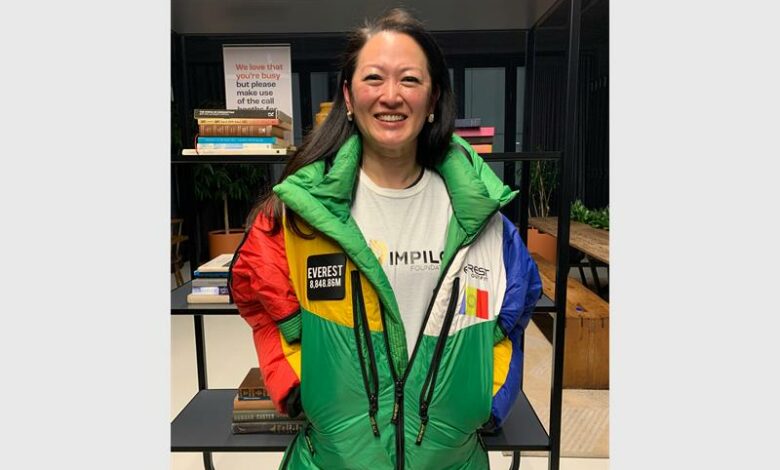
Angela Yeung says climbing Mount Everest was never simply about standing on the world’s highest peak at Workshop17 at the Bank in Rosebank.
After spending 50 days on the mountain via the north side, she returned with a deeper understanding of leadership, resilience, and purpose that she now hopes to share with others.
A charitable cause drove the Sandton resident’s expedition. Through the #EmpowerHer8849 campaign, every metre she climbed represented another bra for a woman or girl in need, giving each step a purpose beyond reaching the summit.
“What surprised me most was how calm I remained. You are living with some of the world’s highest achievers, and naturally, there are big personalities and big egos. I expected the altitude to be the biggest challenge, but it was often the human dynamics.”
Read more: Talitha Oosthuizen: Climbing mountains for change
She said the experience taught her to trust her own judgement rather than be influenced by those around her.
“I realised I was able to manage my own emotions without being affected by everyone else’s. Everest taught me to think independently, trust my own judgement, and not be afraid to make decisions that were right for me, even if they were different from what others were doing.”
Although Everest is often viewed as the ultimate physical challenge, Yeung believes the greatest test took place in her mind.
“The psychological pressure peaked while we were trapped in the high camps because of bad weather. We had no idea if we’d even get a summit window.
You’re isolated, you can’t communicate with your family, and you’re surrounded by other climbers who are all under enormous pressure. Managing your own mind and emotions became far harder than climbing the mountain.”
The uncertainty intensified when a typhoon moving north from India threatened to close the narrow weather window needed for a summit attempt, after she had already reached an altitude of 8 300m.
“I never questioned climbing Everest itself, but I did question whether the mountain would ever give us a chance. Everest taught me a lesson I now apply to life and leadership: Don’t waste energy on what you can’t control. Put your energy into what you can and let the rest unfold.”
Also read: Five highest mountains to hike
Choosing the north side of Everest also formed part of her strategy. While the route is colder, more technical, and offers no rescue services, she said it is significantly less crowded than the more popular southern approach. “There are certainly more people attempting Everest today, but the mountain doesn’t care how much you’ve paid or who you are.
The weather is the ultimate decision-maker. At 8 000m, status, money, and ego mean nothing. The mountain is the ultimate equaliser.”
Reflecting on leadership, Yeung believes the mountain reinforced that leading others starts with leading yourself.
“Self-leadership comes before leading others. At high altitude, no one can climb for you. You have to manage your emotions, your decisions, and your attitude.
Leadership isn’t about being fearless; it’s about making good decisions, despite fear.”
Follow us on our WhatsApp channel, Facebook, X, Instagram and TikTok for the latest updates!