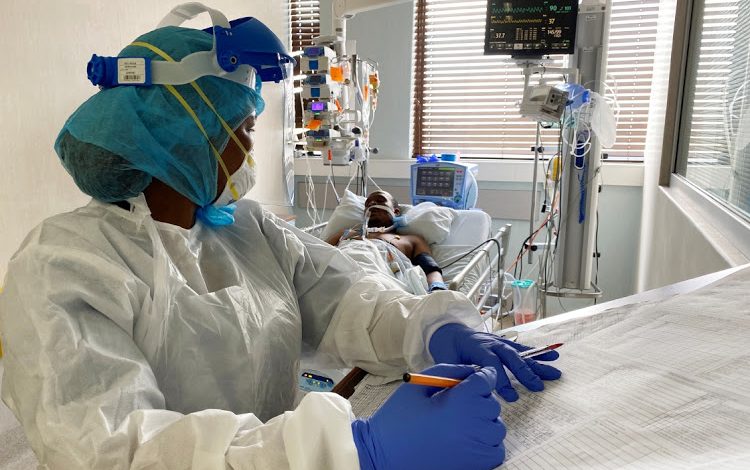
“Our hospitals, both private and public, are already close to full capacity in a number of provinces, and ICU beds are either full already or rapidly filling up,” said President Cyril Ramaphosa.
South Africa has breached the one million mark of confirmed COVID-19 cases after 9 502 cases were reported on Sunday.
“According to the data we have, with every relaxation of the restrictions on the sale of alcohol, the number of trauma cases reporting at our hospitals has increased.
“These trauma cases are putting an unnecessary strain on our already stretched public health facilities,” the President said.
He was addressing the nation on Monday, on developments in relation to the country’s response to the Coronavirus pandemic.
The address follows a meeting on Sunday of the National Coronavirus Command Council (NCCC) and Monday’s special sessions of the President’s Coordinating Council (PCC) and Cabinet.
“In the Eastern Cape, for example, the number of hospitalisations and in-hospital deaths has now surpassed the numbers witnessed in the first surge earlier this year.
“Several provinces are hard at work to prepare additional beds, ventilators and oxygen to respond to this increase,” the President said.
He said frontline healthcare workers, who have put their lives on the line over the past nine months to care for the ill, are becoming infected in higher numbers.
“They are exhausted, and they are struggling under the strain of the second wave. During the month of December, 4 630 public sector health employees contracted COVID-19, bringing the total number infected since the start of the pandemic to over 41 000,” President Ramaphosa said.
He described the frontline healthcare workers as brave men and women, who have kept hospitals and clinics open and running through their resilience, courage and professionalism.
“… [They] are now at even greater risk than before. They are themselves almost at break point.
“They could lose their lives. More families will mourn. All because of our actions, and our failure to take responsibility,” he said.
The President has attributed the rapid rise in infections to so-called super-spreader events, including like end-of-year functions, family and social gatherings, and music and cultural events.
“This is a cause for great alarm, and points to an extreme lack of vigilance over the holiday period. We have let down our guard, and unfortunately, we are now paying the price.
“We have not been wearing masks. We are not washing our hands or sanitising, and we are not keeping a safe distance from others.
“We have continued to host and attend social gatherings and events that in many cases flout public health regulations,” the President said.
He said venues are often poorly ventilated and their permitted capacity is being exceeded.
Hand sanitisers are not being used, and masks are being worn to gain entry, only to be taken off once inside.
“In these same social gatherings, the consumption of alcohol in restaurants, in nightclubs and taverns has contributed to risky behaviour like not wearing masks and not observing social distancing,” the President said.
In an effort to curb the spread of COVID-19, the President announced that the country will be on an adjusted level 3 from level 1 with immediate effect.
“Unless we act now and unless we act decisively, the number of new infections will far exceed what we experienced during the first wave and thousands more people will lose their lives,” President Ramaphosa said.