SASOLBURG – South Africa has taken another step towards a cleaner energy future with the launch of a locally developed hydrogen production system at Sasol’s Research and Technology campus in Sasolburg.
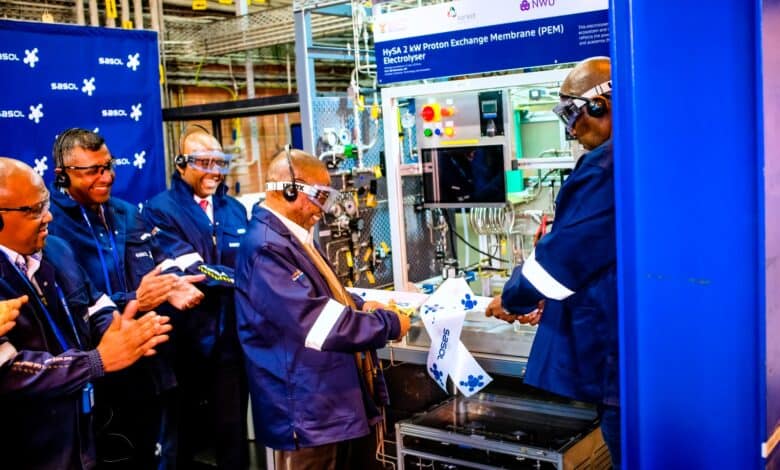
The 2kW Proton Exchange Membrane (PEM) electrolyser was officially commissioned on August 31 by the Department of Science, Technology and Innovation (DSTI), Sasol, the South African National Energy Development Institute (SANEDI) and North-West University.
The cutting-edge technology, developed through the Hydrogen South Africa (HySA) Programme, will be used to test how hydrogen can be produced using renewable energy such as solar and wind power.
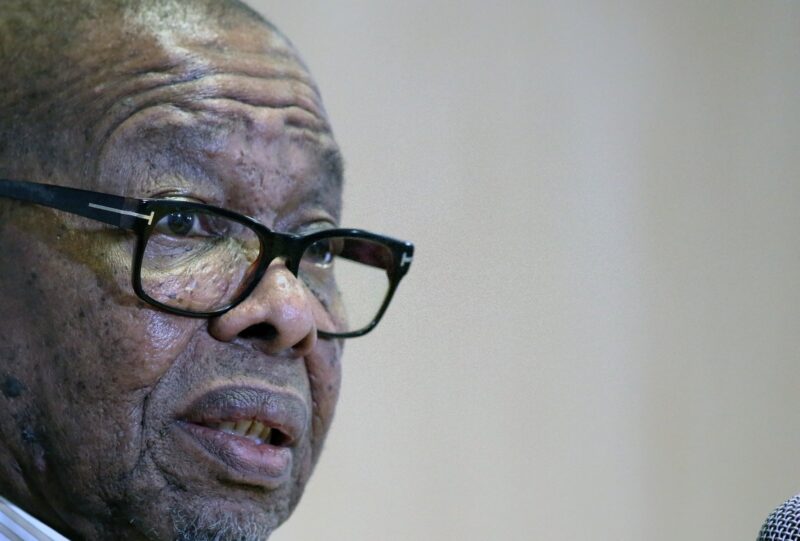
Speaking during the launch, Science, Technology and Innovation Minister Professor Blade Nzimande said the project is more than just a scientific breakthrough.
He said it positions South Africa to benefit from its rich Platinum Group Metals (PGMs), which are essential for hydrogen technology, while helping grow future industries and supporting the country’s transition to a greener economy.
“The relationship between critical minerals, beneficiation, and green hydrogen in the context of DSTI’s Renewable Energy agenda is key. Central to the deployment of this 2kW PEM Electrolyser System is the beneficiation of critical minerals, particularly Platinum Group Metals or PGMs. These minerals are key to fuelling industries of the future and our aim is to ensure South Africa becomes a major player in key upstream, mid-stream and downstream parts of these future industries,” he said.

“We are confident that the knowledge and insights generated through this system will help us move closer to more efficient, commercially competitive, scaled production of green hydrogen, expand our export portfolio, and stimulate domestic utilisation of green hydrogen in support of a net-zero economic future,” he added.
Sasol Executive Vice President for Business Building, Strategy and Technology, Sarushen Pillay, said the partnership proves what can be achieved when government, universities and industry join forces.
“Hydrogen is an important building block for producing sustainable fuels and chemicals. Having this locally developed electrolyser tested at Sasol’s world-class research campus is a major milestone for South Africa,” he said.
Professor Dmitri Bessarabov from North-West University said the project demonstrates that South African innovation can be successfully developed and tested for future commercial use.
During the event, SANEDI Board Chairperson Sicelo Xulu handed over the project’s completion certificate and technical report to Minister Nzimande, confirming the electrolyser meets all required standards.
Xulu said the information gathered from the project will help grow South Africa’s hydrogen economy by using local expertise and natural resources, including platinum, abundant sunshine, wind and water.