Pressure in 2026 and beyond as a form of political accountability in South Africa
A municipality that cannot envision disabled people as full residents cannot build inclusive cities.
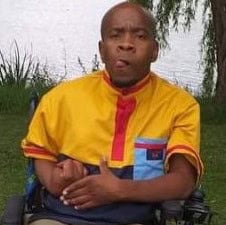
As South Africa enters the 2026 local election cycle, the disability sector faces a familiar and troubling reality.
Disabled people are invoked as symbols of inclusion during campaigns, promised council seats and paraded as evidence of diversity, yet their lived experiences remain unchanged. The absence of a strong, organised pressure group within the disability sector has left disabled communities vulnerable to political tokenism, systemic neglect and corruption-driven failures in service delivery.
Electioneering in South Africa has often reduced disabled people to voting fodder. Political parties promise representation, but once disabled individuals are elected, they are absorbed into the machinery of the status quo. Without a coordinated body to hold them accountable, their presence in councils becomes symbolic rather than transformative. Representation without pressure is hollow, it does not translate into policy reform, budget prioritization or structural change.
The crisis in assistive device provision illustrates the consequences of this vacuum.
In the early 2000s, the Department of Health worked effectively with suppliers to ensure disabled people had access to wheelchairs, hearing aids and other essential devices.
Today, corruption and mismanagement have eroded that system. Budgets are diverted, procurement is compromised and disabled people are left without the tools necessary for basic participation in society. This regression is not simply administrative, it is a political ignorance born of weak accountability.
The disability sector has often been encouraged to “work with” government and private stakeholders. Yet collaboration without pressure risks complicity in stagnation. What is needed is a robust, independent pressure group that demands developmental work rather than politely negotiating for incremental change.
Such a group would play a critical role in exposing corruption within health and social services, ensuring that resources meant for disabled communities are not siphoned off by unscrupulous actors. It would also insist on accessibility in public infrastructure, from municipal buildings to transport systems, recognising that without physical access, disabled people remain excluded from civic life.
Equally important, such a pressure group would hold elected officials accountable for the promises they make during campaigns. Too often, commitments to disability inclusion evaporate once the votes are counted, leaving disabled communities disillusioned and betrayed. Sustained pressure would ensure that these promises are not rhetorical flourishes but binding obligations. Beyond government, the private sector must also be compelled to integrate disability inclusion into their business models.
This cannot be framed as charity or corporate social responsibility, it must be understood as a fundamental obligation to equity and justice.
Local government’s lack of vision on disability is most visible in places like the Vaal.
Disabled residents are still treated as outsiders, with inaccessible public buildings, inadequate transport and limited opportunities for participation in community life. This is not merely a failure of planning, it is a failure of imagination.
A municipality that cannot envision disabled people as full residents cannot build inclusive cities.
The absence of inclusive design reflects a deeper political indifference, one that must be challenged through organized and relentless pressure.
The disability sector in South Africa stands at a crossroads. Without a pressure group, disabled people will continue to be used as political ornaments in election years, their struggles sidelined by corruption and indifference. With one, however, they could transform the political landscape, forcing accountability, demanding accessibility and ensuring that promises translate into lived realities.
The time for polite collaboration has passed.
The time for pressure has arrived.
(Lucky Tumahole – Disability Advocate and Political Writer)