
The Hidden Vanguard of Freedom
"The persistence of inaccessible schools, workplaces and public institutions reveals that the struggle for liberation remains unfinished."

The history of liberation movements in South Africa and beyond is often told through the voices of political leaders, trade unions and armed struggle.
Yet woven into this tapestry is a quieter but equally powerful thread, the contribution of disabled activists. Their role in the anti-apartheid struggle and broader movements for freedom has been systematically overlooked. It is essential to recognise how disability shaped both the experience of oppression and the strategies of resistance.
Many were denied schooling…
Disabled activists confronted apartheid not only as a racial system but also as one that compounded exclusion through inaccessible education, employment and public life. Many were denied schooling or forced into segregated institutions, yet they transformed these sites of marginalization into spaces of organising.
Activists like William Rowland and Maria Rantho, among others, challenged the apartheid state by insisting that disability rights were inseparable from human rights. Their interventions ensured that the liberation struggle did not reproduce ableist hierarchies but instead gestured toward a more inclusive vision of freedom.
“Apartheid created these conditions…”
The anti-apartheid movement itself created conditions that politicised disability.
State violence left many activists injured or impaired and these comrades refused to be sidelined. Instead, they reframed their impairments as part of the collective sacrifice for liberation. In exile and in underground networks, disabled activists demanded recognition not as passive recipients of charity but as leaders in their own right. Their insistence on accessibility within political organizations mirrored the broader demand for a society where participation was not conditional on physical ability.
Globally, disabled activists also linked their struggles to broader currents of decolonization and civil rights. In the United States, the disability rights movement drew inspiration from Black liberation and feminist organizing, while in Africa, disability advocacy became intertwined with postcolonial nation-building.
South Africa’s eventual constitutional settlement which enshrined disability rights, was not a gift from benevolent lawmakers but the outcome of decades of organising by disabled people who refused invisibility.
“Remembering the disabled vanguard of freedom is not an act of nostalgia but a call to action…”
Yet the legacy of disabled activists is not only historical, it is profoundly contemporary. The democratic transition promised equality, however disabled South Africans continue to face systemic exclusion in education, employment and political representation. The persistence of inaccessible schools, workplaces and public institutions reveals that the struggle for liberation remains unfinished. Remembering the disabled vanguard of freedom is therefore not an act of nostalgia but a call to action, to confront the ableism embedded in democratic structures and to demand that freedom be lived in practice, not only proclaimed in law.
“To honour them is to continue their work”…
Tracing these contributions reveals that liberation movements were never only about race, class or gender, they were also about the right of disabled people to exist fully and freely. The struggle against apartheid was enriched by disabled activists who expanded the meaning of freedom, insisting that democracy without accessibility was incomplete.
Their legacy challenges us today to remember that disability is not peripheral to liberation but central to its deepest ideals. To honor them is to continue their work, to insist that the promise of freedom must be measured not only by the absence of racial oppression but by the presence of inclusive justice.
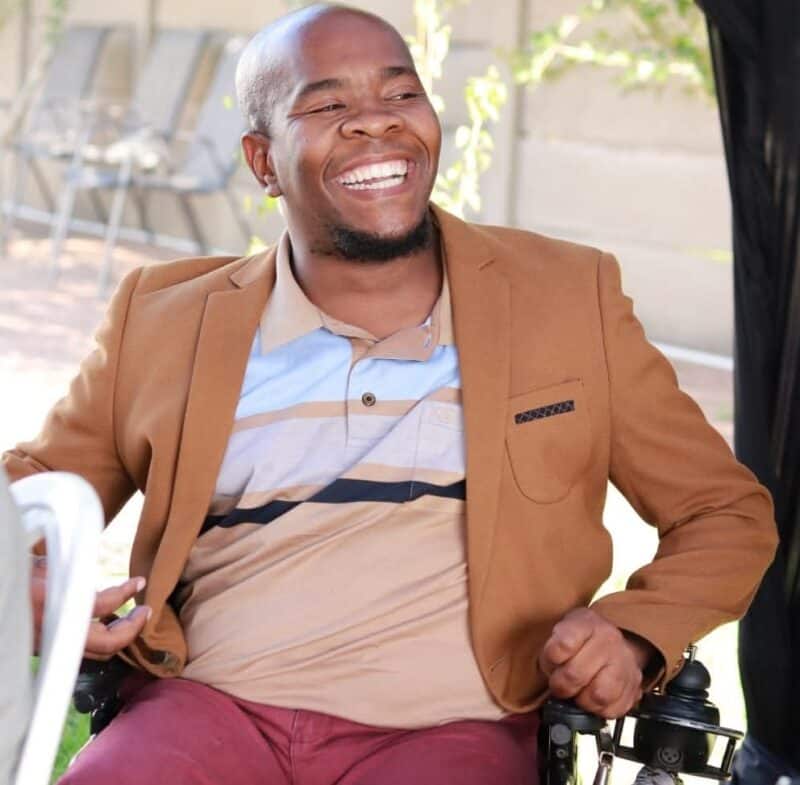
Lucky Tumahole is a Disability Advocate and Political Writer. He writes here in his personal capacity.