
When the pen betrays the truth: How rushed journalism turns tragedy into national damage
"If journalism continues down this path, the damage will not come from bullets alone."
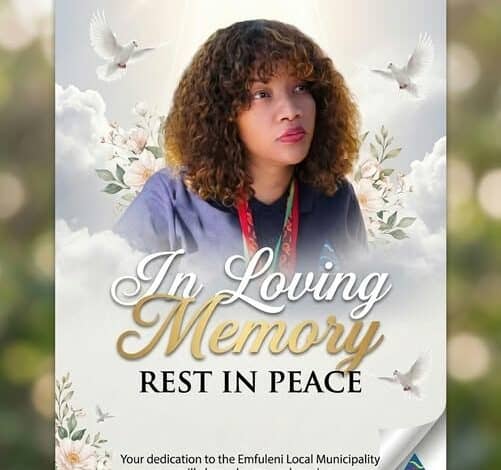
This is a letter written following the recent murder of Martha Mani Rantsofu, an Emfuleni Local Municipality (ELM) employee. Richard Chaka, who is also an employee of the ELM writes:
Journalists are supposed to destroy myths and lies, not promote, magnify, and legitimise them.
On the 30th of March, in broad daylight, a colleague, a sister, a human being full of life, was mercilessly gunned down at a tyre fitment centre in Vanderbijlpark. In the immediate aftermath, social media did what it often does. It spoke first, and it spoke carelessly. A rushed, shallow version of events emerged:
“A woman shot dead while waiting for her car to be repaired.”
No depth.
No dignity. No truth beyond the bare minimum.
” Ho ne ho thotse ho eitse tuu…!”
And yet, no credible journalist picked it up. No national media house pursued it. No journalistic investigative urgency followed. For two weeks, there was silence. Not because the story lacked importance, but because it lacked sensational appeal.
Ho ne ho thotse ho itse tuu…! (It was silence everywhere)
For two weeks after this tragic incident, her family mourned quietly. Her colleagues grieved privately. The police worked methodically. We began preparing to lay her to rest, with dignity, with respect, and without spectacle.
Then came the storm, the insensitive madness begun.
The vultures descended…
As we gathered at Khutlo-Tharo Secondary School, her alma mater, a place that shaped the woman she became, something shifted. Images of her dignified funeral with her colleagues in white shirts bearing the employer’s logo began circulating.
And with that, the digital vultures descended.
An unfiltered, insensitive raw video footage of her murder was leaked and shared without restraint.
It ran amok.
A human life reduced to content, a family’s worst nightmare turned into public consumption and spectacle.
But it did not stop there!
Speculation became narrative, lies became headlines.
Suddenly she was a “whistle-blower”…
Suddenly, she was no longer a Clerk.
She was rebranded, an “Accountant,” a “Manager,” a figure entangled in exposing corruption and tender fraud, a “whistle-blower”.
Fiction was dressed as fact.
And those who knew nothing about her life and role at work spoke with dangerous certainty about her death.
Then, almost like a switch had been flipped, journalists arrived. Not to investigate the truth, not to honour the victim, but to chase the noise.
Since when has social media become reliable?
Headlines flooded in, many echoing the same cowardly disclaimer: “…according to social media sources.” Since when did social media become a credible source?
Since when did unverified claims replace ethical reporting?
Since when did speed become more important than truth?
In the rush to break news, something sacred is being broken, TRUST.
Salt rubbed into the wound of her child, her mother and siblings even before her body could be lowered into a grave.
Journalists are not just storytellers, they are powerful custodians of truth. Their words shape public perception, influence investigations, and impact lives far beyond the page and television screens.
When they fail, the damage is not abstract, it is deeply personal.
Families are forced to mourn not only their loss, but the public distortion of their loved one’s identity. Colleagues are made to defend the dignity of someone who can no longer speak for themselves. Communities are left confused, misled, and divided.
I worked with her…
And even more dangerously, false narratives can derail justice itself. When speculation is amplified, it creates noise that can misdirect investigations, shield real perpetrators, and plant doubt where clarity is needed most.
I worked with her.
Fortunately, my role enables me to know basic operations in every department.
She was not an “Accountant” as we know it academically, she just worked at “Accounts” hence the label. She was not a Manager, (and) she was not even a Supervisor.
She had nothing to do with tenders..
She was a Clerk, a dedicated public servant who helped ordinary people apply and navigate the revenue programs in the Customer Care Department. She served with humility, with patience, and with pride. She had nothing to do with tenders, nothing to do with corruption, nothing to do with some lies now attached to her name.
She was a person, and she deserved better, at least not these lies beyond her grave.
We are witnessing poor Journalism at its best
What we are witnessing is not just poor journalism, it is a slow erosion of truth. A dangerous culture where being first matters more than being right.
Where clicks outweigh consequences, where empathy is sacrificed at the altar of virality. If journalism continues down this path, the damage will not come from bullets alone.
It will come from words.
Because a reckless pen can wound deeper than any weapon. It can distort reality, inflame tensions, and ultimately weaken the very fabric of our society.
As colleagues, we are already in pain.
But reading the lies, seeing her name dragged through narratives she never lived, deepens that pain in ways words can barely contain.
Behind every headline is a human being!
Journalists must remember: Behind every headline is a human being. Behind every “source” is a responsibility, and behind every story is the power to either build a nation, or break it.
The question is: Which will they choose?
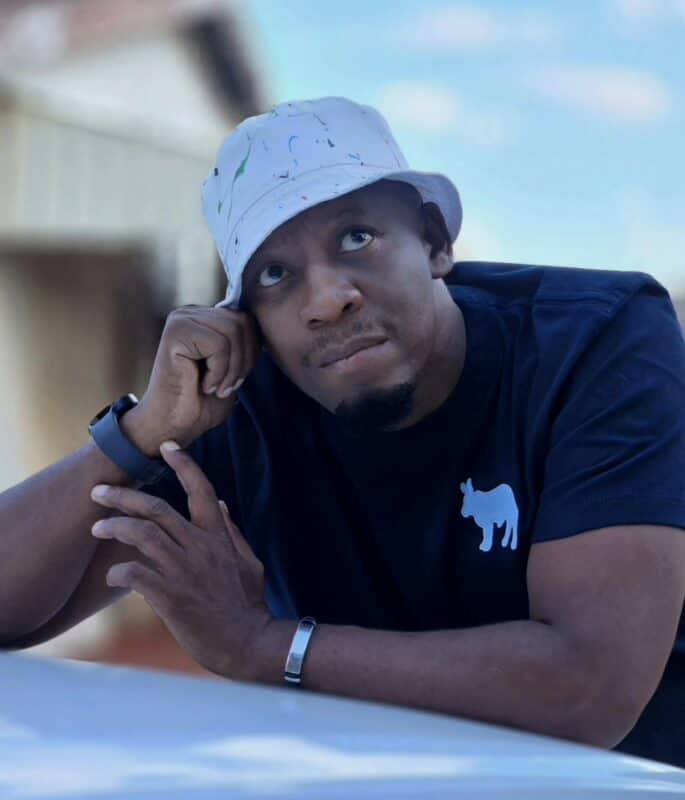
#This is a reflection and personal opinion of Richard Chaka. It is by no means an expression of any institution directly or indirectly linked to him, nor is it the opinion of this publication. He writes this piece purely on his personal capacity. (Ed)