The trouble with South Africa…
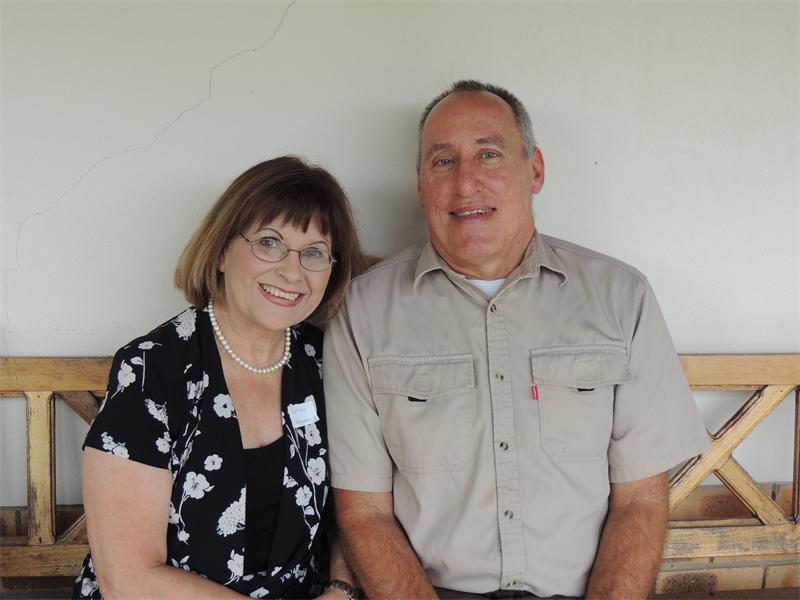
William Saunderson-Meyer of 'Jaundiced Eye' fame, gave a balanced talk on the state of our nation.
DON’T stop pedalling the South African democratic bicycle or it will lose momentum and fall over.
This sage advice came from Tuesday Rostrum guest speaker William Saunderson-Meyer, whose talk, ‘The Rusted Pot at the end of the Rainbow’ and his balanced, sensible views were much appreciated at the club’s recent lunch.
A highly respected journalist, William has produced a no-holds-barred column, ‘Jaundiced Eye’ for 21 years. That makes it older than South Africa’s democracy. With the rich material available, he deemed it a privilege to be able to write a weekly political column, he told his listeners.
As the name of his column suggests, he is a journalist not known for starry-eyed optimism and yet his talk was surprisingly upbeat. At times, he expressed his deep concern and anger about serious issues, like crime, corruption and poor education that were threatening our fledgling democracy. However, he countered these concerns with a reminder that vibrant civic entities like our constitution, the public protector and the media were among South Africa’s many resources.
Overall, his talk left Tuesday Rostrum guests feeling all was not lost. Most important was his assurance that they did, indeed, have a role to play in the future of their country.

Post-1994 South Africa had been a rollercoaster ride, starting with the ‘champagne years’ of the Nelson Mandela era when South Africa had shed its toxic past. Now the party was over and the hangover had set in, he said. It was a good time to take stock of our leaders’ records.
In judging present and past leaders, William pinpointed four important leadership qualities. Nelson Mandela had displayed ethics, vision, accountability and management skills and Thabo Mbeki, while lacking some management skills, had been ethical, accountable and had possessed a vision. When it came to our current president, William was scathing. He believed Jacob Zuma had proved himself lacking in all these qualities. Even worse, he used his powerful position to thwart whenever possible the checks and balances against corrupt governance.
William’s interesting take on political corruption was that South Africa was not a particularly corrupt country. His greatest concern was the astonishing and increasing tolerance South Africans displayed regarding political corruption. He gave examples of how blatant dishonesty exhibited by those in power had been dealt with far more leniently in South African than it had been in other countries.
Another threat facing our young democracy was extremism, often attractive to disaffected young people and fuelled by what William called the ‘testosterone trigger’. He pointed out young men under the age of 35 years represented a particularly volatile segment of society. With 60 percent of South Africans under 35 years of age and a high unemployment rate, radicalisation was a real threat. On the other hand, many young people seemed aware the African National Council was not necessarily in tune with their needs and were looking at moderate alternatives.
To many of his listeners, the most surprising threat William identified was what he called white disengagement, either as a result of guilt or because the white community felt politically redundant. Should this political disengagement take hold, the consequences would be tragic, he warned.
William made the point that while there was much wrong with South Africa, there was much that was right and the lives of many South Africans had tangibly improved since 1994. He reminded his listeners that redress, if sometimes clumsily deployed, had been necessary.
As it moved into the future South African society needed to become more racially homogenous, he concluded. And all South Africans needed to keep on pedalling that bicycle. A lively question and answer session followed his talk, with William impressing his listeners with his considered and informed responses.